


Quran Teacher Online: How to Find the Right Teacher for You or Your Child
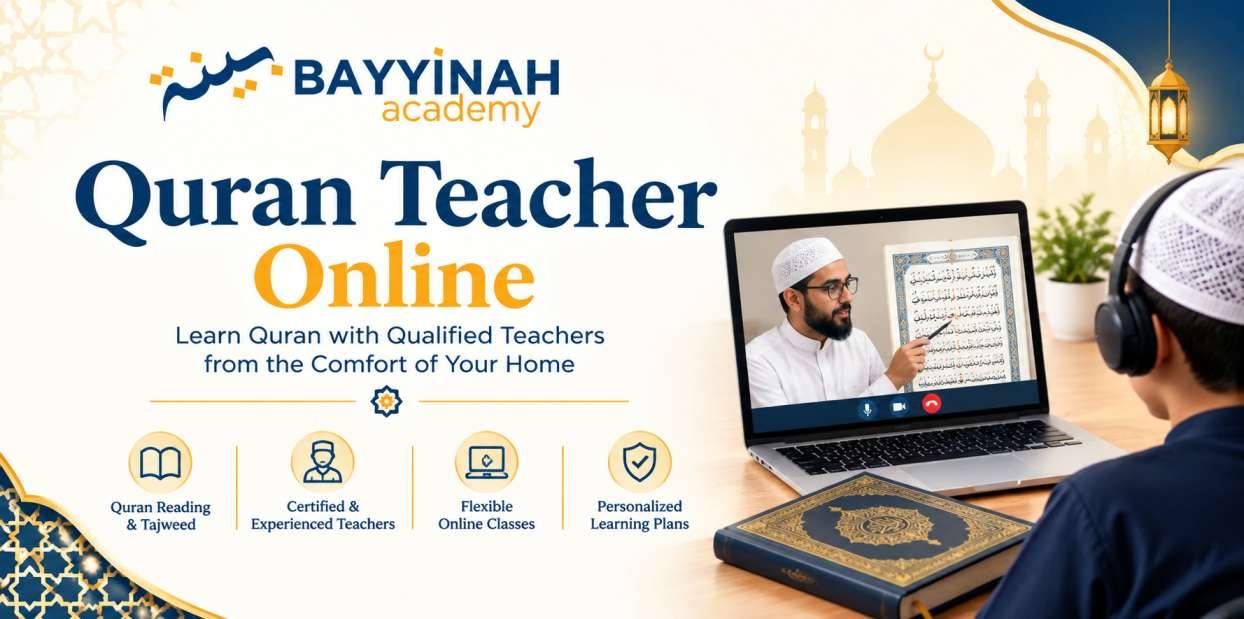
Learning the Quran is a meaningful journey, but finding the right teacher can make a significant difference in how confidently and consistently a student learns. Today, families and adult learners no longer need to rely only on local tutors. With an online Quran teacher, students can learn from the comfort of home while receiving personalized instruction through live classes.
Whether you are looking for Quran lessons for your child, want to improve your own recitation, or are starting from the basics, online learning can provide a practical and flexible solution.
But not every online Quran program is the same. The teacher's qualifications, teaching approach, communication skills, class structure, and understanding of a student's needs all matter.
This guide explains what to consider when choosing an online Quran teacher and how to make online learning productive and enjoyable.
What Is an Online Quran Teacher?
An online Quran teacher provides Quran education through live internet-based classes. Depending on the student's goals and level, lessons may include Quran reading, Arabic letters, pronunciation, Tajweed, memorization, revision, or basic Islamic studies.
Most classes take place through video or audio communication, allowing the teacher and student to interact in real time. This makes the experience closer to traditional one-to-one tutoring than simply watching prerecorded lessons.
A good online teacher should do more than listen to a student read. They should identify mistakes, explain the correct pronunciation, adjust the lesson to the student's level, and provide constructive feedback.
Why Choose a Quran Teacher Online?
Online Quran learning has become popular because it fits more easily into modern family schedules.
Flexible lesson times
Students can often arrange classes around school, work, family responsibilities, or other commitments. This can be especially helpful for families living in countries where qualified Quran teachers are not readily available nearby.
One-to-one attention
Individual lessons allow the teacher to focus on one student's strengths and weaknesses. A beginner may need more time with Arabic letters and basic reading, while an advanced student may need detailed Tajweed correction.
Learning from home
Students do not have to travel to a learning center. A quiet room, suitable device, internet connection, and learning materials may be enough to begin.
Access to teachers from different locations
Online education removes many geographical limitations. Students can potentially learn from qualified teachers who would otherwise be unavailable in their local area.
Convenient learning for children and adults
Online Quran classes are not limited to children. Adults who want to improve their recitation or finally learn to read the Quran can also benefit from personalized instruction.
What Can You Learn With an Online Quran Teacher?
The right course depends on the student's current ability and goals. Common areas of study include:
-
Quran reading for beginners
-
Arabic letters and pronunciation
-
Noorani Qaida or similar foundational reading methods
-
Tajweed rules
-
Quran recitation
-
Quran memorization and revision
-
Selected surahs
-
Basic Islamic studies
-
Daily duas and essential religious knowledge
A strong teacher should assess the learner before creating a lesson plan rather than giving every student exactly the same material.
How to Choose the Best Online Quran Teacher
Choosing a teacher is about more than finding someone who can recite the Quran. Teaching ability matters just as much.
1. Check Quranic knowledge and teaching qualifications
Ask about the teacher's Quran education, Tajweed training, teaching experience, and relevant qualifications. If the teacher has an ijazah or another recognized credential, you can ask what it covers and who issued it.
Credentials alone do not guarantee that someone is an excellent teacher, but they can help establish a foundation of trust.
2. Look for experience with your student's age
Teaching a young child is different from teaching an adult beginner.
Children often benefit from shorter activities, encouragement, repetition, and an engaging teaching style. Adults may prefer a more structured explanation of pronunciation and Tajweed rules.
Try to choose someone who has experience working with learners in the appropriate age group.
3. Consider pronunciation and Tajweed expertise
Correct pronunciation is an important part of Quran learning. A teacher should be able to recognize errors and explain how to correct them clearly.
For students specifically studying Tajweed, ask whether the teacher follows a structured Tajweed curriculum and how pronunciation mistakes are monitored during lessons.
4. Ask about the class format
Before enrolling, understand how lessons actually work.
Useful questions include:
-
How long is each lesson?
-
Are classes live or prerecorded?
-
Is the class one-to-one or group-based?
-
How frequently are lessons held?
-
Does the teacher provide homework?
-
How is student progress monitored?
-
Can parents receive feedback about a child's progress?
Clear answers can prevent misunderstandings later.
5. Look for patience and good communication
A knowledgeable teacher may still be a poor fit if they cannot communicate effectively with the student.
The teacher should be patient when correcting mistakes and able to explain difficult concepts in a way the learner understands. For children especially, encouragement can have a major impact on motivation.
6. Consider a trial lesson
If a school or teacher offers a trial class, use it to evaluate the learning experience rather than simply asking whether the teacher is knowledgeable.
Pay attention to whether the teacher:
-
Assesses the student's current level
-
Corrects mistakes respectfully
-
Explains pronunciation clearly
-
Keeps the student engaged
-
Has a structured lesson plan
-
Listens to the student's questions
A trial lesson can reveal whether the teacher and student are a comfortable match.
Online Quran Classes for Children
Parents often have additional concerns when choosing a Quran teacher for their children.
The teacher should understand that children learn at different speeds. Some students may read quickly but struggle with pronunciation, while others may need additional practice with Arabic letters before progressing.
A child-friendly online Quran class should therefore balance discipline with encouragement.
Parents can also support learning by creating a consistent routine. A regular class schedule, quiet study space, and a few minutes of revision between lessons can make the learning process more effective.
It is also helpful for parents to communicate with the teacher periodically about progress rather than waiting until a problem develops.
Online Quran Learning for Adults
Adults sometimes postpone Quran learning because they feel embarrassed about starting as a beginner. There is no reason to feel that way.
A good online Quran teacher can begin at the student's actual level, whether that means learning Arabic letters from the beginning or refining an existing recitation.
Adult learners may also appreciate flexible scheduling and lessons tailored to specific goals. Someone who already reads the Quran may want to focus primarily on Tajweed, while another learner may need foundational reading instruction.
The important thing is to choose a teacher who is comfortable working with adult beginners and understands that progress can look different at every stage of life.
How Much Does an Online Quran Teacher Cost?
The cost of online Quran lessons varies considerably. Pricing may depend on factors such as:
-
Teacher qualifications and experience
-
Class length
-
Number of lessons per week
-
One-to-one versus group classes
-
Subject being taught
-
Location and currency
-
Additional learning materials or services
Instead of choosing a teacher based solely on the lowest price, consider the overall value of the program.
A slightly more expensive teacher who provides individualized feedback, consistent progress tracking, and reliable instruction may be more beneficial than a cheaper service with limited interaction.
How to Make Online Quran Classes More Effective
A teacher can provide instruction, but the student's routine also plays an important role.
Create a consistent schedule
Regular lessons are generally easier to maintain than irregular sessions. Choose times that realistically fit the student's daily routine.
Practice between lessons
Even a short amount of revision can reinforce what was covered during class. Students should review difficult letters, verses, or Tajweed rules rather than waiting until the next lesson.
Keep distractions away
A quiet study area can make online lessons considerably more productive. Notifications, television, toys, and unrelated devices can quickly interrupt concentration.
Ask questions
Students should feel comfortable saying when they do not understand something. A good teacher would rather explain a concept again than have a student continue with an incorrect understanding.
Track progress
Simple progress notes can help students and parents see what has been learned and what still needs attention.
Questions to Ask Before Hiring an Online Quran Teacher
Before signing up, consider asking:
-
What qualifications and Quran teaching experience do you have?
-
Do you teach Tajweed?
-
Do you offer lessons for beginners?
-
Do you teach children as well as adults?
-
How long is each lesson?
-
Are classes private or group-based?
-
How do you evaluate student progress?
-
Do you offer a trial lesson?
-
What happens if a student misses a class?
-
What technology or materials does the student need?
A reputable teacher or Quran learning program should be comfortable answering reasonable questions about its teaching process.
Frequently Asked Questions
Is an online Quran teacher suitable for beginners?
Yes. Online Quran lessons can be suitable for complete beginners when the teacher uses a structured, step-by-step approach and adapts lessons to the student's ability.
Can children learn Quran online?
Yes. Many children study Quran online with live teachers. Parents should look for an instructor experienced in teaching children and should consider the teacher's communication style, patience, and ability to maintain the child's attention.
Can I learn Tajweed online?
Yes. Tajweed can be taught through live online lessons, particularly when the teacher listens carefully to the student's recitation and provides immediate correction.
How often should I take Quran classes?
There is no single schedule that works for everyone. Two or three lessons per week may be manageable for many students, while others may prefer a different routine. Consistency is generally more important than choosing an unrealistic schedule.
Can adults learn Quran online?
Absolutely. Adults can begin from the basics or work on specific areas such as reading fluency, Tajweed, pronunciation, or memorization.
Final Thoughts
Finding a Quran teacher online can make Quran education more accessible, flexible, and personalized. However, the technology itself is not what determines the quality of learning. The teacher, curriculum, communication, consistency, and student's individual needs all matter.
Before choosing a program, look beyond promotional claims. Ask about qualifications, teaching experience, class structure, progress tracking, and trial lessons. Most importantly, find a teacher who creates a respectful environment where students can ask questions, make corrections, and steadily improve.
With the right teacher and a consistent routine, online Quran learning can become a practical and rewarding part of a student's life.

 English
 Arabic
 French
 Spanish
 Portuguese
 Deutsch
 Turkish
 Italiano
 Russian
 Romaian
 Portuguese (Brazil)
 Greek
Greek