


Islamic Studies Online Courses | Learn Islam Online
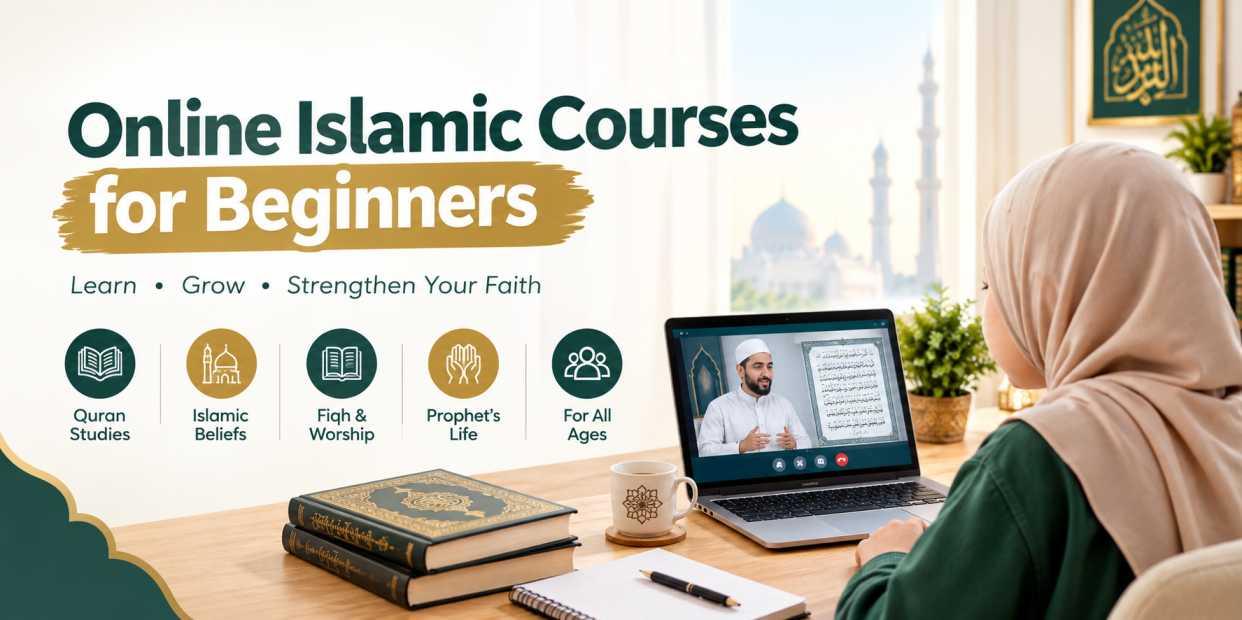
Learning about Islam is a lifelong journey. Whether you are beginning to explore the fundamentals of the faith, want to strengthen your existing knowledge, or are looking for structured religious education for your children, online learning has made Islamic education more accessible than ever.
Islamic studies online courses allow students to study from home while following lessons designed around their age, knowledge level, interests, and schedule.
From Quran and Hadith to Islamic beliefs, Seerah, Fiqh, manners, and daily worship, online programs can cover a wide range of subjects. However, the quality of an online course depends heavily on its curriculum, teachers, sources, and approach to learning.
This guide explains what Islamic studies courses can offer and how to choose a program that provides meaningful and reliable education.
What Are Islamic Studies Online Courses?
Islamic studies online courses are structured educational programs that teach different areas of Islamic knowledge through the internet.
Some courses are designed for complete beginners, while others focus on particular subjects or advanced study.
Depending on the program, students may study:
-
Quran and Quranic sciences
-
Hadith
-
Seerah of Prophet Muhammad ﷺ
-
Islamic beliefs and Aqeedah
-
Fiqh and everyday worship
-
Islamic history
-
Islamic manners and character
-
Arabic language
-
Duas and daily supplications
-
Islamic studies for children
Classes may be live, prerecorded, or a combination of both. Live courses generally provide more opportunities for students to ask questions and interact with teachers.
Why Study Islam Online?
Online Islamic education offers several practical advantages.
Flexible Learning
Students can often choose class times that fit around work, school, university, and family commitments.
This flexibility makes online learning particularly useful for adults who may not be able to attend scheduled classes at a physical institution.
Learn From Home
Students can study in a familiar environment without commuting to a learning center.
For parents, this can also make it easier to incorporate Islamic education into a child's weekly routine.
Access to Qualified Teachers
Online education can connect students with teachers from different locations.
Instead of limiting your options to instructors available nearby, you can look for teachers with relevant qualifications and experience in the particular subject you want to study.
Courses for Different Age Groups
Online Islamic education can be tailored to children, teenagers, university students, and adults.
The teaching method should change according to the learner's age and level of understanding.
What Subjects Are Covered in Islamic Studies?
The subjects offered vary by course, but a comprehensive program may include several areas of Islamic knowledge.
Quran Studies
Students may learn Quran reading, basic interpretation, themes, vocabulary, and lessons derived from selected verses.
Some courses combine Quran studies with Tajweed so students can improve both understanding and recitation.
Hadith Studies
Hadith courses introduce students to the sayings, actions, and teachings attributed to Prophet Muhammad ﷺ.
A responsible course should explain the importance of authentic sources and provide appropriate context rather than presenting isolated quotations without explanation.
Seerah
Seerah courses explore the life of Prophet Muhammad ﷺ, including important events, challenges, character, leadership, and lessons from his life.
Studying Seerah can help students understand the historical context surrounding many events in early Islamic history.
Aqeedah
Aqeedah concerns Islamic beliefs and foundational matters of faith.
Depending on the course and its scholarly tradition, students may study topics such as belief in Allah, His attributes, angels, revealed books, messengers, the Hereafter, and divine decree.
Because theological approaches can differ, students should understand the scholarly framework used by a particular course.
Fiqh
Fiqh deals with Islamic jurisprudence and practical rulings.
Courses may cover areas such as prayer, fasting, purification, Zakat, Hajj, family matters, and everyday conduct.
Students should look for courses that clearly identify the scholarly methodology or school of thought being taught when differences of opinion are relevant.
Islamic Manners and Character
Islamic education is not limited to information.
Courses may also explore honesty, patience, respect for parents, kindness, responsibility, humility, and other aspects of good character.
These lessons can help students connect religious knowledge with everyday behavior.
Islamic Studies Online Courses for Children
Parents often look for online Islamic education that teaches children the basics of their faith in an age-appropriate way.
Children's courses may introduce:
-
Islamic beliefs
-
Five Pillars of Islam
-
Stories of the Prophets
-
Seerah
-
Basic duas
-
Prayer
-
Islamic manners
-
Quran reading
The teaching style matters greatly.
Young students may learn more effectively through short lessons, stories, repetition, questions, and interactive activities rather than long lectures.
Parents should also ask whether teachers have experience working with children.
Islamic Education for Adults
Adults may have very different learning goals.
Some may want to learn the fundamentals of Islam, while others may want to study Fiqh, Hadith, Seerah, or Quran interpretation in greater depth.
Online courses allow adult learners to choose subjects according to their interests and existing knowledge.
A well-designed beginner course should not assume that every student already understands technical Islamic terminology.
How to Choose the Best Islamic Studies Online Course
With so many online programs available, choosing carefully is important.
Check the Teacher's Background
Look for information about the instructor's education, scholarly training, teaching experience, and areas of specialization.
A course provider should be reasonably transparent about who is teaching the material.
Understand the Curriculum
Read the course description carefully.
Ask what subjects are included, what books or sources are used, how long the course lasts, and what students are expected to learn.
A clear curriculum is usually a better sign than vague promises about "complete Islamic knowledge."
Consider the Sources
Reliable Islamic education should be grounded in recognized primary and scholarly sources.
If the course makes theological or legal claims, students should be able to understand where those teachings come from.
Look for Context
Islamic texts should be taught with appropriate context.
A good teacher should explain relevant background and distinguish between established principles, scholarly interpretations, and matters where legitimate differences exist.
Ask Questions
Before enrolling, ask about anything that is unclear.
Useful questions include:
-
Who teaches the course?
-
What qualifications do instructors have?
-
Which subjects are covered?
-
Which books or sources are used?
-
Is the course live or prerecorded?
-
Can students ask questions?
-
Is the course suitable for beginners?
-
How is student progress evaluated?
Live vs. Recorded Islamic Studies Courses
Both formats have advantages.
Live Classes
Live lessons allow students to ask questions and interact directly with the teacher.
They can also provide accountability because students attend classes at scheduled times.
Recorded Courses
Recorded lessons can be convenient for students with unpredictable schedules.
They allow learners to pause, replay, and review difficult material.
However, recorded courses may offer less opportunity for personalized feedback.
A Combination of Both
Some programs combine prerecorded learning materials with live question-and-answer sessions.
This can provide flexibility while still giving students access to teacher guidance.
How to Make the Most of Online Islamic Education
Enrolling in a course is only the beginning. Students can improve their learning experience through consistent habits.
Set a Regular Study Schedule
Choose specific times for classes, reading, and revision.
A realistic routine is easier to maintain than an ambitious schedule that quickly becomes overwhelming.
Take Notes
Writing down important concepts, questions, and references can improve retention.
Keep a dedicated notebook or digital document for each subject.
Ask Questions
Do not hesitate to ask when something is unclear.
A good learning environment should allow students to seek clarification respectfully.
Review Previous Lessons
Regular revision helps connect new information with what you have already learned.
Study Beyond the Class
If the teacher recommends specific books, articles, Quran passages, or Hadith collections, use them to deepen your understanding.
Students should prioritize reliable sources and qualified scholarly guidance when studying independently.
Benefits of Structured Islamic Learning
Self-study can be valuable, but a structured course offers several advantages.
A teacher can organize subjects in a logical sequence, explain difficult concepts, correct misunderstandings, and recommend appropriate resources.
Structured learning can also prevent students from jumping between unrelated topics without developing a solid foundation.
For beginners in particular, a clear learning path can make Islamic education less confusing and more manageable.
Common Mistakes to Avoid
Choosing a Course Based Only on Price
Low cost can be attractive, but price alone does not tell you whether the teaching quality is strong.
Ignoring the Teacher's Background
Always investigate who is responsible for teaching the material.
Learning From Short Social Media Clips Alone
Short online content can introduce useful ideas, but it often lacks the depth and context required for serious Islamic study.
Treating Every Online Opinion as Authoritative
The internet contains a wide range of religious opinions. Students should distinguish between qualified scholarship and personal commentary.
Trying to Learn Everything at Once
Islamic knowledge covers many disciplines. Building a strong foundation before moving into advanced subjects can produce better long-term understanding.
Frequently Asked Questions
Are Islamic studies online courses suitable for beginners?
Yes. Many courses are specifically designed for students with little or no previous formal Islamic education. Always check the course level before enrolling.
Can children study Islamic subjects online?
Yes. Children can learn Islamic beliefs, manners, Seerah, basic worship, duas, and Quran-related subjects through age-appropriate online classes.
Can adults study Islam online?
Absolutely. Online learning can be particularly convenient for adults who want to study alongside work and family responsibilities.
Are online Islamic studies courses reliable?
The reliability of a course depends on its teachers, sources, curriculum, and scholarly approach. Students should research the provider rather than assuming every online program has the same academic standards.
Should I choose live or recorded classes?
It depends on your learning style and schedule. Live classes offer direct interaction, while recorded lessons provide greater flexibility. A combination can offer the advantages of both.
Can I study advanced Islamic subjects online?
Some institutions offer advanced programs in areas such as Hadith, Fiqh, Arabic, Quranic studies, and other Islamic disciplines. Advanced learners should pay particular attention to teacher qualifications, curriculum depth, and scholarly methodology.
Final Thoughts
Islamic studies online courses have made religious education more accessible to people with different schedules, backgrounds, and learning goals. Whether you want to understand the basics of Islam, study the Seerah, improve your knowledge of Fiqh, or explore Quran and Hadith, an online course can provide structure and guidance.
The most important step is choosing a program carefully. Look at the teacher's qualifications, curriculum, sources, teaching method, and scholarly framework before enrolling.
Good Islamic education is not simply about collecting information. It is about developing sound understanding, asking thoughtful questions, studying reliable sources, and applying beneficial knowledge in everyday life.
With the right course and a consistent approach, online Islamic education can become a valuable part of lifelong learning.

 English
 Arabic
 French
 Spanish
 Portuguese
 Turkish
 Dutch
Dutch
 Italiano
 Russian
 Romaian
 Portuguese (Brazil)
 Greek
Greek