


Why Is Hair Direction Important in Sideburn Hair Transplant in Dubai?
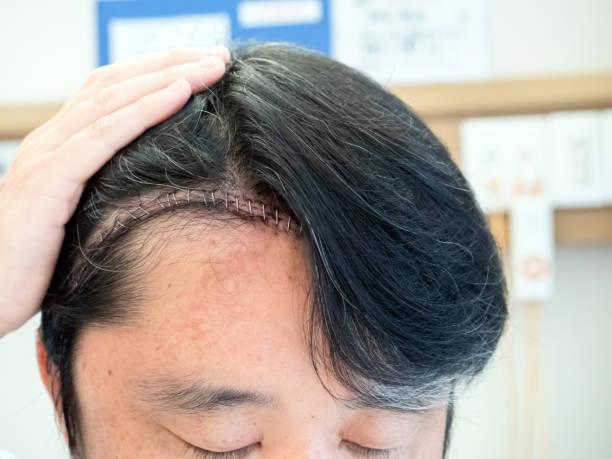
Hair direction is one of the most important details in a Sideburn Hair Transplant in Dubai because facial hair does not simply grow straight outward from the skin. Sideburn follicles follow changing angles and patterns as they move from the temple toward the ear, cheek, and beard region. Reproducing these patterns helps transplanted follicles blend with the patient's existing facial hair.
Even well-surviving grafts can look unnatural if they are positioned at an incorrect angle.
How Natural Sideburn Hair Grows
The sideburn is a transition zone between scalp hair and facial hair.
Individual follicles may change direction across a relatively small area. Some hairs lie closer to the skin, while others project outward or follow a downward trajectory.
This variation creates the natural texture and movement seen in a healthy sideburn.
Hair Direction Changes Across the Sideburn
The upper sideburn may have a different orientation from the lower section.
Near the temple, hair can follow a more scalp-like direction. Closer to the cheek and ear, the direction can gradually change.
A successful restoration respects these differences rather than placing every follicle at the same angle.
Why Incorrect Angles Can Look Obvious
Hair shafts emerge from the skin according to the direction of their underlying follicles.
If a transplanted follicle is inserted too vertically, too horizontally, or against the surrounding pattern, the hair may stand apart from neighboring growth.
The difference can become particularly visible when the sideburn is kept short.
Facial Hair Magnifies Small Placement Errors
The sideburn is a compact and highly visible area.
A small number of poorly oriented hairs can sometimes attract more attention than a larger number of irregularly placed scalp follicles.
Precision therefore matters even when the treatment area is small.
Hair Direction Is Considered During Recipient-Site Creation
Recipient sites determine the direction in which transplanted follicles will sit.
During a facial hair transplant, these sites are created to reflect the intended angle and orientation of the future hair growth.
The Skin Surface Is Not Treated as Flat
The sideburn follows the contours of the face.
The angle of the skin changes around the temple, ear, and cheek. Recipient-site design must take these contours into consideration.
This helps transplanted hair emerge in a way that corresponds with the surrounding anatomy.
Existing Hair Provides a Natural Reference
The patient's remaining sideburn hair can reveal how follicles naturally grow in that particular area.
Rather than relying entirely on a generic template, the surgeon can study the direction, spacing, and angle of existing follicles.
This is particularly useful when restoring a partially depleted sideburn.
Direction Matters at the Sideburn Border
The outer edge of the sideburn often requires especially careful placement.
If hairs at the border are too upright or too densely positioned, the transition can look abrupt.
Fine, appropriately oriented follicles can create a more gradual visual connection between bare skin and established hair.
The Border Should Transition Into Existing Growth
A natural sideburn does not necessarily have a hard line.
The appearance can change gradually from fine peripheral hairs to stronger internal growth.
Correct orientation helps support this transition.
Curly and Wavy Hair Require Additional Consideration
Hair texture changes how direction appears.
A curly follicle may leave the skin at one angle but bend shortly afterward. Wavy hair can also create a different visual pattern from straight hair.
The surgeon therefore considers both the direction of the follicle and the behavior of the hair shaft.
Hair Direction Can Affect Perceived Density
Two areas containing the same number of hairs can appear different depending on how those hairs lie.
Hair that follows the natural direction may distribute visually across the skin. Incorrectly angled hair can bunch together or stand apart.
This is one reason density alone does not determine whether a sideburn looks natural.
The Direction of Donor Hair Is Also Relevant
During extraction, the natural orientation of donor follicles needs to be considered.
Follicles beneath the skin are not always perfectly vertical. Understanding their trajectory helps reduce unnecessary damage during removal.
This connects donor extraction with recipient placement.
Sideburn Direction Should Complement the Beard
The lower sideburn may transition into nearby beard growth.
If transplanted hairs point in a direction that conflicts with the surrounding beard pattern, the transition can look disconnected.
The Temple-to-Beard Transition Matters
The sideburn sits between two distinct hair-bearing regions.
A successful design considers how the restored follicles relate to both scalp-adjacent hair and facial hair below.
Facial Shape Influences the Visual Effect
Hair direction does not exist independently of facial structure.
The same sideburn orientation may look different on a narrow face compared with a broader face because the surrounding contours change the way hair frames the features.
This is why individualized design is preferable to copying another person's sideburn pattern.
How Direction Is Maintained During Placement
During implantation, the surgeon places grafts according to the prepared recipient sites.
The follicular unit needs to sit correctly within the skin without excessive manipulation.
Careful placement helps preserve the intended direction from the point of implantation.
Clinic note: Natural sideburn restoration depends on more than placing follicles into the correct location. The angle, direction, depth, and relationship with surrounding facial hair all influence how transplanted hair eventually appears.
What Happens When Hair Direction Is Planned Correctly
When follicular direction is compatible with existing growth, the transplanted area can become much harder to distinguish from the native sideburn.
The result is not simply a greater number of hairs. It is a more coherent pattern of hair emergence.
Why This Matters for Short Hairstyles
Short fades and close sideburn grooming expose the relationship between hair and skin.
When hair is cut short, changes in direction can become more apparent because the shafts have less length to conceal placement differences.
Patients who regularly wear short hairstyles should mention this during consultation.
A Precise Approach to Sideburn Hair Transplant in Dubai
For Sideburn Hair Transplant in Dubai, hair direction should be assessed before graft placement rather than treated as a minor finishing detail.
At Tajmeels Clinic, a consultation can assess existing facial hair, sideburn anatomy, donor characteristics, and the desired design before developing an individualized restoration plan.
The objective is to create a sideburn that follows the patient's natural facial hair pattern rather than imposing an artificial direction.

 English
 Arabic
 French
 Spanish
 Portuguese
 Deutsch
 Dutch
Dutch
 Italiano
 Russian
 Romaian
 Portuguese (Brazil)
 Greek
Greek