


Machinery Textile: A Practical Guide to Textile Production Equipment
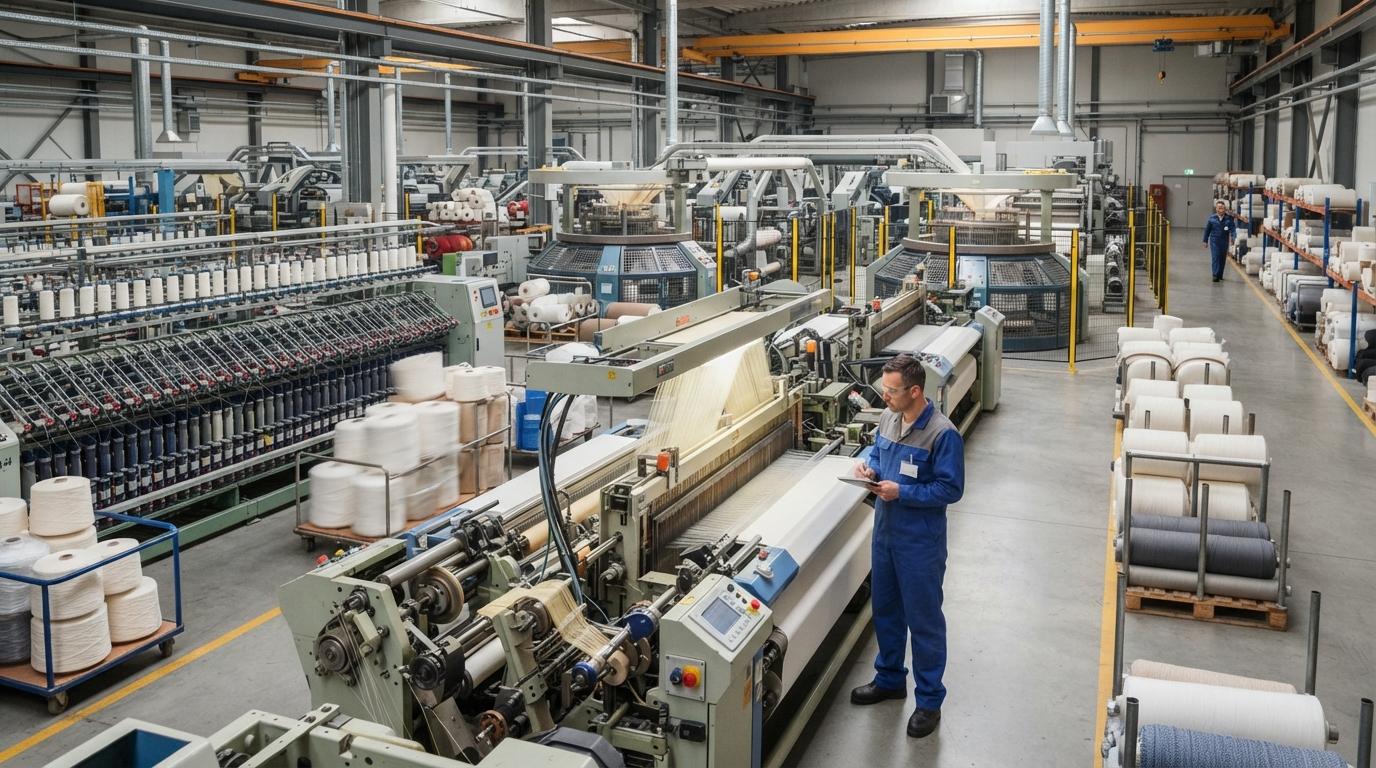
The textile industry depends on specialized equipment to transform raw fibers into yarn, fabric, finished textiles, and garments. From fiber preparation and spinning to weaving, knitting, dyeing, finishing, and inspection, each stage requires machinery designed for a specific production task. The term machinery textile is commonly associated with the wide range of industrial equipment used throughout this manufacturing chain. Understanding the different machine categories can help textile businesses plan production systems, compare equipment, and make better purchasing decisions.
What Is Textile Machinery?
Textile machinery refers to equipment used to process fibers, yarns, fabrics, and textile products. Modern textile production can involve many connected machines rather than a single piece of equipment.
The exact machinery required depends on the type of textile being produced. A spinning mill needs equipment for fiber preparation and yarn production, while a weaving facility requires looms and supporting systems. Garment factories need cutting, sewing, embroidery, pressing, and finishing equipment.
Because every production stage affects the next one, machinery needs to be selected as part of a complete manufacturing process.
Main Types of Textile Machinery
Textile equipment can be grouped according to its role in production. Major categories include spinning, weaving, knitting, dyeing, finishing, printing, garment-making, and inspection equipment.
Spinning Machinery
Spinning machinery converts prepared fibers into yarn. The process can involve several stages, including opening, cleaning, carding, drawing, combing, roving, spinning, and winding.
The type of spinning system depends on the fiber and yarn characteristics required by the manufacturer.
Modern spinning equipment can incorporate automated controls and monitoring systems that help maintain production consistency.
Weaving Machinery
Weaving machines create fabric by interlacing yarns. Looms can be designed for different fabric structures, widths, production speeds, and yarn types.
The choice of loom affects fabric quality, production capacity, energy use, and maintenance requirements.
Knitting Machinery
Knitting equipment creates fabric by forming loops of yarn. Circular and flat knitting machines are used for different fabric structures and applications.
Knitting machinery is especially important for products requiring stretch, comfort, or specific knitted constructions.
Dyeing and Finishing Machinery
Fabric often needs additional processing after it is produced. Dyeing machinery adds color, while finishing equipment can modify appearance, texture, dimensional stability, or other characteristics.
Dyeing and finishing systems may include washing, drying, heat-setting, coating, compacting, calendaring, and other processes. Textile machinery categories commonly include equipment for washing, bleaching, dyeing, drying, finishing, cutting, rolling, and folding.
Why Finishing Matters
Finishing can significantly affect the final appearance and performance of textile products.
For example, finishing processes may help control fabric width, improve surface characteristics, reduce unwanted shrinkage, or provide specific functional properties.
The correct equipment depends on the fabric composition and the desired final result.
Textile Printing Machinery
Printing equipment is used to apply designs, patterns, or colors to textiles. Depending on the application, manufacturers may use different printing technologies.
The selection depends on production volume, fabric type, design complexity, color requirements, and desired output quality.
Digital textile printing has also expanded the possibilities for detailed designs and shorter production runs.
Garment Production Machinery
Textile production eventually connects with garment manufacturing. Garment factories use specialized equipment to cut fabric, assemble pieces, create decorative details, press finished products, and prepare clothing for inspection.
This can include industrial sewing machines, cutting machines, embroidery equipment, pressing systems, and finishing machinery.
Why Machinery Selection Matters
Textile machinery represents a major investment. The wrong equipment can affect production speed, product quality, energy consumption, maintenance requirements, and overall operating costs.
A machine should therefore be evaluated according to the actual production requirement rather than simply its advertised capacity.
Important factors include:
-
Fabric or fiber type
-
Required production capacity
-
Product specifications
-
Machine speed
-
Energy consumption
-
Maintenance requirements
-
Available floor space
Automation in Textile Machinery
Automation has become an important part of modern textile manufacturing. Automated systems can monitor production conditions, detect certain defects, manage machine settings, and provide operational information.
Automation can reduce repetitive manual work and improve process consistency when implemented correctly.
However, automated machinery still requires trained operators and maintenance personnel. Technology does not remove the need for proper process management.
Energy Efficiency
Energy consumption can be a significant operating expense in textile manufacturing. Spinning, weaving, drying, dyeing, heating, and finishing processes can require substantial amounts of energy.
When comparing machinery, manufacturers should consider not only purchase price but also long-term energy requirements.
Efficient motors, optimized production settings, heat recovery, and appropriate maintenance can help reduce unnecessary energy use.
Maintenance of Textile Machinery
Regular maintenance helps protect equipment performance and reduce unexpected downtime.
Maintenance requirements vary by machine type, but may involve inspection, lubrication, cleaning, adjustment, replacement of worn components, and monitoring of critical parts.
A maintenance schedule should be based on manufacturer recommendations and actual operating conditions.
Spare Parts and Technical Support
Before purchasing machinery, textile manufacturers should consider the availability of spare parts and technical support.
A production line can be affected significantly if an important component is unavailable for an extended period.
Reliable suppliers should provide clear information about replacement parts, service support, machine documentation, installation, and operator training.
New vs Used Textile Machinery
Both new and used machinery can have a place in textile production.
New equipment may provide current technology, manufacturer support, and updated efficiency features. Used equipment can offer a lower initial investment, but buyers need to inspect its condition carefully.
For used machinery, important considerations include operating history, maintenance records, machine age, availability of spare parts, electrical condition, and compatibility with the existing production line.
Production Capacity and Machine Matching
A machine's capacity should match the rest of the production system.
Buying one extremely fast machine does not necessarily increase total output if another stage becomes a bottleneck.
For example, increasing weaving capacity without sufficient yarn preparation or finishing capacity may simply move the production limitation to another stage.
A complete production analysis is therefore more useful than evaluating one machine in isolation.
Space and Factory Layout
Machine dimensions and factory layout can influence installation and workflow.
Textile equipment needs sufficient space for operators, material movement, maintenance access, ventilation, utilities, and safety procedures.
Before purchasing large equipment, the manufacturer should consider floor loading, electrical requirements, access routes, and installation conditions.
Quality Control and Inspection
Textile production requires consistent quality. Machinery can influence yarn properties, fabric construction, color consistency, surface appearance, and finished-product quality.
Inspection equipment can help identify defects before products reach later stages of manufacturing.
Combining suitable machinery with quality-control procedures helps manufacturers maintain consistent production standards.
Choosing a Textile Machinery Supplier
When comparing suppliers, look beyond machine specifications.
A good supplier should understand the intended application and provide suitable technical information. Installation, training, maintenance, spare parts, warranty terms, and after-sales support should also be considered.
It is useful to compare total ownership costs rather than only the purchase price.
Common Purchasing Mistakes
Textile manufacturers sometimes select equipment based on maximum speed without considering product quality or production requirements.
Other common mistakes include ignoring energy consumption, overlooking maintenance access, failing to check spare-parts availability, and not considering compatibility with existing machinery.
Clear technical specifications can help prevent these problems.
Future of Textile Machinery
Textile machinery is becoming increasingly connected, automated, and data-driven. Manufacturers are using sensors, digital monitoring, automated controls, and improved production systems to increase efficiency and consistency.
Sustainability is also becoming an important consideration. Equipment that reduces energy, water, material waste, or unnecessary processing can support more efficient production.
The future of textile manufacturing will likely involve greater integration between machinery, software, quality control, and production planning.
Conclusion
The term machinery textile covers a broad range of equipment used across textile production, from fiber preparation and spinning to weaving, knitting, dyeing, finishing, printing, and garment manufacturing.
Choosing the right equipment requires an understanding of the production process, material requirements, capacity, energy use, maintenance, factory layout, and long-term support. Instead of focusing only on machine speed or purchase price, manufacturers should evaluate how each machine fits into the complete production system.
FAQs
What is textile machinery?
Textile machinery includes industrial equipment used to process fibers, yarn, fabric, and finished textile products.
What are the main types of textile machinery?
Major categories include spinning, weaving, knitting, dyeing, finishing, printing, garment-making, and inspection equipment.
Why is textile machinery important?
It helps manufacturers produce textiles efficiently and consistently while supporting different stages of the production process.
Is automation useful in textile production?
Yes. Automation can help monitor processes, reduce repetitive work, and improve consistency when properly implemented.
What should be considered before buying textile machinery?
Manufacturers should consider production capacity, material type, machine specifications, energy use, maintenance, spare parts, factory space, and technical support.

 English
 Arabic
 French
 Spanish
 Portuguese
 Deutsch
 Turkish
 Dutch
Dutch
 Russian
 Romaian
 Portuguese (Brazil)
 Greek
Greek