


Marble Vinyl Wrap: A Stylish Alternative to Natural Stone
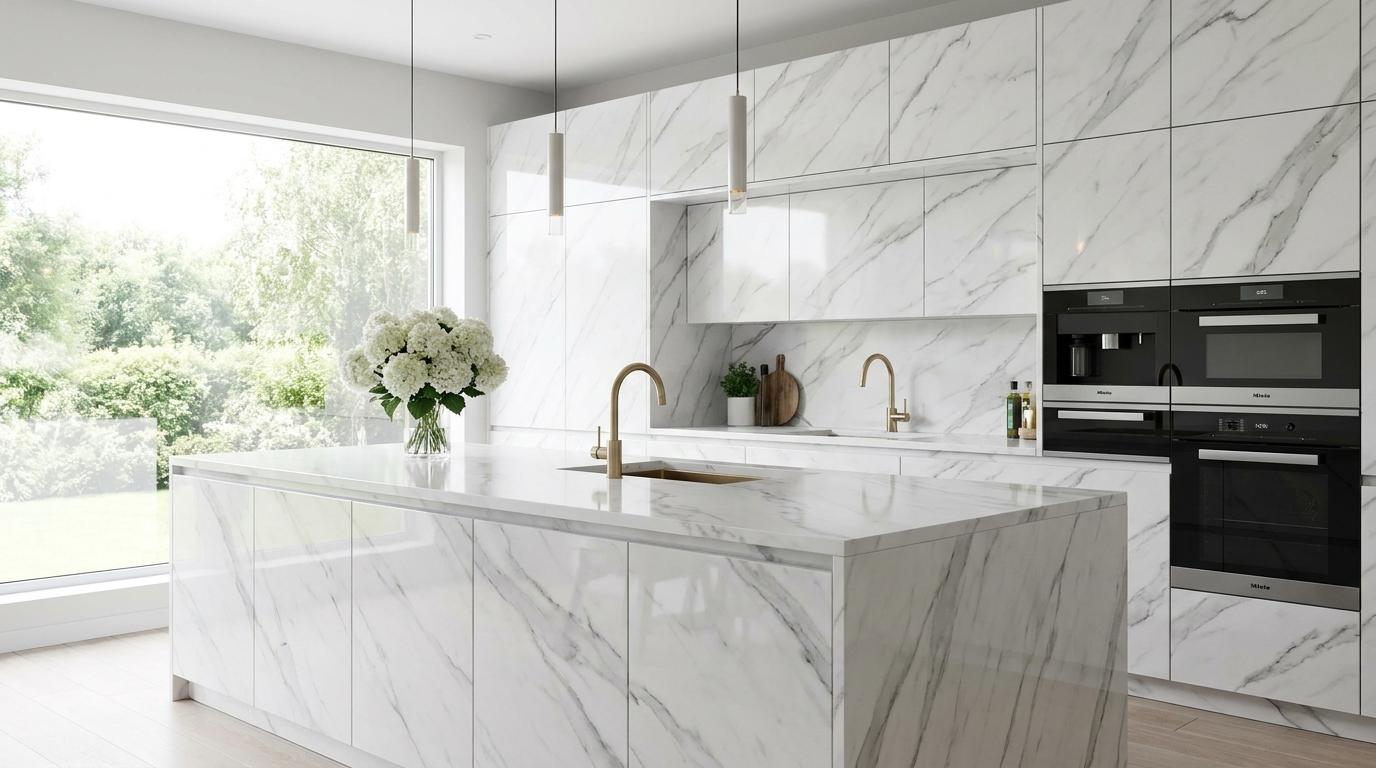
Marble has long been associated with luxury, elegance, and timeless interior design. Its distinctive veining can instantly make a room feel more sophisticated, but genuine marble can also involve significant material, installation, and maintenance considerations.
Marble vinyl wrap offers another way to achieve a similar visual effect. Modern architectural films can reproduce the appearance of stone across suitable interior surfaces without replacing the underlying material. This makes them useful for renovation projects where appearance matters but extensive construction is undesirable.
From kitchen cabinets and doors to walls, reception counters, and furniture, marble effect film can refresh an existing interior with relatively little disruption.
What Is Marble Vinyl Wrap?
Marble vinyl wrap is a decorative adhesive film designed to give an existing surface the appearance of marble or another stone finish. Depending on the product, it can feature realistic veining, gloss levels, textures, and colour variations that imitate natural materials.
Architectural finishing systems such as 3M DI-NOC demonstrate how far this technology has developed. The range includes hundreds of stone, wood, metal, and other surface designs, with films designed for interior walls, doors, cabinets, columns, and other surfaces.
Unlike a solid marble slab, the film adds a very thin decorative layer to the existing substrate. The result depends heavily on the quality of the film, the original surface, and the installation technique.
For a professional finish, installers normally prepare the surface carefully before applying the film. Dust, grease, damage, rough textures, and loose coatings can affect adhesion and may remain visible through the finished wrap. 3M's installation guidance specifically stresses proper surface preparation and adhesion testing before application.
Why Choose Marble Vinyl Wrap?
One of the biggest attractions is the ability to change the appearance of an existing surface without removing it. This can make a renovation project faster and less disruptive than conventional replacement work.
Creates a Luxury Stone Appearance
Marble patterns work particularly well in modern interiors because they can add visual depth without overwhelming the rest of the design. White marble with subtle grey veins creates a clean appearance, while darker stone patterns can give furniture, counters, or feature walls a more dramatic character.
High-quality architectural films are designed to imitate natural materials rather than simply print a generic marble picture. 3M, for example, describes its DI-NOC finishes as reproducing the appearance of natural stone and offers matte as well as other surface effects.
Reduces Renovation Disruption
Traditional stone installation can involve removing an existing surface, transporting heavy materials, cutting slabs, and carrying out additional construction work.
A surface film can be applied directly to suitable existing substrates. 3M states that its architectural finishes support remodel and reuse projects while reducing downtime, construction waste, and disruption compared with more traditional renovation approaches.
Offers More Design Flexibility
Marble is available in many natural variations, and vinyl manufacturers can offer additional interpretations through different colours, patterns, finishes, and textures.
This allows designers to choose a look that suits a specific room rather than being restricted to the available stone slab.
Where Can Marble Vinyl Wrap Be Used?
Marble effect vinyl can work across many interior applications, provided the selected film is suitable for the substrate and environmental conditions.
Kitchen Cabinets
Kitchen cabinets are one of the most noticeable applications. A dated cabinet finish can make an otherwise attractive kitchen look old-fashioned. Wrapping suitable doors and panels with a marble pattern can create a completely different appearance without replacing the cabinetry.
The film can also coordinate with existing handles, worktops, splashbacks, and wall colours.
Walls and Feature Areas
A marble wall can become a strong focal point in a home, office, hotel, reception area, or retail environment. Instead of installing heavy stone, designers can use a decorative film on a suitable prepared wall.
Architectural finishing products can also cover columns and other complex interior surfaces. 3M lists walls, columns, doors, cabinets, and curved surfaces among suitable applications for its DI-NOC system.
Doors and Furniture
Interior doors, desks, wardrobes, reception furniture, and storage units can also benefit from a marble finish. Using the same pattern across several surfaces can create a coordinated interior scheme.
Countertops
Countertops require more careful consideration because they experience frequent contact, abrasion, heat, moisture, and cleaning. A film should only be used when the manufacturer specifically approves it for the intended surface and conditions.
For busy commercial areas, abrasion-resistant architectural films may be more appropriate. 3M offers an abrasion-resistant DI-NOC range designed for demanding interior locations such as counters, tables, doors, shelves, elevators, and other high-traffic surfaces.
Marble Vinyl Wrap vs Real Marble
The biggest difference is that real marble is a natural stone while vinyl wrap is a thin decorative surface finish.
Real marble offers genuine stone texture, weight, and natural variation. It can also require specialist fabrication and installation. Marble wrap focuses primarily on appearance and renovation efficiency.
| Feature | Marble Vinyl Wrap | Natural Marble |
|---|---|---|
| Appearance | Realistic printed stone effect | Genuine natural stone |
| Weight | Very lightweight | Heavy |
| Installation | Relatively quick | More involved |
| Surface removal | Often unnecessary | Usually required for replacement |
| Design choices | Wide range of patterns | Natural slab availability |
| Maintenance | Generally simple | Requires appropriate stone care |
| Renovation disruption | Lower in suitable applications | Usually higher |
The best choice depends on the project. A luxury bathroom built around authentic natural stone may require genuine marble, while a commercial refurbishment may benefit from a lightweight decorative film.
How to Choose the Right Marble Wrap
Not every marble vinyl film offers the same performance. Before purchasing, consider the surface, location, expected wear, and desired appearance.
Look for:
- A realistic marble pattern with convincing veining
- A suitable adhesive system
- Compatibility with the intended substrate
- Appropriate durability for the application
- Resistance to everyday cleaning where required
- Matte, satin, or gloss finish options
- Manufacturer installation guidance
- Warranty and technical documentation
Products from established manufacturers can also provide technical data and professional installation resources. 3M provides product specifications and installation guidance for DI-NOC, while Avery Dennison maintains architectural film resources and installer support.
How Is Marble Vinyl Wrap Installed?
A professional installation generally begins with inspecting and preparing the surface. Any holes, loose material, peeling coatings, grease, dust, or significant imperfections need attention before the film is applied.
The basic process normally involves:
- Surface inspection: Check that the substrate is suitable and stable.
- Cleaning: Remove dirt, grease, dust, and contaminants.
- Surface preparation: Repair imperfections and create a smooth application area.
- Adhesion testing: Test the film on the specific substrate where required.
- Film positioning: Measure and position the material carefully.
- Application: Apply the film while controlling tension and avoiding trapped air.
- Edge finishing: Trim and secure edges around corners, handles, and joins.
- Final inspection: Check seams, corners, edges, and overall pattern alignment.
Surface preparation matters particularly on walls. 3M's guidance notes that imperfections in a prepared wall can show through the finished film, which is why a smooth substrate and properly cured primer or sealer are important.
How to Maintain Marble Vinyl Wrap
Maintenance is generally straightforward when the correct product has been selected for the application. Regular dusting and gentle cleaning can help preserve the appearance.
Avoid aggressive chemicals, abrasive pads, or cleaning methods that the film manufacturer does not recommend. 3M's DI-NOC guidance recommends mild cleaning methods and warns against strong solvents and abrasive products.
High-use areas may need a film specifically designed for increased abrasion resistance. Choosing the correct specification at the beginning can help maintain the appearance for longer.
Common Mistakes to Avoid
Poor preparation is one of the most common causes of an unsatisfactory result. Applying film over a dirty, damaged, damp, or heavily textured surface can produce visible imperfections or adhesion problems.
Another mistake involves choosing a film based only on its appearance. A beautiful marble pattern may not be suitable for a countertop, wet area, exterior application, or high-traffic commercial environment.
Pattern alignment also matters. Marble naturally contains flowing veins, so poorly positioned joins can make a wrapped surface look artificial. Professional installers can plan the cuts and orientation to create a more convincing visual result.
Frequently Asked Questions
Is marble vinyl wrap waterproof?
Some films can tolerate moisture, but waterproof performance depends on the specific product, installation, edges, seams, and substrate. Always check the manufacturer's application guidance before using it in wet areas.
Can marble vinyl wrap be applied to kitchen cabinets?
Yes, suitable architectural films can be used on compatible cabinet surfaces. Proper cleaning, preparation, adhesion, and edge finishing are important for a durable result.
Does marble vinyl wrap look like real marble?
High-quality architectural films can create a highly realistic stone appearance. The quality of the printed pattern, texture, finish, and installation strongly influences the final result.
Can marble wrap be removed?
Some products are designed to be removable, while others use stronger permanent adhesive systems. Removal characteristics vary by product and substrate, so the manufacturer's specifications should be checked before installation.
Can it be used on countertops?
Some specialized films are suitable for countertop applications, but not every architectural film is designed for heavy abrasion, heat, moisture, or food preparation areas. Choose a product specifically approved for the intended use.
How long does marble vinyl wrap last?
Service life depends on the product, substrate, installation quality, cleaning routine, location, and level of wear. High-traffic areas generally require more durable film specifications.
Is professional installation necessary?
DIY application may work on small, flat projects, but professional installation is preferable for large surfaces, corners, complex shapes, commercial interiors, or high-value projects. Manufacturers such as 3M provide training and preferred installer programs for architectural finishes.

 English
 Arabic
 French
 Spanish
 Portuguese
 Deutsch
 Turkish
 Dutch
Dutch
 Russian
 Romaian
 Portuguese (Brazil)
 Greek
Greek