


The Game That Runs on Real Time, Fake Relationships, and Daily Chaos
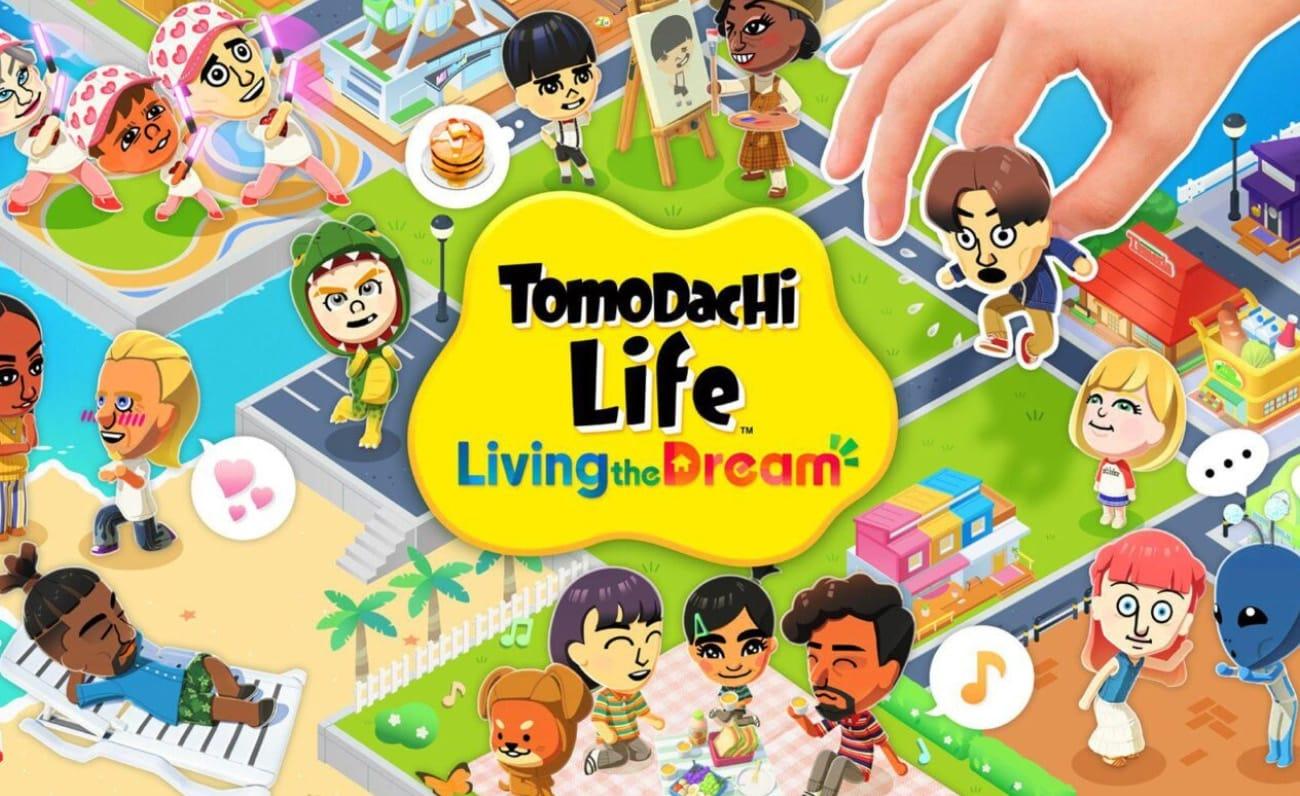
There is a moment in Tomodachi Life: Living the Dream when a MiiNews bulletin interrupts whatever you were doing to announce, in the most serious local-news tone imaginable, that one of your residents got hiccups. It is one of the game's signature micro-moments, and it happens before you have even unlocked half the island's facilities. That gap between the absurdity of the content and the straight-faced delivery of MiiNews is the closest thing to a design thesis the game has — and once you understand that, the rest of the experience clicks into place.
Mii Creation and the Personality System in Tomodachi Life: Living the Dream
The two creation paths — "From Scratch" and "Get Help" — lead to meaningfully different results. From Scratch places full control in your hands, letting you select face types, hairstyles, eye shapes, and use the face paint feature to draw directly onto a Mii's face. Get Help asks a series of questions about the character's appearance and generates a starting point for you to refine. The face paint option is genuinely new to this entry and has become one of the most-shared aspects of the game online, with players designing everything from simple freckles to elaborate portraits that cover the entire face.
Personality assignment during creation is not decorative. The game uses personality type to determine how a Mii responds to requests, how quickly they form friendships, how they behave as roommates, and what kinds of Happiness Seeds they generate. Two Miis with compatible personalities placed in the same house will generate more daily interactions than two Miis who are mismatched — and "personality-stacking" in roommate configurations is something the player community started documenting within the first two weeks of the game's release.
Players who invest time in understanding personality dynamics early find that the Wishing Fountain levels faster and more facilities appear before the 10-hour mark. Players who treat Mii creation as purely cosmetic still have a good time, but they tend to miss a layer of control that makes Tomodachi Life: Living the Dream feel less passive and more like a social experiment you are actively steering. New players are often surprised to learn that a Mii's voice — adjustable during creation — also affects how other Miis react to them in specific event types.
The Shops That Shape Daily Play in Tomodachi Life: Living the Dream
The Marketplace is the most time-sensitive location on the island. Items rotate during the day, and a mystery bag option appears exclusively at night before disappearing by morning. Players who check the Marketplace only once per day during afternoon hours will miss both the morning rotation and the nighttime mystery bag, which is one of the most common missed opportunities in the early game. The community recommendation — echoed across guides and Discord servers — is to check the Marketplace at three points: morning, evening, and just before midnight if you can manage it.
T&C Reno updates with a new Weekly Special every Monday, making it the only shop tied to a real-world day of the week rather than a time-of-day cycle. This means players who miss a Monday special cannot purchase it until the following week. Interior sets from T&C Reno affect the visual mood of Mii living spaces, and certain themed room configurations — a supermarket-style interior, a library setup — trigger unique reactions from the Miis who live in them. Whether these reactions are random or personality-driven is something the player community has been testing and debating since launch.
Foto-Tomo, the photography facility, requires 10 total island friendships to unlock. Once open, it lets players stage photo scenes for their Miis, which feed back into the island's visual record and occasionally appear in MiiNews segments. Serious island builders tend to treat Foto-Tomo as a vanity feature, while players who focus on storytelling through their Mii cast use it as a primary tool for documenting relationship milestones — a wedding, a first friendship, a rivalry that finally resolved.
Advancing Through the Island Without Burning Out
Tomodachi Life is not a game you can binge. This is something the game itself communicates by design — requests only appear at certain times, the Marketplace resets on a real-world clock, and Miis follow their own daily schedules including sleep. Players who try to force progress by spending four straight hours in the game will exhaust the available interactions and sit in a quiet island waiting for something to happen. The game is built for bursts of 20 to 40 minutes, ideally spread across different times of day.
The Wishing Fountain is the clearest guide to whether you are progressing. Depositing Happiness Seeds levels the fountain, and each level unlocks something new — an island decoration, an item category, a new Palette House Workshop option. Players who check the fountain regularly and deposit Seeds as they accumulate will see their island visibly change over time. Players who ignore the fountain for days find that their island feels static even when they have a large number of residents, because the items and structures that make the environment feel alive are gated behind fountain levels.
By the time the Tomoria Café opens at 8 residents, the island begins to feel self-sustaining. Miis start generating enough events on their own that daily check-ins rarely go without something worth watching. This is the phase where the game's reputation for producing unexpected moments — a Mii falling for someone completely incompatible, a roommate conflict that spirals into an island-wide social realignment — starts to live up to its description.
Island Layout and the Quik Build System
Quik Build is the tool that lets players move houses and shops anywhere on the island, and it is consistently underused in the early game. The system matters because spatial proximity in Tomodachi Life: Living the Dream is not just aesthetic — Miis interact more frequently with residents and facilities that are physically close to them on the island map. Placing T&C Reno near residents who frequently request room changes shortens the lag between requests and resolutions. Positioning high-compatibility roommate households near the Wishing Fountain increases the rate at which Happiness Seeds flow back into progression.
Island layout also affects how often spontaneous outdoor interactions occur. Miis do not just stay in their homes — they walk around, notice each other, and trigger conversations based on proximity. Players who arrange the island with these interactions in mind describe a noticeably busier and more entertaining experience than players who place buildings randomly. The Mii Ant Farm community nickname for the game comes directly from this: once you understand that Miis respond to their spatial environment, the whole island starts to look like something you are deliberately designing rather than passively observing.
What Long-Term Play in Tomodachi Life: Living the Dream Reveals
Relationships in Tomodachi Life: Living the Dream can develop one-sidedly — a mechanic the game introduces quietly and that surprises a lot of players. A Mii can hold a one-sided friendship or romantic interest toward another who does not reciprocate, and the game tracks this asymmetry through the relationship system. Handled carefully, it creates dramatic tension. Handled poorly, it leads to falling-outs that knock relationship gauges back significantly. Long-term players who have watched their island through multiple relationship cycles describe this asymmetry mechanic as one of the most interesting additions to the series, even when it produces frustrating outcomes.
Reaching 70 residents — the maximum island population — is a long-term project that requires consistent daily play over many weeks. Players who hit that number report that the density of simultaneous events becomes genuinely overwhelming in the best possible way: multiple Miis proposing in the same week, roommate conflicts occurring in three different households at once, and MiiNews running out of broadcast time before it can cover everything that happened that day. The game transforms at that population level from a quiet social simulator into something much louder and considerably less predictable.
FAQ: Tomodachi Life: Living the Dream
How does the Wishing Fountain work in Tomodachi Life: Living the Dream?
The Wishing Fountain is powered by Happiness Seeds, which are generated whenever you successfully resolve a Mii's request. Requests are color-coded: yellow for food and clothing needs, orange for friendship advice, pink for romantic situations, and purple for physical events like hiccups or falls. Depositing Seeds raises the fountain's level, and each new level unlocks additional island items, decorations, and Palette House Workshop options. The fountain is the primary progression mechanism in Tomodachi Life: Living the Dream, and players who neglect it will find their island feeling static even with a large population of active Miis.
What happens at the Ferris wheel in Tomodachi Life: Living the Dream?
The Ferris wheel is a designated romantic date location in Tomodachi Life: Living the Dream, specifically suited for one-on-one interactions between Miis in established or developing relationships. Taking two Miis on a Ferris wheel ride raises their relationship gauge more effectively than standard proximity interactions, making it a useful tool when trying to advance a courtship or stabilize a romantic pair after a falling-out. It is one of several island locations that carry relationship-specific weight beyond their visual role in the environment.
Can you have same-sex relationships in Tomodachi Life: Living the Dream?
Yes. Tomodachi Life: Living the Dream fully supports same-sex relationships and non-binary Mii identities, which marks a significant change from the 3DS entry that was criticized in 2014 for not including this. Dating preferences and gender identity can be set during or after Mii creation, and the game's relationship system treats all configurations equally in terms of what events — proposals, the Wedding Hall, roommate dynamics — are available to them. This was one of the most-discussed aspects of the game ahead of its April 2026 launch and was broadly praised by the player community upon release.
The island you build in Tomodachi Life: Living the Dream will tell a different story than anyone else's. Your Miis' particular combination of personalities, the specific one-sided crushes that go unreciprocated, the first pair to reach the Wedding Hall, and the roommate configuration that turns three strangers into the noisiest household on the island — none of it is scripted, and none of it will repeat. That unpredictability is what kept players returning to the 3DS game for years, and Tomodachi Life: Living the Dream carries it forward, even if the Concert Hall is no longer there to score the chaos.

 English
 Arabic
 French
 Spanish
 Portuguese
 Deutsch
 Turkish
 Dutch
Dutch
 Russian
 Romaian
 Portuguese (Brazil)
 Greek
Greek