


Are SOC Managed Services Providers Essential for Indian Banks?
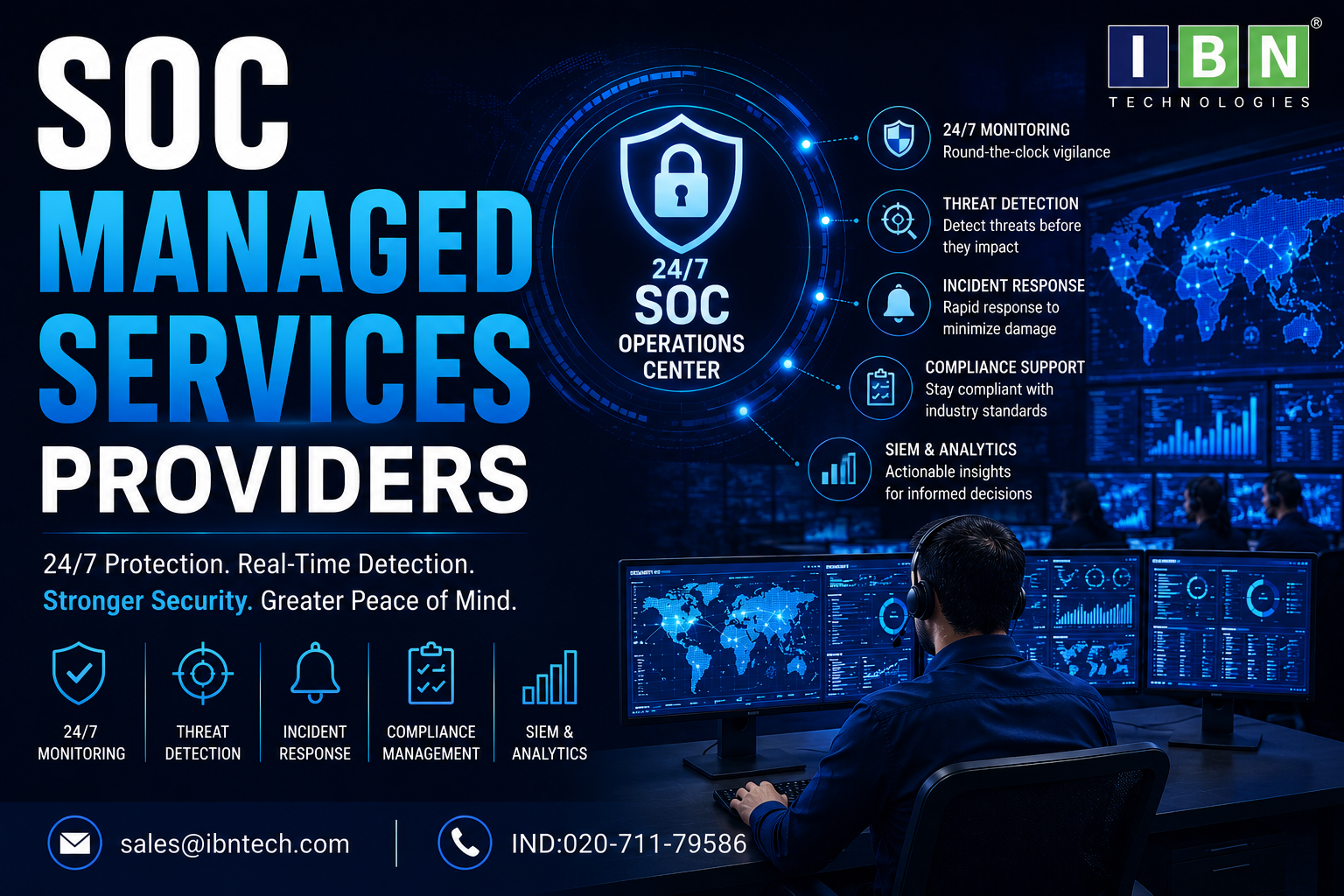
Meeting BFSI Security Needs With SOC Managed Services Providers
For Indian BFSI organisations, soc managed services providers supply ongoing security monitoring, alert investigation and incident escalation across transaction platforms, customer channels, cloud services and employee systems. They can improve the speed and consistency of cyber operations, but they do not transfer regulatory accountability away from the bank, lender, insurer or financial-services firm.
Why BFSI security cannot depend on periodic review
Financial institutions manage high-value transactions, customer data, digital identities, payment flows and sensitive operational information. A threat can begin with a compromised employee account, a fraudulent customer login or an exposed application interface, then move into systems that affect customers and business operations.
Transaction exposure: Security events can affect payment instructions, beneficiary details, account access and service availability. Monitoring must help teams recognise unusual activity before it turns into a material loss or disruption.
Complex ecosystems: Banks, NBFCs, insurers and fintech firms connect with payment networks, cloud platforms, vendors, customer applications and internal business systems. Each connection creates activity that may need security oversight.
Constant availability: Customers use digital services throughout the day. Attackers can target online banking, mobile platforms and remote-access services outside normal business hours, making continuous monitoring more practical than periodic review.
Governance pressure: Security leaders need clear incident information for senior management, risk teams and compliance owners. A well-documented investigation helps turn technical activity into a decision-ready risk assessment.
Where internal security operations can struggle
Many BFSI organisations have invested in SIEM platforms, endpoint controls, firewalls, identity tools and fraud systems. These tools are necessary, but their value depends on skilled interpretation, consistent escalation and close coordination with business owners.
Too many signals: Security platforms can generate a large number of alerts. Without regular tuning and analyst investigation, critical events may be delayed by false positives or duplicate notifications.
Siloed decisions: A fraud team may see unusual transaction behaviour while a security team sees abnormal access activity. If these signals are not connected, the organisation may miss the full picture.
Response ambiguity: A high-severity alert can require decisions from security, technology, legal, compliance, operations and customer support. Unclear roles slow containment when timing matters most.
Specialist capacity: Building continuous internal coverage requires staffing, training, shift planning, tool administration and quality assurance. These needs can compete with other transformation and service-delivery priorities.
Why does a managed soc provider for Indian BFSI compliance matter?
A managed soc provider for Indian BFSI compliance can support the operational discipline needed to monitor, assess and escalate cyber events across priority systems. The service should be designed around the institution’s risk appetite, critical services, internal controls and regulatory obligations rather than treated as a generic technology deployment.
Consider a scenario in which an employee’s privileged account signs in from an unusual location, accesses a sensitive administrative console and changes a payment-related configuration. A monitoring team can correlate the identity, endpoint and application events, then escalate the evidence to the appropriate internal owners for business-impact assessment and action.
Risk-based monitoring: Start with systems supporting customer access, payments, core financial processes, privileged administration, sensitive data and external interfaces. This allows analysts to prioritise the alerts that carry the greatest operational consequence.
Investigation workflow: Analysts should review related events, asset criticality and available threat indicators before assigning a severity level. A useful alert explains why the activity matters and what evidence supports the finding.
Controlled escalation: The provider should notify named contacts through a tested path, while internal BFSI leaders retain authority over business-impacting containment actions. This preserves governance during a fast-moving incident.
Audit-ready records: Investigation notes, timestamps, affected assets and response decisions should be recorded consistently. These records support internal reviews and improve the organisation’s ability to demonstrate an organised response.
What should BFSI leaders expect from the service?
The operating model should explain responsibilities in advance, especially for incidents that could affect transaction processing or customer communications. A service that only forwards alerts is different from one that performs triage, correlation and evidence-led escalation.
|
Operating area |
Provider responsibility |
BFSI organisation responsibility |
|
Monitoring |
Review agreed security logs and detection alerts |
Confirm critical assets, priorities and log access |
|
Investigation |
Correlate events and assess potential threat activity |
Supply application, transaction and business context |
|
Escalation |
Notify contacts based on agreed severity procedures |
Decide on containment that affects business services |
|
Incident evidence |
Document findings, timelines and analyst observations |
Maintain governance, reporting and decision records |
|
Improvement |
Recommend tuning and risk-reduction actions |
Prioritise, approve and implement control changes |
|
Service reviews |
Present alert and incident trends |
Link findings to risk, audit and management processes |
How do SOC managed services providers support incident readiness?
SOC managed services providers help create a repeatable path from initial detection to internal action. Their value is strongest when the provider, security team and business owners rehearse how a high-impact incident will be assessed and escalated.
Defined playbooks: Prepare procedures for compromised credentials, ransomware, suspicious privileged access, payment-system anomalies, data exposure and third-party incidents. Every playbook should identify decision makers and communication owners.
Access boundaries: External analysts should receive only the access needed to investigate agreed systems. Privileged access, session recording and customer-data exposure require deliberate controls.
Joint exercises: Tabletop discussions help teams identify gaps in contact lists, approval paths and recovery procedures before an incident occurs. These exercises should include security, operations, compliance and relevant business owners.
Post-incident learning: After a significant event, teams should review detection quality, communication timing, root causes and residual risks. The resulting actions should be assigned, tracked and verified.
What compliance context should guide the engagement?
BFSI entities must establish cybersecurity operations that align with their specific regulatory classification and internal risk governance. The monitoring service should support, rather than replace, the organisation’s responsibilities for policy, reporting, control assurance and incident management.
Response structure: RBI directions state that regulated entities should have cyber incident response and recovery policies covering classification, assessment, communication, containment, timely recovery and corrective action. They also require written procedures that identify roles for internal and outsourced staff.
Reporting coordination: RBI directions call for proactive notification to CERT-In and RBI in line with regulatory requirements. A monitoring workflow must therefore ensure that a suspected event reaches the organisation’s authorised decision-makers rapidly
Forensic readiness: Significant incidents may require a clear evidence trail to support severity assessment, root-cause analysis and remediation. Log integrity, timestamps and investigation records should be planned before an event occurs.
Control improvement: Repeated alerts can reveal weak identity controls, excessive privileges, vulnerable internet-facing services or ungoverned vendor access. These findings should be channelled into the institution’s risk-treatment process.
FAQ
Can a managed soc provider for Indian BFSI compliance make RBI reports on behalf of a bank?
The bank or regulated entity remains responsible for regulatory decisions and reporting. A provider can support investigation, evidence collection and escalation so authorised internal teams can act promptly.
Do SOC managed services providers replace a bank’s internal CISO function?
No. The CISO and internal governance structure retain responsibility for cyber-risk leadership, policy, risk decisions and regulatory accountability.
Which systems should a BFSI organisation onboard first?
Start with identity services, customer-facing applications, payment and transaction platforms, privileged administration tools, critical cloud workloads and security controls protecting sensitive data.
IBN Technologies provides managed SOC, SIEM and MDR capabilities that can support continuous monitoring, threat analysis and incident-response coordination for complex BFSI environments.
Contact Us
IBN Technologies
Phone: +91 20 6768 0404
Email: sales@ibntech.com

 English
 Arabic
 French
 Spanish
 Portuguese
 Deutsch
 Dutch
Dutch
 Italiano
 Russian
 Romaian
 Portuguese (Brazil)
 Greek
Greek