


The Small Component Driving Big Reliability in Modern Machines
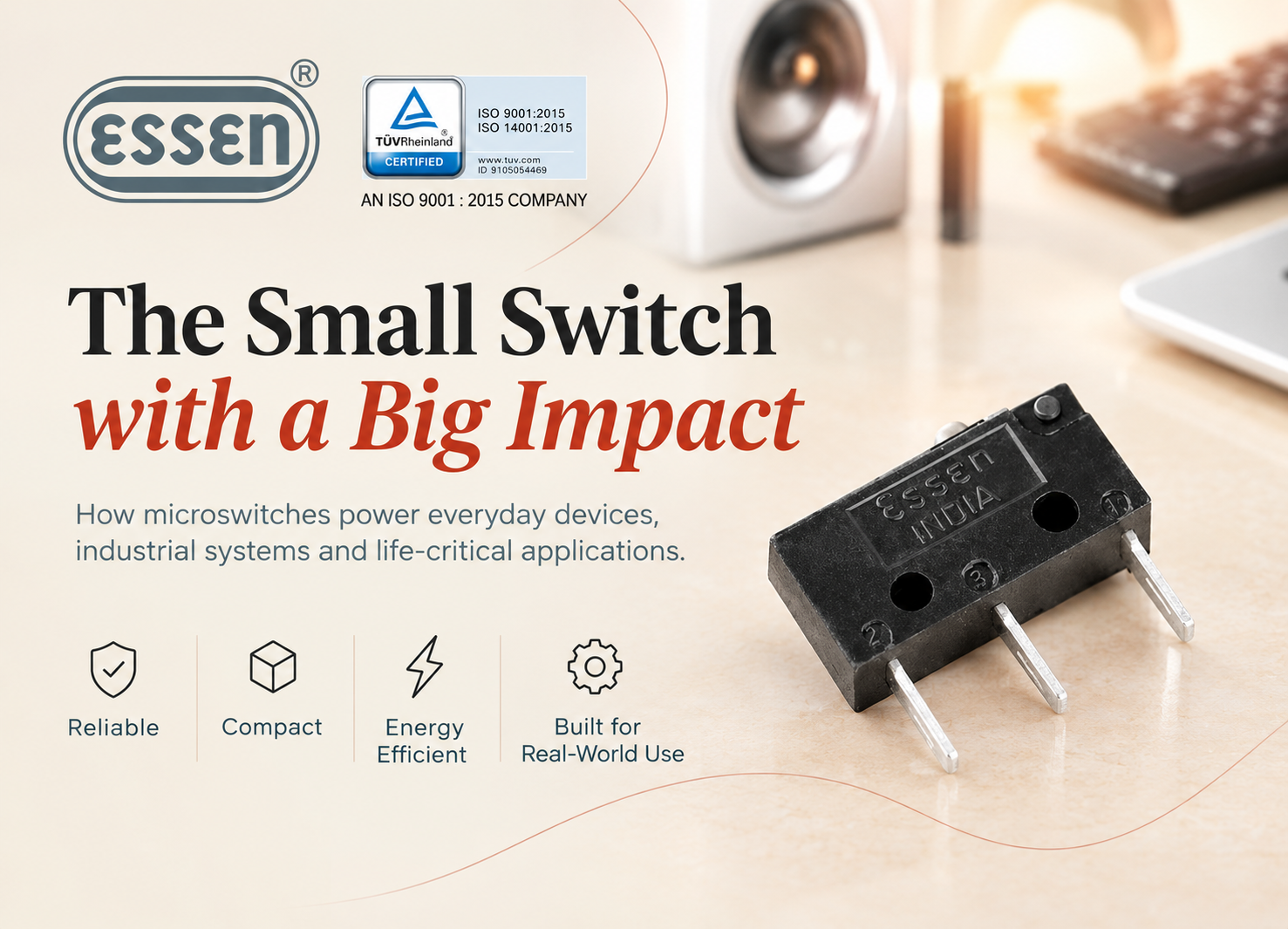
Flip a light switch, press an elevator button, or close a laptop lid, and a tiny mechanism likely just did its job behind the scenes. Microswitches are compact, spring-loaded devices that detect physical movement and translate it into an electrical signal. Despite their small size, they play a massive role in keeping modern technology responsive, safe, and efficient.
These components are everywhere. In consumer electronics, microswitches sit inside keyboards, remote controls, and household appliances like washing machines and microwaves. In industrial automation, they trigger safety interlocks and control conveyor systems. The automotive sector relies on them for everything from seatbelt sensors to power window controls. Even precision-driven fields like medical equipment depend on microswitches to ensure devices respond accurately and consistently, every single time.
So why do engineers and manufacturers keep choosing microswitches over bulkier alternatives? A few reasons stand out:
- Reliability and precision: Microswitches are built to trigger at exact points of contact, reducing the risk of false signals or missed actuations.
- Cost-effectiveness: Compared to larger switching mechanisms, microswitches offer dependable performance without driving up production costs.
- Durability: Quality microswitches are rated for hundreds of thousands, even millions, of operation cycles, making them suitable for high-frequency use.
- Compact design: Their small footprint allows engineers to fit reliable switching functions into tight spaces, something larger switches simply can't match.
Beyond the basics, microswitches bring several technical advantages that make them a go-to choice for demanding applications. They respond in milliseconds, which matters in safety-critical systems where delays aren't an option. They also draw very little power, which helps when designing battery-operated or energy-efficient products. Many models are built to withstand extreme temperatures, moisture, and dust, so they continue performing in harsh environments. And because they come in various configurations, actuator types, and contact ratings, manufacturers can customize them for nearly any use case.
Choosing the right microswitch isn't just a matter of picking the first option available. A few factors deserve attention before making a decision:
- Match the switch to your application's environmental conditions, such as temperature range, moisture exposure, or vibration levels.
- Confirm the load capacity and switching frequency align with how often and how hard the switch will be used.
- Check for relevant certifications and durability standards, especially for industrial or medical-grade applications.
- Work with a supplier that has a proven track record of quality manufacturing and technical support.
That last point matters more than it might seem. A well-engineered microswitch can mean the difference between a product that performs reliably for years and one that fails at the worst possible moment.
As machines and devices continue to shrink in size while growing in complexity, the demand for dependable, space-efficient switching solutions isn't going anywhere. Microswitches will remain a foundational component in engineering projects across industries, precisely because they solve a simple problem exceptionally well.
If you're sourcing microswitches for your next project, it's worth working with a manufacturer that understands the engineering behind them. Essen Deinki, with six decades of experience producing precision electronic components, is one option worth exploring for quality, certified microswitch solutions.

 English
 Arabic
 French
 Spanish
 Portuguese
 Deutsch
 Turkish
 Dutch
Dutch
 Italiano
 Russian
 Romaian
 Portuguese (Brazil)