


How to Teach Kids Telling Time With Worksheets
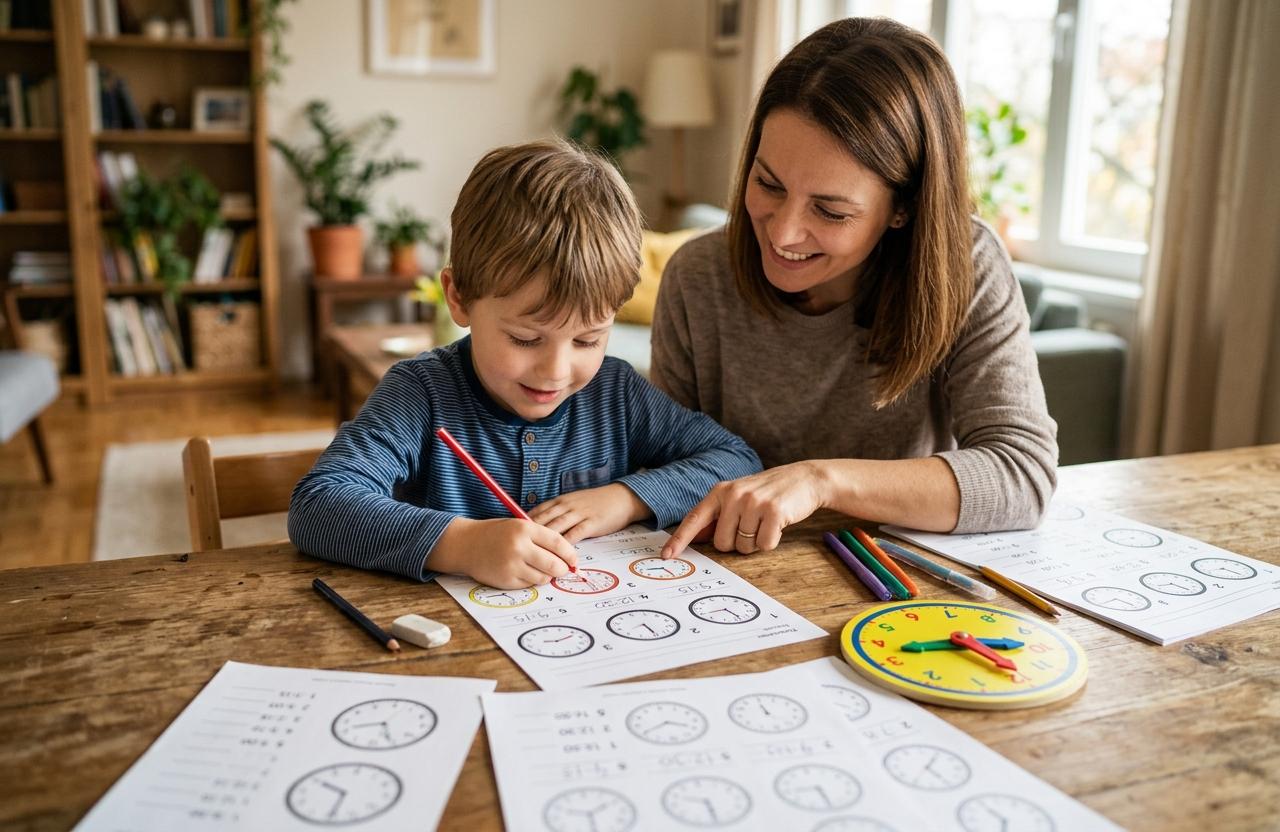
Learning to tell time is an important skill that helps children understand daily routines, schedules, and the concept of time passing. However, reading an analog clock can sometimes be challenging for young learners. Children need to understand numbers, clock hands, minutes, hours, and the relationship between different times before they can confidently read a clock.
One effective way to make this learning process easier is by using How to Teach Kids About Telling Time With Worksheets. Well-designed worksheets give children opportunities to practise identifying clock numbers, reading the hour and minute hands, matching times, and solving simple time-based activities. With regular practice, worksheets can turn an abstract concept into something more familiar and manageable.
Why Is Telling Time Important for Kids?
Telling time is more than simply reading a clock. It helps children develop practical skills that they can use every day. Knowing the time helps them understand when it is time to wake up, go to school, eat meals, complete homework, play, and go to bed.
Learning time also supports mathematical development. Children practise counting, number recognition, addition, subtraction, and patterns while working with clocks. Understanding that an hour contains 60 minutes and that a minute contains 60 seconds introduces children to basic mathematical relationships.
For these reasons, teaching children to tell time should involve both explanation and plenty of hands-on practice.
How to Introduce Time Before Using Worksheets
Before giving children worksheets, introduce the basic parts of a clock. Show them an analog clock and explain that it has numbers from 1 to 12 and two main hands.
The shorter hand represents the hour, while the longer hand represents the minutes. Explain that the hour hand moves slowly as the minute hand travels around the clock.
Start with simple examples such as one o'clock, two o'clock, and three o'clock. At this stage, focus on the hour hand and allow children to become comfortable with the numbers around the clock.
Once they understand the basic idea, introduce the minute hand and explain how each number represents five minutes when counting around the clock.
How to Teach Kids About Telling Time With Worksheets
Worksheets can make time practice more organized and engaging. Begin with simple worksheets and gradually increase the difficulty as children improve.
Start With O Clock Times
The easiest starting point is teaching whole hours. A worksheet can show several clocks with the minute hand pointing to 12. Children can identify the hour shown by the shorter hand.
For example, if the short hand points to 4 and the long hand points to 12, the answer is four o'clock.
This type of activity helps children understand the basic relationship between the clock hands without introducing too much information at once.
Introduce Half Hour Times
After children become comfortable with whole hours, move to half-hour times. Explain that when the minute hand points to 6, it represents 30 minutes.
A worksheet could include clocks showing 1:30, 3:30, 6:30, and 9:30. Children can write the correct time underneath each clock.
This activity helps them understand that the hour hand moves between numbers as time progresses.
Teach Quarter Hours
The next stage is introducing quarter past and quarter to. Children can learn that 15 minutes is a quarter of an hour and 45 minutes represents three quarters of an hour.
For example, a worksheet might show a clock at 2:15 and ask children to identify the time as quarter past two.
Another clock could show 4:45, helping children learn the phrase quarter to five.
Use Matching Worksheets
Matching activities are particularly useful for young learners. One side of the worksheet can contain analog clocks, while the other side contains digital times.
Children draw lines between the matching pairs.
For example, an analog clock showing 7:30 can be matched with the digital time 7:30. This activity helps children connect different ways of representing the same time.
Matching exercises can also include written phrases such as "half past six" and ask children to connect them with the appropriate digital or analog clock.
Include Daily Routine Activities
Children often understand time more easily when it relates to their everyday lives. Worksheets can use familiar routines to make the concept meaningful.
For example:
- School starts at 8:00.
- Lunch is at 12:30.
- Homework begins at 4:00.
- Dinner is at 7:00.
- Bedtime is at 8:30.
A worksheet can ask children to match each activity with the correct clock or arrange daily activities in chronological order.
This approach helps children see why telling time is useful outside the classroom.
Add Time Drawing Activities
Instead of only asking children to read clocks, allow them to create clocks themselves. A worksheet can provide blank clock faces and give instructions such as "Draw the hands to show 5:00."
As children become more confident, use instructions such as "Show 3:30" or "Draw quarter past seven."
Drawing the hands requires children to actively apply what they have learned rather than simply recognizing an answer.
Make Worksheets Progressively More Difficult
One of the most important principles when using worksheets is to increase difficulty gradually.
A useful progression is:
- Identify numbers on a clock.
- Read whole-hour times.
- Read half-hour times.
- Learn quarter-hour times.
- Read five-minute intervals.
- Convert analog time to digital time.
- Solve simple time problems.
- Calculate elapsed time.
Starting with advanced questions can make children feel frustrated. Worksheets should match the child's current learning level while providing a small challenge.
Use Time Word Problems
Once children can read clocks confidently, introduce simple word problems.
For example, a worksheet might ask:
"Sarah starts reading at 5:00 and reads for 30 minutes. What time does she finish?"
Children can use the clock to work out that she finishes at 5:30.
Another example could be:
"Tom leaves home at 7:30 and arrives at school at 8:00. How long does his journey take?"
These questions help children apply their knowledge to realistic situations.
Encourage Regular Practice
Learning to tell time requires repetition. Instead of completing a large number of worksheets in one sitting, provide short practice sessions regularly.
Ten to fifteen minutes of practice can be enough for younger children. Repeated exposure helps reinforce the connection between clock positions and specific times.
Parents and teachers can also use real clocks alongside worksheets. After completing an activity, ask children to find the same time on an actual clock.
Make Learning Positive and Encouraging
Children learn more effectively when they feel confident. Avoid treating mistakes as failures. Instead, use incorrect answers as opportunities to review the concept.
Praise effort and improvement rather than focusing only on correct answers. Simple encouragement can motivate children to continue practising.
You can also turn worksheets into small challenges by allowing children to complete a certain number of questions and then check their answers together.
Conclusion
Teaching children to tell time becomes easier when lessons are clear, gradual, and supported by regular practice. How to Teach Kids About Telling Time With Worksheets is an effective approach because worksheets provide structured opportunities to practise different time concepts.
Start with whole hours, then introduce half hours, quarter hours, five-minute intervals, and eventually elapsed-time problems. Include matching activities, clock-drawing exercises, and real-life examples to make learning more meaningful.
With patient instruction and consistent worksheet practice, children can develop strong time-reading skills and gain confidence using this important everyday ability.

 English
 Arabic
 French
 Spanish
 Portuguese
 Deutsch
 Turkish
 Dutch
Dutch
 Italiano
 Russian
 Portuguese (Brazil)
 Greek
Greek