


Managed SOC Services Cost for Indian Banks: A Smart Guide
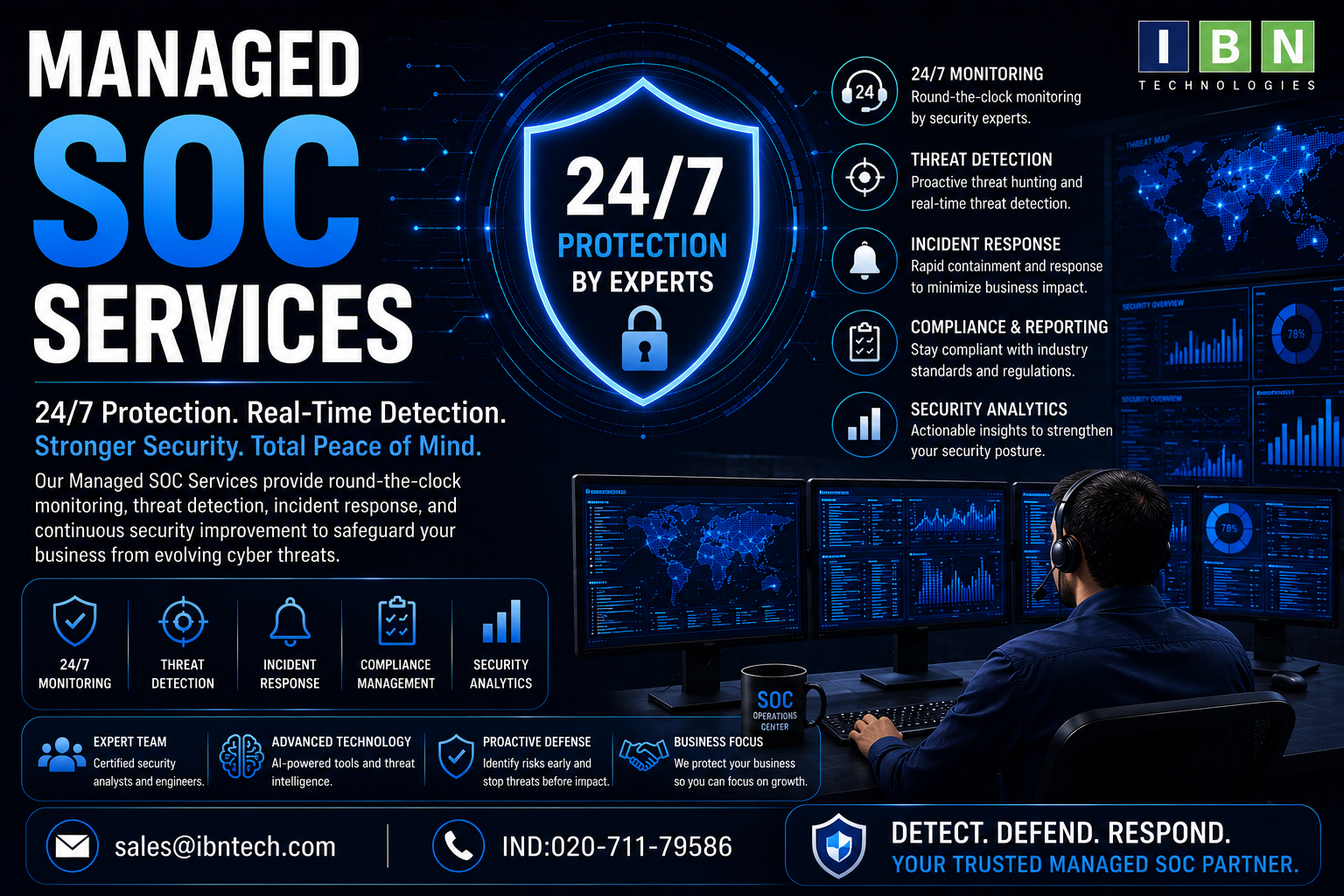
What BFSI Leaders Should Know About Managed SOC Services
For Indian banks, insurers and financial institutions, managed soc services provide structured monitoring, alert investigation and incident coordination across customer, payment, lending and administrative systems. Their cost depends on the environment covered, event volume, integration effort, service hours, response responsibilities, reporting needs and the organization’s risk and governance expectations.
What shapes the investment
Managed SOC pricing cannot be judged fairly from a single monthly figure. A small financial organization with a limited cloud environment has different operational requirements from a bank supporting branches, digital channels, payment workflows and extensive third-party connections.
The first step is to separate the service into its main cost drivers. This makes it easier to compare proposals with equivalent scope.
Monitoring scope: Identity systems, payment applications, databases, endpoints, cloud workloads, network devices and customer portals may all require different integrations and detection priorities.
Event volume: More data can require greater collection, processing and retention capacity. High volume is useful only when the information is relevant and manageable.
Coverage hours: Business-hours monitoring, extended support and continuous operations involve different staffing and escalation arrangements.
Investigation depth: Alert notification, triage, investigation, threat hunting and response coordination are separate activities and should not be treated as the same service.
Onboarding complexity: Older systems, custom applications and multiple environments may require additional planning before monitoring becomes effective.
How to compare provider proposals
When reviewing SOC managed services providers cost for Indian BFSI firms, ask what is included in the quoted scope and what may create additional charges. A credible comparison should describe operations, responsibilities and expected outputs.
Common cost categories include:
- Platform licensing and administration.
- Log collection, processing and storage.
- Integration with identity, endpoint, network and application systems.
- Analyst alert review and investigation.
- Incident escalation and reporting.
- Initial onboarding and detection tuning.
- Optional response or specialized investigation support.
Internal effort also matters. A managed provider may reduce the need to recruit every specialist role, but the institution must still provide asset information, access approvals, incident owners and business context.
Why cost must follow financial risk
BFSI leaders should not assess managed SOC services only by the number of alerts handled. The importance of an event depends on the system affected and the possible impact on customers, transactions, service availability and sensitive information.
A suspicious sign-in is more significant when it is followed by changes to payment configuration, privileged access or a customer database. Monitoring should therefore connect technical events to business processes.
Critical systems: Prioritize systems that influence payments, customer access, financial records or transaction processing.
Privileged activity: Administrative actions should be visible and investigated when they fall outside approved patterns.
Third-party access: Service providers, technology partners and cloud platforms should be included where they affect important workflows.
Evidence handling: Investigation records should support internal reviews, risk management and incident coordination.
Change visibility: New digital services and infrastructure modifications should trigger a review of monitoring coverage.
Questions for BFSI decision-makers
What affects SOC managed services providers cost for Indian BFSI firms?
The main factors are monitored assets, data sources, event volume, service coverage, analyst responsibilities, investigation depth and response authority. Retention expectations, integration complexity and reporting requirements can also affect the total cost.
A lower quotation may exclude critical systems, extended monitoring, detection tuning or incident support. Compare equivalent coverage before drawing conclusions.
Should an Indian bank choose alert monitoring or broader support?
The right choice depends on internal capability and risk exposure. Alert monitoring may suit a bank with experienced investigators, while broader support can help when internal staff need assistance with triage, analysis and coordination.
The institution should define which actions remain internal. Account suspension, system isolation and customer communication may require specific approvals.
How can BFSI organizations measure managed SOC value?
They can review visibility across critical systems, alert quality, investigation consistency, escalation timeliness and unresolved monitoring gaps. Management reporting should connect operational findings with business risk rather than focus only on activity volume.
Useful review measures include recurring false positives, critical assets without coverage, overdue remediation and lessons from significant incidents.
A cost review checklist
A procurement or risk team can use these questions when assessing proposals:
- Which environments and systems are monitored?
- Are onboarding and integrations included?
- What log retention is provided?
- Are detection rule changes included?
- How are critical alerts escalated?
- Is investigation support included?
- Which response actions require approval?
- What reports will security and compliance teams receive?
- How are additional sources priced?
- How are service reviews conducted?
- What internal resources are required?
This checklist helps distinguish genuine scope differences from headline pricing differences. It also gives finance, security, procurement and compliance teams a shared evaluation structure.
A financial services scenario
Imagine an Indian insurer using cloud applications, branch connectivity, customer portals and a central identity service. A privileged account signs in from an unfamiliar device, then accesses a database containing policy information.
A meaningful SOC investigation would examine authentication details, device context, recent access patterns and related database activity. The issue could then be escalated with a timeline, affected assets and recommended actions for the insurer’s security and application owners.
The example illustrates why monitoring cost should be considered alongside asset importance. A service that covers a low-risk test environment is not equivalent to one that monitors customer data and administrative access.
Keeping the model efficient
Start with a risk-based monitoring scope. Prioritize identity, payment, customer-facing and administrative systems before expanding to lower-priority sources.
After onboarding, review detection performance and remove avoidable noise. Improve asset context, update escalation contacts and confirm that newly introduced applications are covered.
Cost control should not mean removing visibility from critical systems. It is more sustainable to improve data quality, prioritize high-impact assets and clarify response responsibilities.
Define data ownership and access permissions at the outset. These decisions influence both operational efficiency and governance.
FAQ
Are managed SOC services more cost-effective than building a full internal SOC?
They may be, depending on staffing needs, technology ownership, service hours and the organization’s existing capabilities. The comparison should include recruitment, retention, platform management, training and internal operating effort.
Can a financial institution combine managed SOC services with its internal team?
Yes. Internal specialists can retain risk ownership and approve major actions while the managed team supports monitoring, triage or investigation. Clear handoffs are essential.
What should compliance teams check before approval?
They should review log coverage, access controls, evidence handling, retention, incident escalation, reporting and third-party responsibilities. The proposal should also explain how service changes and incidents will be documented.
IBN Technologies can help BFSI organizations assess security operations requirements and structure managed monitoring around financial risk and governance priorities.
Contact Us
IBN Technologies
Phone: +91 20 6768 0404
Email: sales@ibntech.com

 English
 Arabic
 French
 Spanish
 Portuguese
 Deutsch
 Turkish
 Dutch
Dutch
 Italiano
 Russian
 Romaian
 Portuguese (Brazil)