


How Restaurants Can Improve Their Google Maps Visibility
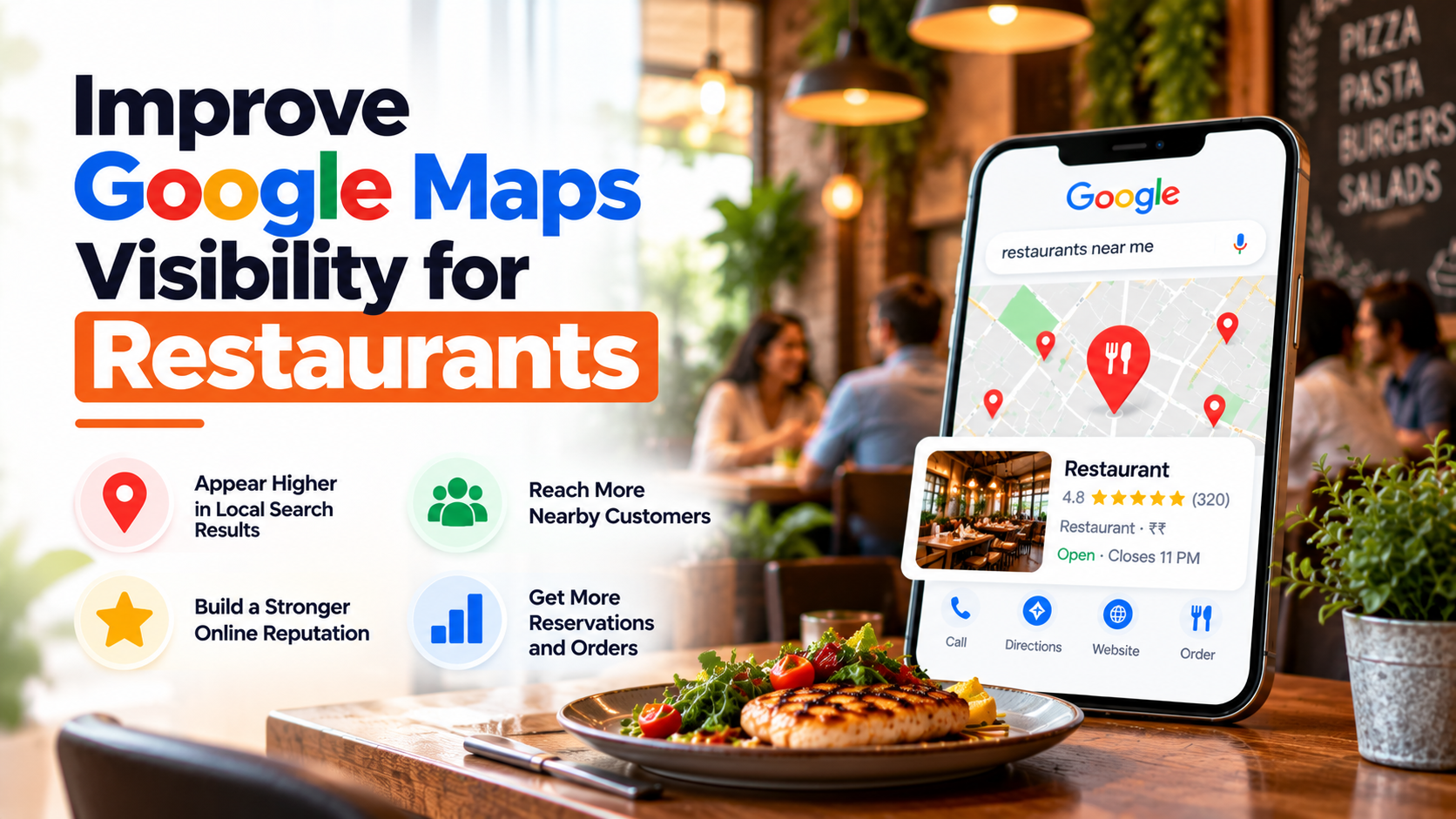
When people are hungry or planning a meal outside, they often open Google Maps to explore restaurants around them. They may search for a particular cuisine, a comfortable place for dinner, or a restaurant suitable for a family gathering. Within minutes, they can compare different options, check photos, read reviews, and decide where to go. This is why Google Maps visibility matters for restaurants that want to attract nearby customers.
However, simply listing a restaurant on Google Maps is not enough. Restaurants need accurate information, relevant content, and a well-maintained online presence to help customers discover and choose them. Professional Local SEO services can support this process through Google Business Profile optimization, keyword research, review management, and local performance tracking.
Choose the Right Restaurant Category
Google uses business categories to understand what a restaurant offers.
Choosing the most accurate primary category helps communicate the restaurant's main dining experience.
For example, a restaurant specializing in a particular cuisine should select an appropriate category rather than relying on a broad description that does not clearly represent its food.
Additional categories should only be used when they genuinely apply.
Avoid selecting unrelated categories simply because they appear popular.
Accurate categorization helps Google and customers better understand the business.
Keep Your Restaurant Details Updated
Imagine a customer finding your restaurant on Google Maps, travelling to the location, and discovering that it is closed.
An experience like this can create frustration and reduce customer confidence.
Restaurants should regularly check their opening hours, address, phone number, and other important details.
Update holiday hours, temporary closures, and changes to dining services when necessary.
If your restaurant offers takeaway, delivery, or dine-in options, make sure the information is accurate.
Reliable business details make it easier for customers to plan their visits.
Show What Makes Your Restaurant Different
Customers often compare several restaurants before making a decision.
Your Google Business Profile should help them understand what makes your restaurant worth considering.
This might include a particular cuisine, a family-friendly dining environment, outdoor seating, or other genuine features.
Use the available profile fields to describe your restaurant clearly.
Avoid exaggerated claims or repeating keywords unnecessarily.
Customers should be able to understand the dining experience you offer without having to search through multiple websites.
Upload Genuine Food and Restaurant Photos
Photos are an important part of restaurant discovery.
Customers want to see the food, seating arrangements, and atmosphere before visiting.
Upload clear photographs of your actual dishes, dining area, entrance, and other relevant features.
Use natural lighting and make sure the images represent what customers can expect.
Avoid relying entirely on stock photographs or heavily edited food images.
Update your gallery when you introduce new dishes, change the restaurant's interiors, or improve the dining space.
Authentic photographs help customers feel more familiar with the restaurant.
Make Your Menu Accessible
Many people check a restaurant's menu before deciding where to eat.
They may want to know whether their favourite dishes are available, whether there are vegetarian choices, or whether the restaurant suits their budget.
Make your menu easy to access through supported Google Business Profile features and your website.
Use accurate dish names, clear descriptions, and updated prices where appropriate.
If certain dishes are seasonal or temporarily unavailable, keep the information current.
A clear menu can help customers make decisions before they arrive.
Encourage Honest Customer Reviews
Customer reviews provide insight into real dining experiences.
People may read feedback about food quality, service, cleanliness, waiting times, and overall atmosphere.
Restaurants can encourage customers to share genuine reviews after their visits.
However, they should not offer rewards in exchange for positive ratings or pressure customers to leave particular feedback.
Respond to reviews professionally.
Thank customers for sharing positive experiences and address complaints respectfully.
Consistent review management shows that the restaurant values customer feedback and is willing to improve.
Use Google Business Profile Updates Meaningfully
Restaurants regularly introduce new dishes, seasonal menus, dining offers, and special events.
Google Business Profile updates can help communicate relevant changes to people viewing the profile.
For example, a restaurant might share information about a newly introduced menu or a genuine limited-time dining offer.
Keep updates clear, accurate, and relevant to customers.
Avoid publishing repetitive promotional messages simply to increase posting frequency.
Useful updates can make the profile more informative for people considering a visit.
Check Your Google Maps Visibility
A restaurant may appear prominently for one search but have weaker visibility for another.
For example, customers may search using a cuisine, dining preference, or restaurant category.
Regular local ranking checks can help restaurants understand how visible they are for relevant searches.
Review which search terms match your offerings and where your restaurant is being discovered.
If visibility is limited, investigate whether the profile, website, and other online information accurately describe the restaurant.
Google Maps rankings depend on factors including relevance, distance, and prominence, so no optimization can guarantee a particular position.
Improve Your Restaurant Website
Your website supports the information customers discover through Google Maps.
It should clearly display your menu, location, contact details, opening hours, and available dining services.
If you accept reservations or online orders, provide straightforward access to those options.
The website should also work properly on mobile devices.
Customers searching while travelling or planning a meal may leave if the website is difficult to use.
A simple, informative website can help visitors move from discovering the restaurant to making a decision.
Make Your Location Easy to Identify
Accurate location information is especially important for restaurants.
Check that the Google Maps pin correctly represents your business location.
If your restaurant is inside a shopping complex or another large property, provide accurate location details where supported.
Clear entrance photographs can also help customers recognize the restaurant when they arrive.
Avoid adding unnecessary keywords or promotional text to your business name.
Making the restaurant easier to locate improves the customer experience.
Monitor Customer Actions
Google Maps visibility becomes more meaningful when restaurants understand what customers do after discovering them.
Review available performance information such as calls, direction requests, website interactions, and other relevant actions.
These measurements can help identify whether customers are engaging with your restaurant's online presence.
For example, frequent direction requests may indicate interest in visiting, although they do not confirm that every person arrived.
Combine available online data with actual reservations, orders, and customer feedback to understand performance more clearly.
Build a Stronger Presence on Google Maps
Improving Google Maps visibility requires more than completing a business listing once.
Restaurants should maintain accurate information, use relevant categories, share genuine photographs, keep menus updated, respond to customer reviews, and provide convenient ways to contact or visit the business.
Regularly reviewing visibility and customer interactions helps identify where further improvements may be needed.
The goal is not simply to appear in more searches. It is to help people discover a restaurant that genuinely matches their dining preferences.
When customers can easily find your restaurant, understand what you offer, and plan their visit, Google Maps becomes a valuable part of your customer discovery experience.

 English
 Arabic
 French
 Spanish
 Portuguese
 Deutsch
 Turkish
 Dutch
Dutch
 Italiano
 Russian
 Portuguese (Brazil)
 Greek
Greek