


The Technology Behind Today's Remote-Controlled Fans
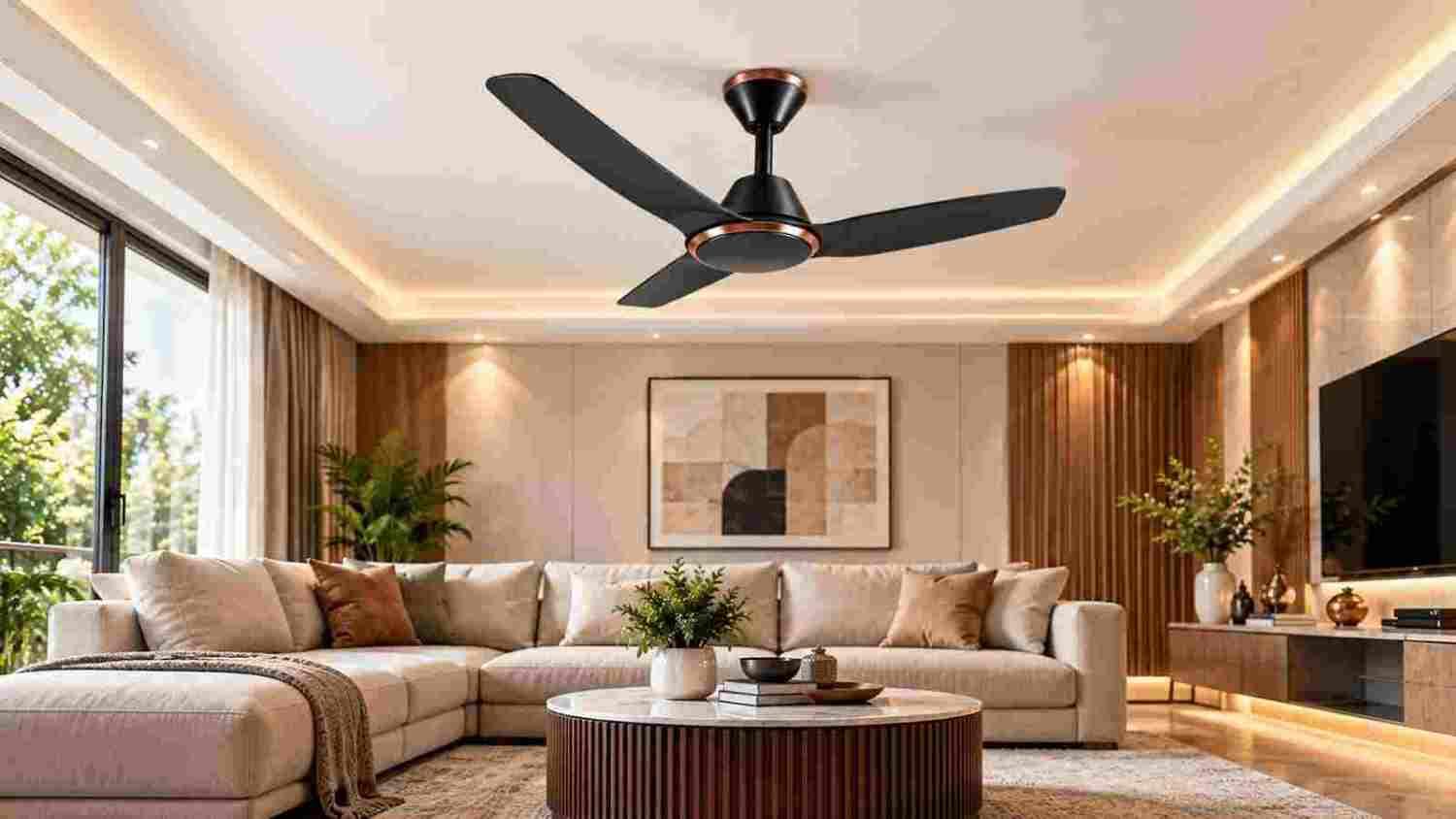
Open the canopy of a sample fan and you'll find a small circuit board where a plain switch used to sit. That board, not the motor, decides how the fan behaves when your customer needs it. Yet most quotes for Remote Control Ceiling Fans describe it in one line, if at all. Before comparing prices, find out what that line hides.
From Button Press to Blade Speed: How the Signal Travels
A button press becomes a coded signal, the receiver decodes it, and a control stage switches the motor. Every link in that chain shapes how Remote Control Ceiling Fans behave in the field, and each can be built more than one way.
Transmitter: Infrared or Radio
Infrared sends light pulses and needs a line of sight. Radio, often sub-GHz, passes through walls but can pick up interference. Which means room layout should drive the choice.
Receiver and Control Board
The control stage sets speed through methods such as triac phase control, capacitor taps, or a dedicated BLDC driver. Ask which one the model uses. Low-speed hum and canopy heat often trace back to that choice.
Power-Cut Behaviour Nobody Specifies
After a power cut, does the fan restart at its last speed, stay off, or jump to full? Boards react differently. Nobody tells you to test this at sampling, but customers notice it first.
Technical Questions a Remote Control Ceiling Fans Manufacturers Should Answer
To tell whether a Remote Control Ceiling Fans Manufacturers controls the design or only assembles it, put these five questions to them. Get answers one to three in writing before approving a sample. Without them, sampling approval proves only that the sample works.
-
Which control method does this model use? It drives noise, heat and repairs. Strong: a named method. Weak: "latest technology."
-
Are control-board parts frozen for production? A substituted part can change behaviour after approval. Strong: written notice before any change. Weak: "we use equivalent parts."
-
How does it behave at lowest speed and after a power cut? Customers notice both first. Strong: a live demonstration. Weak: "that's normal."
-
Which product-level certificate covers this model? ISO covers management systems, not fan models. Strong: a BIS licence number (IS 374 covers ceiling fans in India) you verify yourself. Weak: ISO offered as a stand-in.
-
What are the spare-board and complaint terms? A failed board is a service problem. Strong: terms agreed before the purchase order.
A supplier who swaps a board part after approval has sold you a different fan.
What Documented Technology Does for Your Business
Remote Control Ceiling Fans with a named control method give you something concrete to compare and resell.
-
Once the method is named, quotes compare like for like (procurement efficiency).
-
With parts frozen after sampling, each production batch behaves like the sample (product consistency).
-
Because power-cut behaviour is tested early, end-user surprises drop (risk reduction).
-
Agreed spare-board terms let you plan service stock (operational reliability).
-
Verified certification means fewer compliance questions at resale (risk reduction).
-
Packaging reviewed for electronics lowers transit damage claims (logistics reliability).
Rajkot to the Port: Planning the Freight Leg
We build in Rajkot, Gujarat, and Mundra and Kandla are major Gujarat ports. For buyers weighing Remote Control Ceiling Fans Manufacturers in India, the freight plan needs as much attention as the fan. Confirm routing, transit time and dispatch date at quotation stage. Ask how control electronics are protected from moisture in a container, then write it into the purchase order. Delivery timing depends on model, quantity and batch.
About Us
We've made ceiling fans since 2017 at J K Industrial Park on Mavdi-Lodhika Road, Rajkot, and we're ISO-certified. That tells you how we run our processes, not what's inside any single model. For that, ask us to name the control method of the model you're evaluating.
Send Us Your Requirement
Our MOQ depends on the model and configuration, so give us your planned quantity and we'll confirm the minimum before sampling starts. Send the sweep size, preferred remote type, supply voltage, target market, packaging requirement, delivery location and sampling requirement. Weighing us against Remote Control Ceiling Fans Dealers? Ask each the five questions above.
Conclusion
Before shortlisting, check whether the Remote Control Ceiling Fans Manufacturers on your list explain the control board as readily as the motor. If remote-operated models take a larger share of your catalogue, these answers will matter more with every order. Ask before the first sample, while changes are still cheap.
FAQs
How do Remote Control Ceiling Fans receive commands?
The remote sends a coded infrared or radio signal, and a receiver in the fan decodes it. Ask which type the model uses.
Will the fan keep its speed after a power cut?
It depends on the control board. Some restore the last speed, others switch off. Test a sample.
Can one remote operate several fans?
Only if the pairing system allows it, and some don't. Confirm how many distinct pairings exist.
How do Remote Control Ceiling Fans Suppliers in India handle component changes between lots?
A careful supplier gives written notice before changing a control-board part. Agree that rule before the purchase order.
Are remote-controlled fans noisier at low speed?
Sometimes. It depends on the control method and motor pairing, so listen at lowest speed on the sample.
Do Remote Control Ceiling Fans Dealers in India provide test documents?
Not always. A dealer may hold only what the manufacturer supplied, so ask for the manufacturer-issued certificate and verify it independently.
How is electronics damage avoided in sea freight?
Through packaging that secures the fan and protects boards from moisture. Confirm the method in writing.

 English
 Arabic
 French
 Spanish
 Portuguese
 Deutsch
 Turkish
 Dutch
Dutch
 Italiano
 Romaian
 Portuguese (Brazil)
 Greek
Greek