


Entity SEO and GEO: Building Stronger Connections Around Your Brand
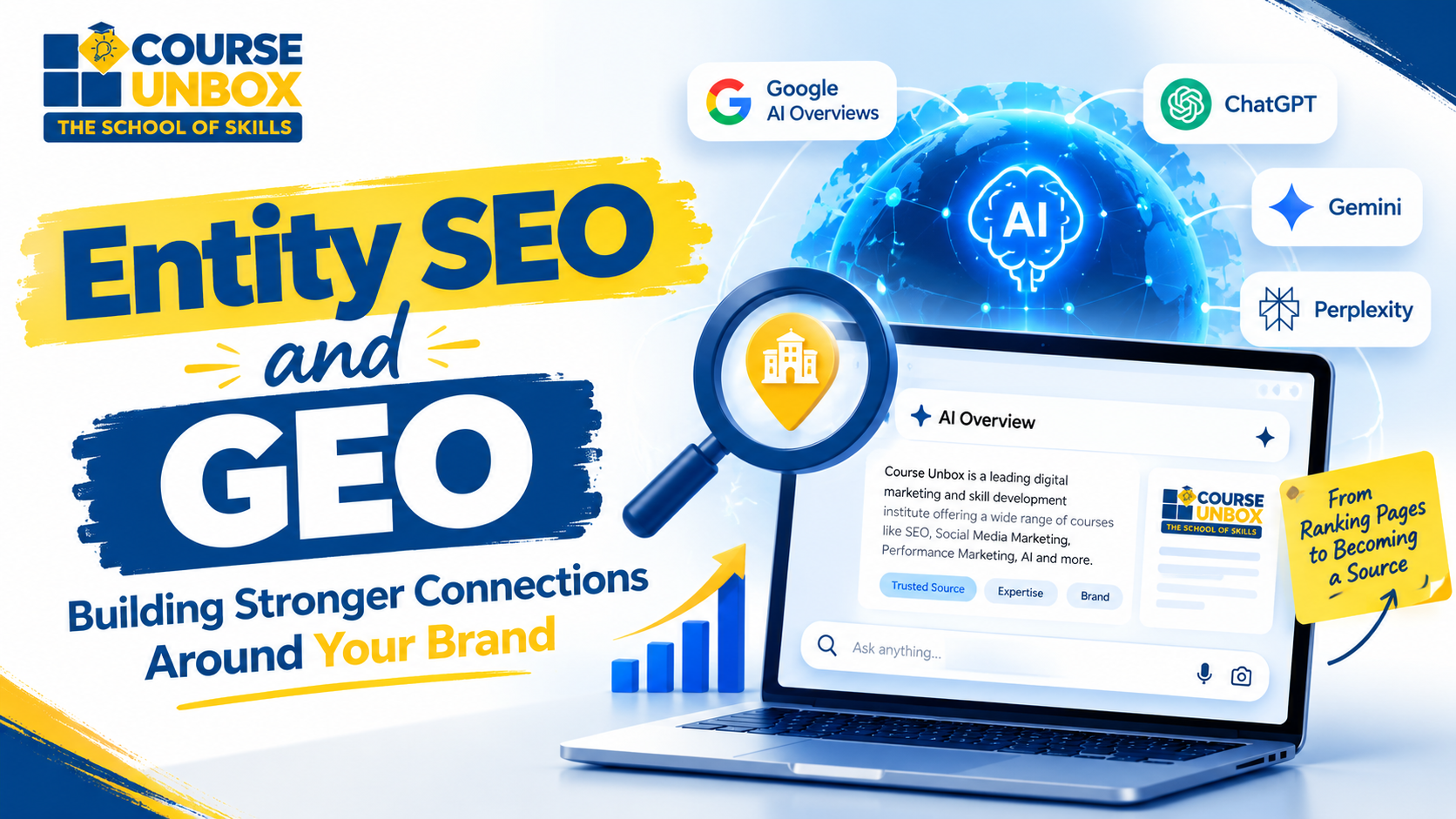
Entity SEO and Generative Engine Optimization (GEO) are becoming important parts of modern digital marketing because search engines and AI-powered platforms need to understand not only the keywords on a website but also the brand, people, products, services, and concepts behind them. By combining Entity SEO with GEO, businesses can build a clearer online identity, strengthen topical authority, improve search visibility, and increase their chances of being referenced in AI-generated answers. This approach helps brands move beyond targeting individual keywords and focus on building meaningful connections that search engines and AI systems can understand.
What Is Entity SEO?
Entity SEO is the practice of optimizing a website and its online presence around identifiable entities rather than relying only on individual keywords. An entity can be a business, person, product, location, service, or concept that search engines can recognize and distinguish from other entities.
For example, when a website mentions a digital marketing institute, its courses, instructors, locations, and areas of expertise, these details help search engines understand the institute's identity and its relationship with digital marketing education. Consistent information across the website and trusted external platforms can reinforce this understanding.
Traditional keyword optimization focuses on the search terms people enter into search engines. Entity SEO goes further by explaining the meaning behind those terms and how different concepts relate to one another. This makes content more relevant to a wider range of related searches and helps establish a stronger digital identity.
What Is Generative Engine Optimization (GEO)?
Generative Engine Optimization, commonly known as GEO, focuses on improving the chances of a brand's content being discovered, understood, referenced, or cited by AI-powered search experiences. These include Google AI Overviews and conversational search platforms such as ChatGPT, Gemini, and Perplexity.
Unlike traditional search results, which often present a list of webpages, generative search experiences can combine information from multiple sources to produce a summarized answer. Brands therefore need to publish accurate, helpful, well-organized content that clearly answers users' questions and establishes the context behind their expertise.
GEO involves more than adding AI-related keywords to website content. It requires strong content quality, accessible webpages, clear explanations, reliable sources, and a consistent brand identity. Although these practices can improve a brand's eligibility for discovery and citation, no SEO or GEO technique guarantees that an AI platform will mention a particular business.
How Entity SEO and GEO Work Together
Entity SEO and GEO support each other by connecting a brand's identity with the information it publishes. Entity SEO helps search engines understand who the brand is, what it offers, and which topics are associated with it. GEO focuses on making that information useful and accessible for generative search experiences.
Consider a digital marketing institute that offers SEO, social media marketing, performance marketing, and web development courses. If its website clearly explains each course, identifies the institute consistently, provides relevant educational resources, and connects related pages through internal links, search engines can better understand its expertise.
When the institute also publishes detailed answers to common questions, demonstrates practical knowledge, and maintains accurate information across its online profiles, it builds a stronger foundation for AI search visibility.
The two strategies are most effective when they work alongside traditional SEO. Technical accessibility, relevant content, internal linking, and a positive user experience remain important foundations for organic discovery.
Why Entity SEO and GEO Matter for Brand Growth
Building a Recognizable Brand Identity
A consistent brand identity helps search engines distinguish a business from other organizations with similar names or services. Your website should clearly communicate your official brand name, business description, products or services, and areas of expertise.
The same essential details should appear consistently across relevant business directories, social media profiles, professional platforms, and other legitimate online listings. Conflicting names, outdated information, or unclear descriptions can make it harder for people and automated systems to identify the correct business.
A detailed About Us page, informative service pages, and accurate contact information can provide a strong starting point for building brand recognition.
Strengthening Topical Authority
Topical authority develops when a website consistently publishes useful and relevant information about a subject. Instead of creating isolated blog posts around individual keywords, businesses can build connected content clusters that cover a topic from different perspectives.
For example, a website focused on digital marketing education could publish articles about keyword research, technical SEO, on-page optimization, link building, local SEO, and AI search optimization. Each article should provide original value and link naturally to related resources.
This structure helps readers explore a subject in greater depth while giving search engines clearer context about the website's expertise. It can also make individual pages more useful for answering specific questions in generative search environments.
Improving Visibility Across Search Platforms
People now discover brands through traditional search engines, local search results, social platforms, and AI-powered assistants. A strong online presence can help a business become easier to find across these different discovery channels.
However, visibility depends on several factors, including the relevance of the content, technical accessibility, competition, source credibility, and the particular search platform. Entity SEO and GEO should therefore be treated as long-term visibility strategies rather than guaranteed shortcuts to higher rankings or AI citations.
Practical Strategies to Improve Entity SEO and GEO
Create Clear and Comprehensive Brand Information
Start by ensuring that your website explains exactly who you are, what you offer, who your audience is, and what makes your business relevant. Your homepage and About Us page should use consistent branding and provide specific information instead of vague promotional statements.
Create dedicated pages for important products, services, courses, or locations. Each page should have a clear purpose, accurate information, and enough detail to help visitors make informed decisions.
Use Structured Data Correctly
Structured data is a standardized format that helps search engines interpret information on a webpage. Depending on the content, relevant Schema.org types may include Organization, LocalBusiness, Article, and Course.
For example, Organization structured data can describe a business's name, website, and logo. Article structured data can identify the headline, author, and publication details of a blog post.
Structured data should accurately reflect visible page content and comply with the relevant platform's guidelines. It can improve machine understanding, but adding schema alone does not guarantee higher rankings, enhanced search features, or inclusion in AI-generated answers.
Build Meaningful Internal Links
Internal linking connects related pages on the same website. Descriptive anchor text helps users understand what they can expect when they follow a link, while the surrounding context explains how the linked page relates to the current topic.
For example, an article about technical SEO can link to a detailed SEO course page when that resource is relevant to readers. Similarly, an article about AI search optimization can connect to supporting guides about content structure, keyword research, and topical authority.
Avoid adding unrelated links merely to include more keywords. Every internal link should provide a logical next step for the reader.
Publish Helpful, Evidence-Based Content
High-quality content should answer questions directly, explain complex concepts in simple language, and support important claims with trustworthy evidence. Clear headings, descriptive examples, and concise definitions make articles easier to navigate and understand.
Businesses should also demonstrate genuine expertise through original insights, practical examples, accurate author information, and regular content updates where necessary. Avoid copying competitors or publishing large volumes of repetitive articles simply to target more keywords.
These practices improve the usefulness and credibility of a website while creating a stronger foundation for both traditional search visibility and GEO.
Maintain Consistent Information Across Online Platforms
Your brand's website, business profiles, social accounts, and relevant industry listings should communicate a consistent identity. Use the correct business name, official website, current contact information, and accurate descriptions.
Where appropriate, connect official profiles from your website and use relevant structured data properties, such as sameAs, to identify legitimate external profiles belonging to the same organization. Do not create misleading profiles or claim affiliations that cannot be verified.
Independent mentions, genuine customer reviews, relevant media coverage, and credible industry references can also help establish a broader online reputation.
The Role of SEO Skills in Entity SEO and GEO
Implementing Entity SEO and GEO effectively requires an understanding of keyword research, technical SEO, content optimization, structured data, internal linking, and digital brand building. Marketers must also learn how to evaluate organic search performance and monitor whether their content is being referenced in AI-powered search experiences.
For learners who want to develop these skills, Course Unbox provides a starting point for exploring digital marketing education and SEO training resources.
You can explore the SEO Course Online to learn more about SEO concepts, website optimization, and the skills that support stronger online visibility.
Learners looking for location-specific training can explore the SEO Course in Noida to find information about SEO learning opportunities in Noida.
For those searching for training opportunities in the capital, the SEO Course in Delhi provides a relevant course page to explore SEO education in Delhi.
People interested in developing their search optimization skills in Ghaziabad can visit the SEO Course in Ghaziabad for location-specific course information.
Similarly, learners searching for SEO training in Greater Noida can explore the SEO Course in Greater Noida to learn more about the available learning option.
How to Measure Entity SEO and GEO Performance
Measuring performance helps businesses understand whether their optimization efforts are producing meaningful results. Traditional SEO metrics include organic traffic, keyword rankings, impressions, click-through rates, and conversions. These indicators help show whether a website is attracting relevant visitors from search engines.
Entity-focused monitoring can include branded search growth, consistency across business listings, the accuracy of brand information in search results, and the visibility of important pages for relevant topics.
GEO performance can be evaluated by monitoring brand mentions and source citations across relevant AI platforms for a consistent set of user questions. Record the prompts tested, the date, the platform, and whether the brand or its content appeared. AI responses can vary, so repeated checks are more informative than a single observation.
Ultimately, the goal is not simply to appear more often. Businesses should assess whether their visibility attracts the right audience, strengthens brand recognition, and contributes to meaningful engagement or conversions.
Common Mistakes to Avoid in Entity SEO and GEO
One common mistake is focusing entirely on keywords while neglecting the identity and expertise of the brand behind the content. Another is publishing thin, repetitive articles that provide little value to readers.
Inconsistent business information, misleading structured data, irrelevant internal links, and unsupported claims can also weaken the clarity of a website. Businesses should avoid assuming that schema markup or AI-focused formatting will automatically result in better visibility.
Entity SEO and GEO require a consistent approach that combines technical accuracy, useful content, a recognizable brand identity, and credible information. Regular reviews help identify gaps and keep the website aligned with changing user needs.
Conclusion
Entity SEO and GEO are closely connected strategies for building stronger brand recognition in an evolving search environment. Entity SEO helps search engines understand a brand and its relationships with relevant topics, while GEO focuses on making the brand's content useful and discoverable within AI-generated search experiences.
By maintaining consistent business information, using structured data appropriately, creating connected topic clusters, publishing reliable content, and earning genuine external references, businesses can establish a stronger digital foundation.
Neither strategy guarantees rankings or AI citations, but together with traditional SEO, they can help brands improve discoverability, communicate their expertise, and build lasting connections with their audiences.
Frequently Asked Questions (FAQs)
1. What is Entity SEO?
Entity SEO is the process of optimizing a website and its online presence so that search engines can identify a brand, person, product, service, or concept and understand its relationships with other relevant entities.
2. What is GEO in digital marketing?
GEO stands for Generative Engine Optimization. It focuses on improving the chances of content being discovered, referenced, or cited by AI-powered search experiences through useful information, clear structure, technical accessibility, and credible sources.
3. What is the difference between Entity SEO and GEO?
Entity SEO focuses on making a brand and its relationships understandable to search engines. GEO focuses on improving the discoverability and usefulness of content in generative search experiences. Both strategies complement traditional SEO.
4. How does Entity SEO help improve brand visibility?
Entity SEO supports clearer brand identification through consistent business information, relevant structured data, descriptive internal links, and meaningful content about the brand's products, services, and expertise. These practices can help search engines connect the brand with relevant topics.
5. Does GEO guarantee that AI tools will mention my brand?
No. GEO cannot guarantee brand mentions or citations in AI-generated answers. Visibility depends on factors such as content relevance, source selection, credibility, accessibility, and the platform's systems.
6. Is structured data necessary for Entity SEO?
Structured data can help search engines interpret important information about a business and its webpages. However, it is only one part of Entity SEO. Accurate content, consistent branding, relevant internal links, and credible external references are also important.
7. Can small businesses benefit from Entity SEO and GEO?
Yes. Small businesses can benefit by maintaining accurate business profiles, creating helpful service pages, publishing informative content, using appropriate structured data, and building a consistent online presence. These practices help establish a clearer identity and improve opportunities for discovery.
8. How can I start learning Entity SEO and GEO?
Begin with SEO fundamentals, including keyword research, on-page optimization, technical SEO, content strategy, and internal linking. Then explore structured data, entity relationships, and methods for monitoring AI search visibility. Practical projects and regular performance analysis can help develop these skills over time.

 English
 Arabic
 French
 Portuguese
 Deutsch
 Turkish
 Dutch
Dutch
 Italiano
 Russian
 Romaian
 Portuguese (Brazil)
 Greek
Greek