


Durable Rechargeable Insect Swatter for Household Markets
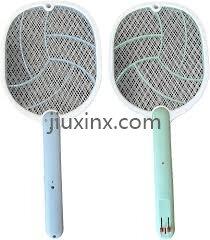
Reusable household appliances are often developed to balance operating convenience, practical maintenance, and durable construction. A Rechargeable Electric Mosquito Swatter integrates a rechargeable power source with an electronic grid, control switch, protective housing, and handheld frame to provide a reusable approach to flying-insect control. For manufacturers and wholesale buyers, product quality depends on how well the battery system, mechanical structure, electrical circuit, and user interface work together.
The external housing provides structural support and protects the internal electronics. Injection-molded plastic is frequently selected because it can offer low weight, electrical insulation, and consistent dimensions. The handle needs enough internal space for the battery, PCB, charging components, and wiring, while the frame must hold the mesh securely. Appropriate structural design can help maintain a comfortable size without compromising assembly stability.
The mesh structure performs the primary insect-control function. A multilayer arrangement can position the energized section between protective outer layers, helping reduce accidental contact with the active area. Consistent spacing and alignment are important because the mesh must maintain its intended geometry during use. The frame should support the layers evenly, and the attachment points should remain stable during routine handling.
Rechargeable power adds several engineering requirements. The battery needs to match the intended electrical system and fit securely within the handle or another protected area. Its position affects both the overall dimensions and the balance of the racket. Designers should consider battery size, internal support, wiring paths, and access to charging components at the same time as the external housing is developed.
The charging circuit manages energy transfer from a compatible external power source to the battery. Depending on the product architecture, it may include charging control and protection components. The charging interface should be firmly mounted because repeated cable insertion and removal can place mechanical stress on the connector and PCB. Its location should also make charging convenient without weakening the handle structure.
The operating circuit connects the battery to the grid when the user activates the switch. A well-designed control system should provide predictable activation while maintaining suitable insulation and electrical separation. If the model includes an indicator light, the circuit can provide visual feedback about a defined operating or charging condition. The indicator's function should be clear in the product documentation.
Battery performance influences the everyday experience of a rechargeable device. Standby consumption, operating frequency, charging behavior, and battery condition all affect practical use. Manufacturers should evaluate these factors during product development rather than assuming that a larger battery automatically produces a better appliance. Battery placement also needs to preserve reasonable weight distribution so that the racket remains manageable during operation.
Durability involves both mechanical and electrical considerations. The handle-to-frame connection should withstand routine movement, while the mesh attachment must remain secure. The switch, charging port, battery mounting area, and internal circuit supports also need appropriate structural protection. A well-designed enclosure can reduce movement of internal components and help protect them from ordinary handling impacts.
Yiwu Jiuxin Electric Co Ltd can coordinate plastic molding, mesh preparation, PCB assembly, battery installation, charging-interface integration, enclosure fitting, and final functional inspection. Standardized assembly methods can help maintain consistent product characteristics across larger production batches. For wholesale buyers, this supports more predictable quality when products are distributed across different markets.
Quality-control procedures should cover charging and operating functions. Inspection can verify charging response, switch activation, indicator behavior where applicable, and electrical performance according to the product specification. Mechanical checks can examine the enclosure, frame, button, mesh attachment, and charging interface. Visual inspection also helps identify molding defects, loose components, and assembly gaps before shipment.
Customization can help products meet different retail and distribution requirements. OEM buyers may request alternative housing colors, surface finishes, logo placement, packaging, control layouts, or charging-interface configurations. Changes involving the battery or circuit should be assessed carefully because they can affect PCB space, internal supports, tooling, assembly procedures, and electrical testing.
Ergonomic design remains important despite the additional charging components. A comfortable handle and balanced frame can make the appliance easier to move, while clearly positioned controls simplify operation. The product should remain convenient to store and carry between uses. These factors are particularly relevant to household products that may be handled frequently throughout the warmer months.
Safety should be incorporated into both development and production. The energized mesh needs suitable protective construction, and the rechargeable battery and charging electronics should remain securely enclosed. Instructions should describe proper charging, operation, cleaning, and storage. Finished products should be evaluated against their defined specifications and applicable requirements for the target market.
For distributors, rechargeable operation can provide a practical selling point when supported by accurate product information. Buyers should confirm the battery configuration, charging method, included accessories, and intended operating conditions before placing an order. Clear specifications can help align purchasing expectations with the product actually supplied.
A well-engineered Rechargeable Electric Mosquito Swatter combines reusable battery power, protective construction, ergonomic handling, and controlled manufacturing. Wholesalers, distributors, and OEM buyers seeking rechargeable household pest-control products can explore product information and manufacturing options from Yiwu Jiuxin Electric Co Ltd at https://www.jiuxinx.com.

 Arabic
 French
 Spanish
 Portuguese
 Deutsch
 Turkish
 Dutch
Dutch
 Italiano
 Russian
 Romaian
 Portuguese (Brazil)
 Greek
Greek