


The Art of Choosing Kitchen Towels: Fabric, Function, and Timeless Style
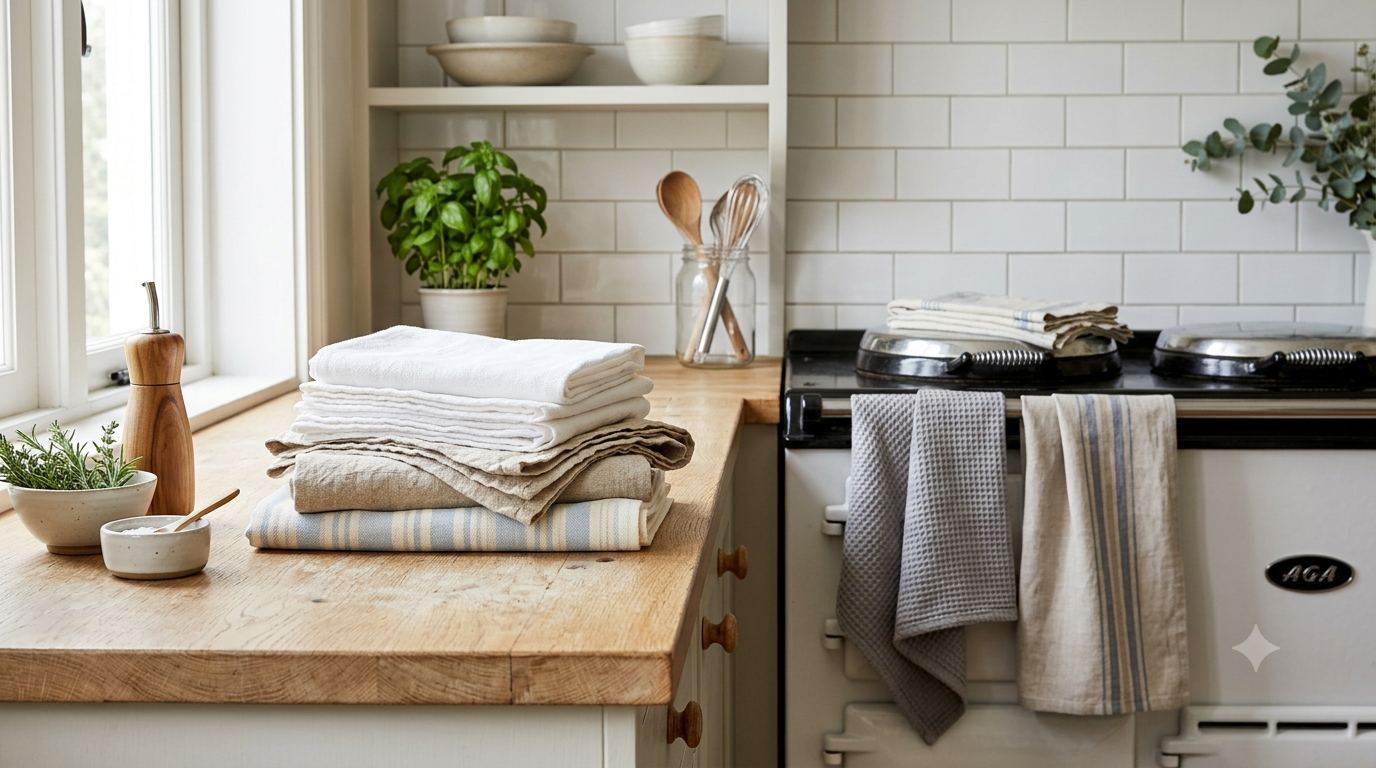
A thoughtfully designed kitchen combines practical essentials with details that make the space feel warm and inviting. From neatly arranged cookware to carefully selected table linens, every item contributes to the overall experience of cooking and entertaining. Kitchen towels are among the simplest accessories to improve, yet they play an important role in daily household routines.
The right towel can make dish drying easier, support baking activities, and add a decorative touch to countertops and shelves. However, choosing the right one requires more than selecting an attractive pattern. Fabric composition, weave, size, and care requirements all influence how a towel performs.
Understanding the differences between Cotton Kitchen Towels, linen dish towels, flour sack towels, and striped designs can help you create a collection that suits your kitchen's practical needs and aesthetic preferences.
Understanding What Makes a Good Kitchen Towel
A good kitchen towel should be appropriate for its intended purpose. Some towels are designed to absorb moisture, while others are better suited to light drying or polishing. The fabric's construction can influence how it feels, how quickly it dries, and how much lint it may leave behind.
Before buying new towels, consider your everyday activities. Do you wash dishes by hand? Do you bake regularly? Do you need lightweight towels that fit into a small drawer? Answering these questions helps you select products that offer practical value.
It is also helpful to maintain separate towels for different jobs. Towels used for drying clean dishes should not automatically be used for wiping dirty countertops or handling food-related spills. A simple system makes kitchen care more organized.
Cotton Kitchen Towels for Everyday Performance
Cotton Kitchen Towels are versatile essentials for a wide range of household tasks. Cotton is available in several weaves, allowing you to choose a texture that suits your needs.
Terry-style cotton towels have a looped construction that can absorb considerable moisture, making them useful for drying hands and managing spills. Flat-woven cotton towels are generally lighter and easier to fold, while waffle-weave designs offer a textured surface suitable for many routine drying tasks.
When selecting cotton towels, examine the stitching, dimensions, fabric weight, and washing instructions. A towel that fits comfortably in your hand and can withstand regular laundering is often a practical choice for everyday use.
Cotton also offers considerable design flexibility. White and cream towels suit classic interiors, while earthy colors and subtle patterns can complement contemporary kitchens. Choosing a few coordinated shades can make even ordinary accessories feel intentional.
Linen Dish Towels for Natural Elegance
Linen Dish Towels bring a distinctive texture to the kitchen. Made from flax fibers, linen is often appreciated for its natural appearance and relaxed finish. It works particularly well in spaces featuring wooden utensils, ceramic dishes, stone countertops, and neutral color palettes.
Depending on the weave and construction, linen towels may be suitable for light drying tasks and polishing certain glassware. Their understated appearance also makes them attractive for open shelves and carefully arranged kitchen accessories.
Linen can feel crisp when new and soften with appropriate washing and use. Following the manufacturer's care instructions helps preserve its appearance and condition.
For a balanced collection, consider combining cotton and linen rather than relying on one fabric for every task. Cotton towels can handle general household duties, while linen towels can be reserved for lighter drying jobs or decorative presentation.
Cotton Flour Sack Towels for Baking and Preparation
Cotton Flour Sack Towels are lightweight, flat-woven textiles with several useful applications in the kitchen. Their simple construction makes them easy to fold, store, and keep close to baking supplies.
Depending on their intended use, flour sack towels may be suitable for covering dough while it rests, lining a clean serving basket, drying washed produce, or polishing selected kitchen items. Their lightweight construction can be convenient when you need a larger piece of fabric without the bulk of a thick towel.
For households that enjoy baking, keeping a few dedicated flour sack towels near mixing bowls and baking trays can make preparation more convenient. Choose products that are easy to launder and appropriate for the intended task.
Food hygiene remains essential. Always use clean towels for food preparation and wash them before reuse if they have touched dirty dishes, contaminated surfaces, or raw food juices. Towels used for cleaning should be kept separate from those intended for food-related activities.
Striped Dish Towels That Never Go Out of Style
Kitchen accessories can be both useful and decorative. Striped Dish Towels offer a classic way to introduce pattern without overwhelming the room.
Navy-and-white stripes create a timeless look, while gray, cream, and beige designs complement understated interiors. Soft green or brighter shades can add contrast to a kitchen dominated by neutral cabinets and countertops.
When selecting stripes, consider the existing colors in your space. A towel that picks up a shade from your backsplash, curtains, or table linens can help connect different decorative elements.
Display clean towels on a designated rail or fold them neatly on an open shelf. For everyday use, prioritize fabric quality, practical dimensions, and straightforward care instructions alongside appearance.
How to Build a Collection That Meets Different Needs
A versatile kitchen does not require a large number of towels. A thoughtfully selected collection can cover most everyday tasks without taking up unnecessary storage space.
Consider these practical categories:
-
General household tasks: Choose cotton towels with a weave suited to drying hands and routine cleanup.
-
Light drying and polishing: Consider suitable linen or flat-woven towels for tasks where a smooth surface is useful.
-
Baking activities: Keep lightweight flour sack towels available for appropriate food-preparation tasks.
-
Kitchen styling: Use striped designs to add pattern and coordinate with other home textiles.
-
Regular replacement: Maintain enough clean towels to replace those that become damp or dirty.
Using different colors or patterns for different tasks can make the collection easier to manage. Store clean towels in a dry cupboard or drawer, and place used towels in a separate laundry container.
Caring for Kitchen Towels the Right Way
Proper care helps maintain the usefulness and appearance of reusable kitchen textiles. Because towels can collect moisture, food residue, and everyday dirt, regular laundering is important.
Wash towels as needed. Replace towels whenever they become damp, visibly soiled, or unsuitable for their assigned purpose.
Follow fabric-specific instructions. Cotton and linen products may have different washing and drying recommendations depending on their construction and finish.
Allow towels to dry thoroughly. Spread them out in a well-ventilated area rather than leaving them crumpled on the counter.
Use detergent appropriately. Follow the manufacturer's recommendations and avoid unnecessary product buildup.
Inspect the fabric regularly. Loose hems may be repairable, while towels with persistent odors, damage, or reduced performance may need to be replaced or repurposed for separate cleaning tasks.
These habits help keep your collection organized and support more effective everyday kitchen care.
Making Kitchen Textiles Part of Your Interior Design
Kitchen towels do not need to be hidden away when they are clean and ready to use. Their colors and textures can contribute to the overall design of the room.
For a minimalist kitchen, choose neutral cotton or linen towels with simple patterns. In a rustic space, natural textures and understated stripes can complement wooden surfaces and ceramic accessories. In a brighter kitchen, colored towels can introduce a small but noticeable accent.
The key is balance. Select a few designs that work with your existing decor rather than introducing too many competing patterns. Practical accessories can contribute to a polished appearance without sacrificing functionality.
Conclusion
Choosing kitchen towels becomes easier when you understand the role of fabric, weave, and design. Cotton provides versatility for everyday tasks, linen adds natural texture, flour sack towels support suitable baking activities, and striped designs bring timeless decorative appeal.
By selecting textiles according to your needs, organizing them by purpose, and caring for them properly, you can create a kitchen that is both functional and welcoming.
For homeowners exploring practical cotton and linen products, All Cotton and Linen offers a range of home textiles designed for everyday living. Visit All Cotton and Linen to discover products that complement your kitchen routines and personal style.

 Arabic
 French
 Spanish
 Portuguese
 Deutsch
 Turkish
 Dutch
Dutch
 Italiano
 Russian
 Romaian
 Portuguese (Brazil)
 Greek
Greek