


How Can I Make My Bedroom Completely Dark
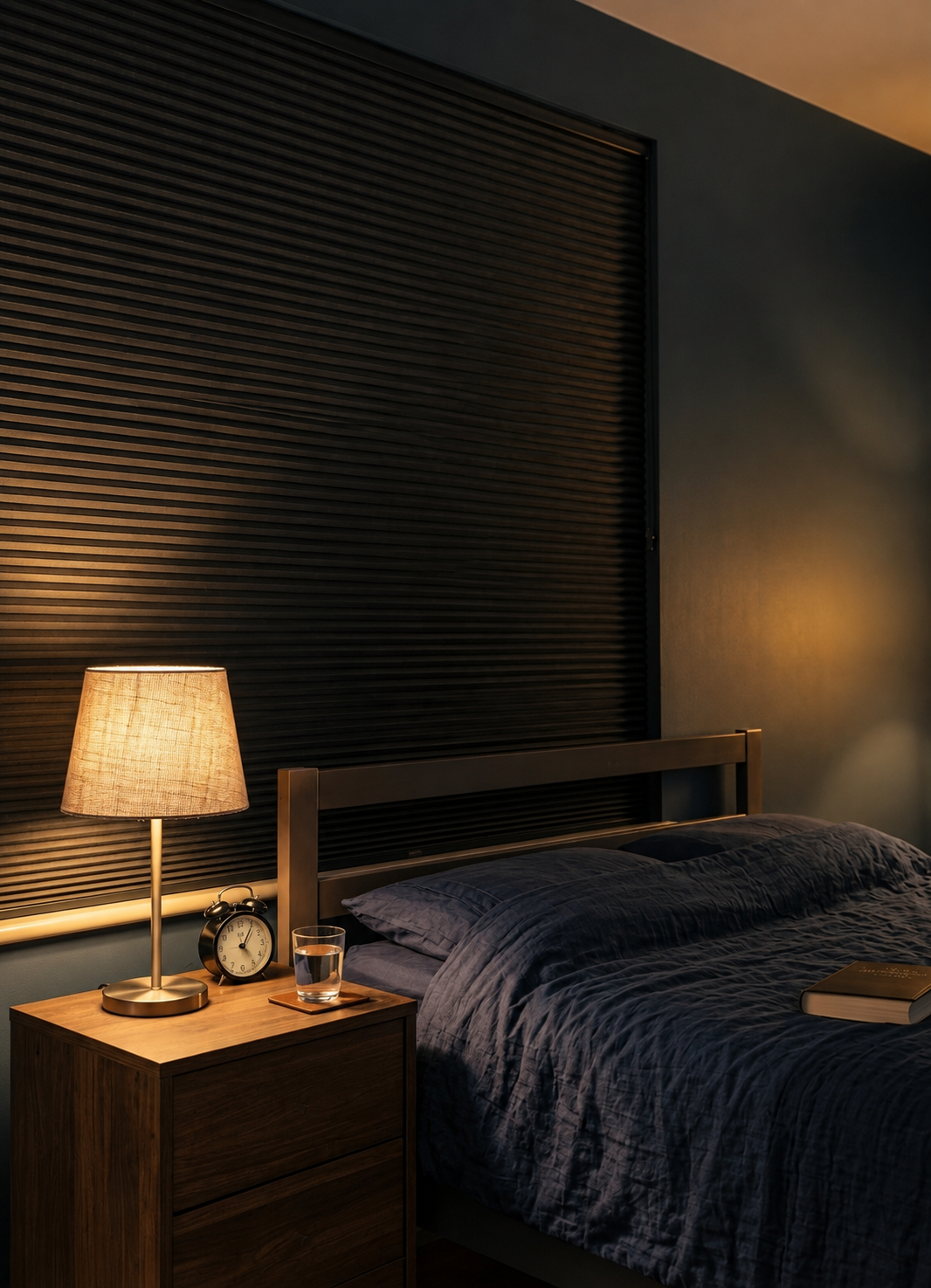
To make your bedroom completely dark, block light at the windows, seal gaps around the edges, cover smaller light sources and choose window coverings that fit your space properly. Ordinary curtains and standard blinds can reduce brightness, but light often slips through the sides, top and bottom. For a closer fit, custom blackout blinds can help limit these gaps and create a darker, more comfortable sleeping environment.
Whether you wake up when the sun rises, work night shifts or need a dark room for daytime naps, the right combination of window treatments and small adjustments can make a noticeable difference.
1. Find Out Where the Light Is Coming From
Before buying anything, identify the main sources of unwanted light. A bedroom may look dark in the evening but feel surprisingly bright at sunrise because even a narrow opening can let daylight through.
Check your room at the time when the problem is most noticeable. Look around the window frame, behind curtains, underneath the blind and near the door.
Common sources of bedroom light include:
-
Streetlights shining through uncovered parts of a window.
-
Early morning sunlight entering from the sides of curtains.
-
Gaps between a roller blind and the window frame.
-
Light coming through a glass panel in a bedroom door.
-
Standby lights on televisions, chargers and other electronics.
This simple inspection helps you focus on the real problem instead of replacing window coverings that are already doing most of their job.
2. Choose Window Coverings That Block Light Effectively
Windows are often the biggest obstacle to achieving complete darkness. The best solution depends on your window's size, position and existing fittings.
Are blackout curtains enough?
Blackout curtains are a practical starting point. Their dense fabric helps prevent daylight from passing through the material, making them useful for bedrooms facing bright streets or receiving strong morning sun.
However, the fabric itself isn't always the problem. Light can enter through the gap between the curtain and the wall, above the curtain pole or underneath the hem.
For better coverage, choose curtains wide enough to extend beyond the window, fit the pole or track close to the wall and allow sufficient fabric to cover the entire opening. A wraparound curtain track can help reduce light entering at the sides.
When should you consider custom blackout blinds?
If your existing curtains leave persistent gaps, custom blackout blinds may be worth considering. They're made to suit individual window measurements, allowing for a closer fit than many standard-sized alternatives.
The distinction matters. Blackout fabric blocks light through the material, but the overall result also depends on how well the blind covers the window opening.
Some total blackout systems use a frame or sealing mechanism to reduce light escaping around the edges. This can be particularly useful for bedrooms where even small amounts of light disturb sleep.
Made-to-measure options are worth exploring if you have unusually sized windows, sleep during daylight hours or want a more precise fit without bulky curtains.
3. Seal the Gaps Around Your Windows
Even high-quality blackout fabric can't create complete darkness if light enters around it.
Start with the top of the window. A curtain pole mounted well above the frame can leave a gap that becomes obvious when sunlight hits the room. A ceiling-mounted track or a suitable pelmet can help cover this area.
Next, look at the sides. If daylight shines through narrow spaces between the window and blind, consider a wider covering, side channels or a system designed to fit closely within the frame.
Finally, check the bottom edge. A blind that stops above the sill may allow sunlight to spread across the room, especially when the sun sits low in the sky.
Avoid assuming that a darker fabric will solve every problem. A well-fitted, moderately coloured blackout covering can perform better in practice than a darker blind with large gaps around it.
If you're renting, look for reversible options that don't require permanent changes to the window frame.
4. Make the Room Darker Without Drilling
Not everyone can drill into walls or window frames. Renters, students and people living in temporary accommodation may need a solution that leaves the property unchanged.
Several options are available:
-
Tension-mounted blackout curtains: These can work where the window structure and curtain design support a secure fit.
-
Removable blackout panels: These offer temporary coverage and can be useful for occasional daytime sleeping.
-
Portable blackout fabric: A temporary option for travel, guest rooms or changing sleeping arrangements.
-
No-drill blackout blinds: Certain systems use alternative fitting methods rather than conventional screws.
A no-drill design can be especially useful when you want a fitted appearance without permanent installation. However, check that the mounting system suits your window type and dimensions before choosing one.
For example, a renter who sleeps during the day may need more than a portable curtain if sunlight enters around all four edges. A close-fitting blackout system could address the gaps more effectively, provided the window is compatible with its installation requirements.
5. Cover Small Sources of Artificial Light
Once you've dealt with the windows, look around the rest of the bedroom. Small electronic lights can stand out when your eyes adjust to darkness.
You don't need to remove every electronic device. Start with the ones closest to your bed or directly within your line of sight.
Try these simple changes:
-
Switch off unnecessary lamps and decorative lighting.
-
Use manufacturer-approved covers for bright indicator lights where appropriate.
-
Turn device displays away from the bed or disable them at night.
-
Close the bedroom door if light from the hallway enters the room.
-
Use a door draft excluder or suitable light-blocking strip if a visible gap remains.
Never cover ventilation openings, smoke alarms or heat-producing equipment. The aim is to reduce unnecessary light without creating new safety problems.
6. Improve Bedroom Comfort Alongside Darkness
A dark bedroom can support a more comfortable sleep environment, but darkness is only one part of the picture. Room temperature, noise, bedding and your usual sleep schedule also matter.
Blackout window coverings may provide some thermal insulation by reducing heat transfer through the window area. The amount depends on the product, glazing, fit and conditions in the room. They shouldn't be treated as a replacement for suitable ventilation or proper temperature control.
Some framed blind systems also help dampen outside noise, although they won't soundproof a bedroom. If traffic or other outdoor sounds regularly wake you, consider addressing the window seals and other sources of noise separately.
For people who work nights, the combination can be particularly useful. Blocking daylight, keeping the room comfortably cool and maintaining a consistent sleep schedule can make it easier to create a suitable daytime sleeping environment.
Parents preparing a nursery may also want blackout coverage for naps. Choose child-safe window coverings, avoid accessible dangling cords and follow the manufacturer's installation and safety guidance.
7. Measure Carefully Before Choosing Made-to-Measure Blinds
A close fit starts with accurate measurements. Before ordering any made-to-measure window covering, establish whether the product fits inside the window recess or mounts outside it.
For an inside-recess system, measure the width at the top, middle and bottom, then record the smallest measurement. Measure the height at the left, centre and right, again using the smallest measurement where the manufacturer's instructions specify it.
Also check the recess depth. Some framed systems need a minimum depth to fit securely and operate correctly.
Don't automatically add extra width or height. Different manufacturers have different measuring rules, and some require the exact opening dimensions while others specify deductions or overlap.
Follow the instructions for the particular product you're considering. If you're unsure, ask the supplier to clarify the required measurements before ordering.
Getting this step right is important because a blind that doesn't fit as intended may leave gaps, even when the material itself provides excellent light blocking.
8. Test Your Bedroom After Making Changes
Once you've installed your chosen window covering, check the result under real sleeping conditions.
Wait until the room is dark outside, switch off the lights and inspect the window edges. Then repeat the check during the morning, when sunlight is most likely to enter. If you sleep during the day, test the room around your usual bedtime.
Pay attention to three things:
-
Light leakage: Can you see daylight or street lighting around the edges?
-
Coverage: Does the blind cover the entire intended opening when fully closed?
-
Everyday use: Can you open, close and secure the covering easily?
If light remains, identify its exact entry point before making another purchase. A small adjustment to the fitting may be all that's needed.
Final Thoughts: What's the Best Way to Get a Completely Dark Bedroom?
Creating a dark bedroom is less about choosing the thickest curtains and more about controlling every route through which light enters. Start by identifying the gaps, improve your existing window coverings and address smaller light sources around the room.
If standard blinds or curtains still leave unwanted brightness, custom blackout blinds can provide a more tailored approach, particularly when the design includes features intended to reduce light around the edges. No-drill options may also suit renters and anyone who wants to avoid permanent changes.
The most useful next step is to inspect your bedroom during the hours when light causes the greatest disruption, then choose a solution that addresses those specific gaps. A well-fitted covering, combined with a comfortable and consistent sleeping environment, gives you a practical starting point for better light control.

 English
 Arabic
 French
 Spanish
 Portuguese
 Turkish
 Dutch
Dutch
 Italiano
 Russian
 Romaian
 Portuguese (Brazil)
 Greek
Greek