


How to Apply for a Boiler Upgrade Grant?
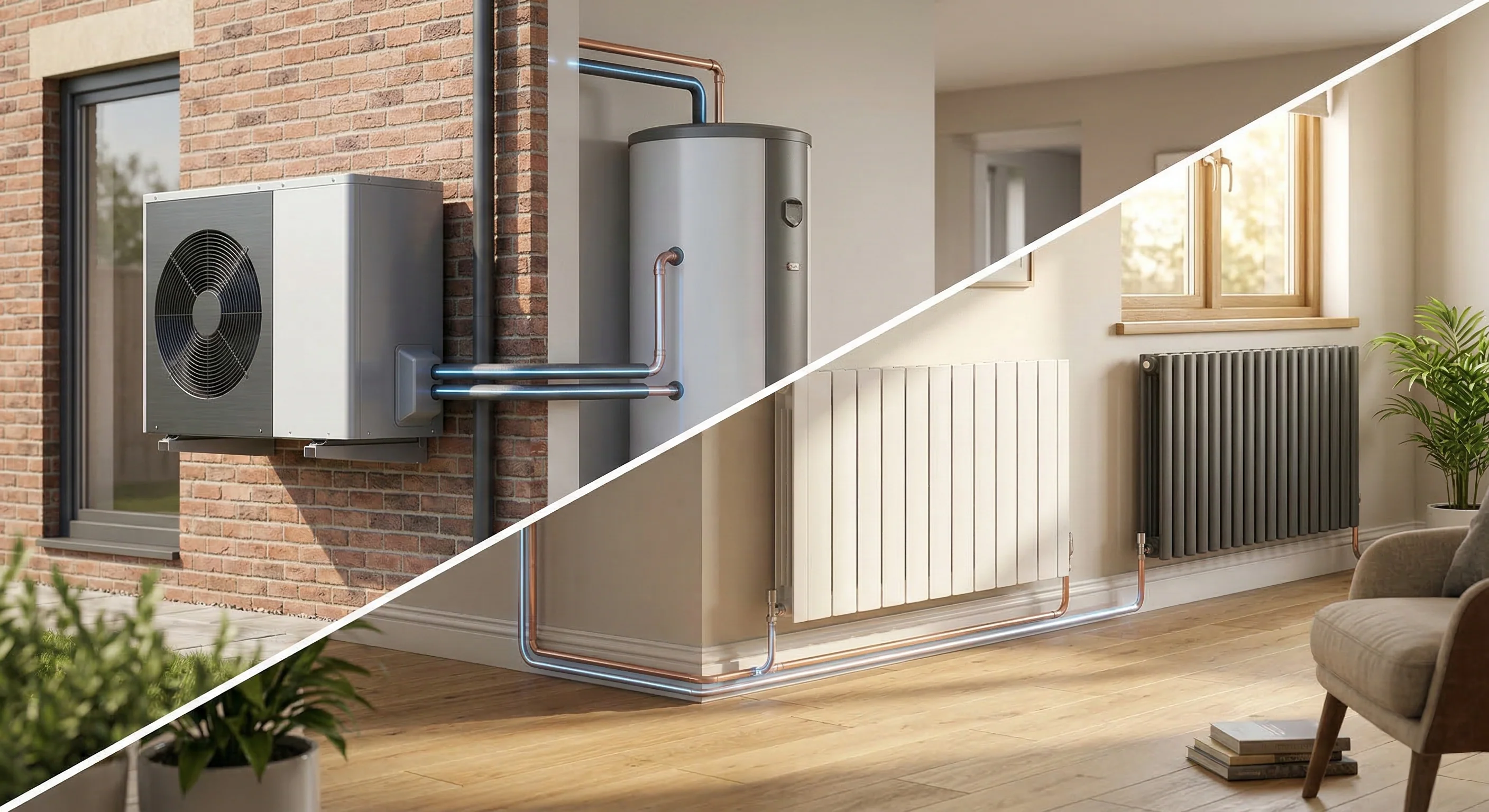
Old boilers are expensive to run. That's why a lot of homeowners in England and Wales are looking at heat pumps, and wondering whether government funding can help cover the cost.
The short answer is yes, but the process works differently from most grant schemes you've come across. You don't apply yourself. Your installer does it for you.
Here's what that actually looks like in practice.
The Installer Does the Heavy Lifting
When you work with a certified installer through the Boiler Upgrade Scheme, they handle the paperwork. You agree on the system, they submit a voucher request before any work begins, and the grant gets applied directly to your quote. You pay the remaining balance after the funding is deducted.
That's a meaningful difference from schemes where you fund the work upfront and wait for a rebate. With this one, the discount shows up before you spend anything.
One condition: the installer must hold Microgeneration Certification Scheme (MCS) accreditation. If they're not certified, the application can't go through, so check that first when comparing quotes.
What Your Property Needs to Qualify
Before an installer can submit anything, your home needs to meet a few basic requirements.
Cavity walls or lofts that could be insulated must already have been treated, or you'll need documentation confirming it isn't possible for your property. This protects against situations where a heat pump is installed in a poorly insulated home, it simply won't perform well, and the government won't fund that.
If your insulation isn't up to scratch yet, sort that first. It's an extra step, but it also reduces your heating bills regardless of which system you end up with.
Choosing the Right System
Most applicants lean toward air source heat pumps, and for good reason. They work well across a wide range of homes, don't need underground pipework, and can be installed with less disruption than other low-carbon alternatives. If you have a smaller garden or a terraced house, they're usually the more practical fit.
Ground source pumps tend to suit larger plots where digging is feasible. They're slightly more efficient in ideal conditions, but the installation is more involved and the cost gap is significant.
For rural homes off the gas grid, biomass boilers are also covered, though they come with fuel storage requirements and stricter local criteria.
Whatever you're considering, look into air source heat pump government grants early. Funding allocations shift, and getting your application in while vouchers are available matters.
Five Steps From Inquiry to Installation
-
Confirm your insulation status. Check whether your walls and loft meet requirements, or gather evidence of a valid exemption.
-
Request quotes from two or three MCS-certified installers. Ask each one to confirm the current grant value for your chosen system, it varies by type.
-
Review the quote carefully. The grant should appear as a line item reducing your total cost, not something you reclaim later.
-
Wait for voucher approval. Your installer submits the request; approval usually takes a couple of weeks.
-
Schedule the installation. Work can begin once the voucher is confirmed. The installer redeems it on completion.
That's the full arc. No government portal to navigate, no long waiting lists to join. Most of it sits with your installer.
What to Pull Together Before You Call Anyone
Getting organised beforehand saves time during the quoting stage.
-
Proof that you own the property (or your landlord's details if you're applying as a landlord)
-
Your home's Energy Performance Certificate, check the government's online register if you're not sure whether one exists
-
A rough description of your current heating setup
-
Any paperwork related to existing insulation, especially if you've had work done recently
You don't need everything in order before making first contact. But having these documents ready means installers can give you a firm quote rather than a rough estimate.
FAQs
Do I need to be on a low income to qualify?
No. The Boiler Upgrade Scheme isn't means-tested. It's open to owner-occupiers and eligible landlords regardless of income, as long as the property and heating system meet the criteria.
Can I use this funding alongside other grants?
In some cases, yes, particularly if your local council runs separate energy efficiency programmes. Ask your installer whether combining funding sources is possible for your situation.
What if the voucher expires before the work is done?
Vouchers are time-limited. If delays push the installation past the expiry date, your installer will need to reapply. Agree on a realistic schedule before work begins.
Is Scotland included?
No. The scheme covers England and Wales only. Scottish homeowners should look at Home Energy Scotland for equivalent support

 English
 Arabic
 French
 Spanish
 Portuguese
 Deutsch
 Turkish
 Dutch
Dutch
 Italiano
 Russian
 Portuguese (Brazil)
 Greek
Greek