


Satin Label vs. Printed Label | Which Is Best for Your Clothing Brand?
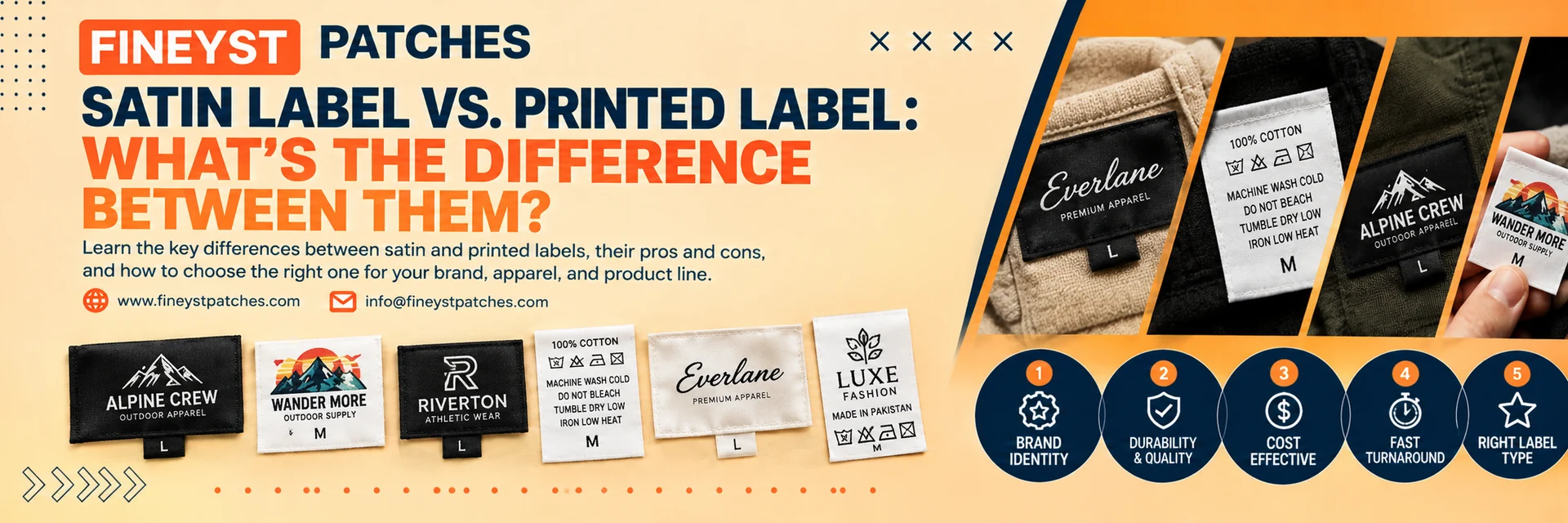
Choosing the right label is an important step in building a professional clothing brand. Labels do more than display a brand name or size. They help customers recognize your products, understand garment care instructions, and remember your brand. When deciding between satin and printed labels, it is important to consider comfort, durability, appearance, and cost.
In the Satin Label vs. Printed Label comparison, both options offer unique benefits for clothing manufacturers, fashion designers, and small business owners. Understanding their differences can help you choose the best labeling solution for your garments.
What Is a Satin Label?
A satin label is a woven or printed fabric label made from satin material, which is known for its smooth surface and slightly shiny appearance. Satin labels are commonly used in clothing, lingerie, sleepwear, baby garments, and other products where softness and a premium look are important.
These labels can feature brand names, logos, sizes, and other essential information. Their smooth texture makes them a popular choice for garments that require a comfortable finish.
Benefits of Satin Labels
1. Soft and Smooth Texture
Satin labels are known for their soft feel, making them suitable for garments worn close to the skin. They are often used in underwear, pajamas, children's clothing, and delicate fabrics where comfort matters.
2. Premium Appearance
The subtle shine of satin creates an elegant appearance that can enhance the perceived quality of a garment. Fashion brands often choose satin labels to give their products a refined and professional finish.
3. Customization Options
Satin labels can be customized with different colors, sizes, logos, and text. This flexibility allows brands to maintain consistent branding across their clothing collections.
4. Suitable for Delicate Clothing
Because of their smooth surface, satin labels are a good option for lightweight and delicate garments. Proper label design and finishing can further improve comfort.
Potential Limitations of Satin Labels
Satin labels may cost more than some basic printed alternatives, depending on the material, production method, order quantity, and design complexity. Their shiny surface may also be unsuitable for brands looking for a simple, matte, or minimalist appearance.
Additionally, durability depends on the satin material, printing or weaving technique, washing conditions, and overall manufacturing quality.
What Is a Printed Label?
A printed label displays text, logos, symbols, or other designs printed directly onto a label material or garment. Depending on the application, printed labels may be made from polyester, cotton, satin, or other suitable materials. Some designs are printed directly onto the garment itself rather than attached as a separate label.
Printed labels are widely used for brand identification, clothing sizes, care instructions, and product information. They are especially popular among businesses that need clear text, detailed graphics, or cost-effective labeling.
Benefits of Printed Labels
1. Clear and Detailed Designs
Printing makes it possible to reproduce small text, fine lines, complex logos, and detailed graphics. This makes printed labels useful for brands with detailed designs or multiple care instructions.
2. Cost-Effective Production
Printed labels can be an economical choice, particularly for straightforward designs and larger production runs. Actual costs depend on the material, printing process, order size, and number of colors.
3. Flexible Design Choices
Brands can choose from different colors, fonts, layouts, and label materials. This flexibility makes printed labels suitable for casual wear, sportswear, uniforms, promotional apparel, and many other products.
4. Lightweight Construction
Some printed labels are thin and lightweight, making them suitable for garments where bulky branding is unnecessary. Printed information can also be applied directly to the fabric, eliminating the need for a separate sewn-in label.
Potential Limitations of Printed Labels
The durability of a printed label depends on the ink, printing technique, substrate, and care conditions. Some printed designs may fade, crack, or lose clarity after repeated washing, especially when unsuitable materials or low-quality processes are used.
Comfort also varies. A printed label on a smooth fabric may feel different from a direct-to-garment print, so it is important to consider how the finished label will interact with the skin.
Satin Label vs. Printed Label: Key Differences
Understanding the main differences between these two labeling options makes it easier to select the right solution for your products.
1. Appearance and Branding
Satin labels offer a smooth, slightly glossy finish that works well for premium and elegant clothing brands. Printed labels provide greater flexibility for detailed graphics and can be produced with either a matte or glossy appearance, depending on the material and process.
If your brand focuses on luxury, softness, or a refined presentation, satin may be a suitable option. If your design includes detailed artwork, multiple colors, or extensive text, a printed label may be more practical.
2. Comfort and Feel
Comfort is particularly important for underwear, sleepwear, children's clothing, and garments designed for sensitive areas of the skin.
Satin labels are often selected for their smooth texture. However, a well-designed printed label can also be comfortable, especially when the information is printed directly onto the garment.
The best choice depends on the material, label placement, edge finishing, and construction.
3. Durability and Washing
Clothing labels need to withstand regular use and laundering without losing essential information.
Satin labels can provide good durability when manufactured with suitable materials and high-quality printing or weaving. Printed labels can also be long-lasting when the correct inks and printing methods are used.
Rather than assuming one type is always more durable, test samples through repeated washing and drying under the care conditions expected for your garments.
4. Cost and Production
Printed labels are often a budget-friendly option for simple designs, while satin labels may offer a more premium finish at a different price point. However, neither option is always cheaper.
Factors such as order quantity, label dimensions, material quality, number of colors, finishing, and production method affect the final cost. Requesting samples and comparing quotes can help you find the best balance between quality and price.
5. Customization and Design
Both satin and printed labels support customization, but each has different strengths.
Satin labels work well for clean branding, elegant logos, and simple text. Printed labels are especially useful for detailed artwork, complex color combinations, and information-heavy designs.
Before placing an order, make sure your logo and text remain clear at the final label size.
Which Label Is Best for Different Types of Clothing?
The ideal choice depends on the purpose of the garment and the image you want your brand to communicate.
Luxury and Designer Clothing: Satin labels can complement premium garments with their smooth texture and elegant appearance.
Baby Clothing and Sleepwear: Soft satin labels or carefully designed printed labels can work well. Comfort and skin contact should guide the final decision.
Sportswear and Activewear: Lightweight printed labels, including direct garment printing where appropriate, can reduce bulk and provide clear product information.
Casual T-Shirts and Everyday Apparel: Printed labels are a practical option for brands seeking flexible designs and straightforward branding.
Lingerie and Underwear: Satin labels are often preferred for their smooth finish, although soft printed alternatives may also be suitable.
Uniforms and Workwear: Printed labels can provide clear branding and information, while satin labels may be appropriate when appearance and presentation are priorities.
How to Choose the Right Label for Your Brand
Before making a decision, consider these important factors:
Know Your Target Customers: Think about the people who will wear your garments. Comfort may be the priority for children's clothing, while a premium appearance may matter more for designer apparel.
Consider Your Brand Identity: Choose a label that matches your brand's style. Satin can communicate elegance, while printed labels offer flexibility for modern, colorful, or minimalist designs.
Check Washing Requirements: Select materials and printing methods that can withstand the garment's expected washing conditions. Test samples before approving a large order.
Compare Overall Costs: Request quotes for different materials, sizes, and quantities. A slightly more expensive label may provide better presentation or performance over time.
Review Customization Options: Make sure the manufacturer can reproduce your logo, brand colors, text, and required garment information accurately.
Order Samples First: Examining a physical sample helps you evaluate texture, print clarity, stitching, and overall quality before committing to bulk production.
Why Custom Clothing Labels Matter
Custom clothing labels help establish a recognizable identity and create a consistent experience for customers. A thoughtfully designed label can make a garment look more professional while communicating important information about the brand and product.
Whether you choose satin or printed labels, consistency is essential. Using the same logo, colors, typography, and overall design across your clothing collection helps strengthen brand recognition.
For clothing businesses that want a distinctive look, customized labels can be tailored to suit specific garment styles, fabric types, and customer expectations. Selecting the right material and production method ensures that your labels complement your products rather than distract from them.
Final Thoughts
The Satin Label vs. Printed Label decision comes down to your brand's needs, budget, garment type, and preferred appearance. Satin labels are an excellent option for businesses that value a smooth texture and elegant finish. Printed labels are ideal for brands that need detailed designs, flexible customization, and practical labeling solutions.
Neither option is universally better. The right choice is the one that balances comfort, durability, design, and cost while supporting your brand identity.
By comparing materials, reviewing samples, and considering how your garments will be worn and washed, you can choose labels that improve your products and leave a positive impression on customers.

 English
 Arabic
 French
 Spanish
 Portuguese
 Deutsch
 Turkish
 Dutch
Dutch
 Italiano
 Russian
 Portuguese (Brazil)
 Greek
Greek