


Chemical Process Equipment Manufacturer: A Guide for Industrial Buyers
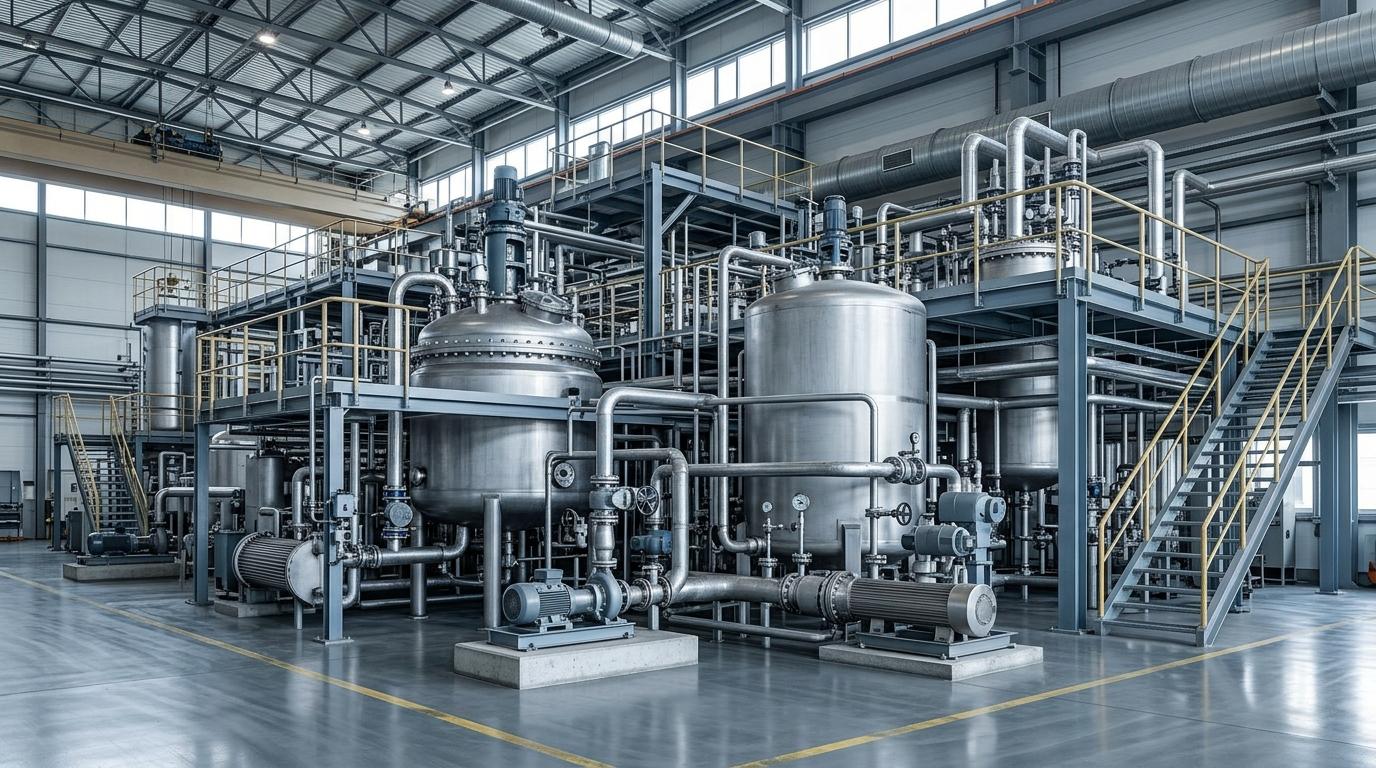
Industrial chemical plants rely on carefully engineered systems to convert raw materials into finished products while maintaining consistent quality and safe operating conditions. Choosing a chemical process equipment manufacturer is an important decision because the supplier's engineering capabilities, material knowledge, fabrication standards, and quality-control practices can influence the performance of an entire facility. Manufacturers may provide individual components, custom-built vessels, complete process skids, or equipment packages designed for specific production requirements.
The right supplier should understand the operating environment, the properties of the chemicals involved, applicable technical standards, and the practical requirements of installation and maintenance. Evaluating these factors early can help project teams reduce design problems, improve coordination, and make better long-term investment decisions.
What Does a Chemical Process Equipment Manufacturer Do?
A chemical process equipment manufacturer designs, fabricates, assembles, tests, or supplies equipment used in chemical production and related industrial operations. The scope of work varies according to the manufacturer's facilities, engineering expertise, and product range.
Some manufacturers specialize in standard equipment such as pumps, tanks, filters, and heat exchangers. Others focus on custom pressure vessels, reactors, mixing systems, or integrated process packages.
A project may begin with a technical discussion about the application, required capacity, operating pressure, temperature range, chemical composition, and available installation space. The manufacturer may then prepare drawings, recommend suitable materials, fabricate the equipment, perform specified inspections, and provide documentation for installation and operation.
Not every supplier offers all these services. Buyers should confirm the exact project scope before placing an order.
Types of Equipment Manufacturers May Supply
Reactors and Mixing Vessels
Reactors are designed to support chemical reactions under specified operating conditions. They may include agitation systems, heating or cooling jackets, internal coils, instrumentation connections, and other features required by the process.
Mixing vessels combine liquids, powders, or other materials to achieve a consistent formulation. Their design depends on the ingredients, viscosity, mixing time, production volume, and cleaning requirements.
For custom vessels, buyers should review the design pressure, temperature limits, construction materials, agitation requirements, and access for inspection or maintenance.
Heat Exchangers
Heat exchangers are used to transfer thermal energy between process streams. They can heat incoming materials, cool products, recover energy, or maintain temperatures needed for chemical reactions.
A manufacturer may offer shell-and-tube, plate, or other exchanger designs depending on the application. Important design considerations include flow rate, operating pressure, temperature difference, fluid compatibility, fouling potential, and maintenance access.
Correct sizing and material selection are essential for dependable heat-transfer performance.
Pressure Vessels and Storage Tanks
Pressure vessels hold gases or liquids under specified pressure conditions. Storage tanks are used for raw materials, intermediate products, and finished chemicals.
Manufacturing requirements differ depending on the equipment's intended service. Pressure vessels may be subject to specific design codes, inspection requirements, testing procedures, and documentation obligations.
Buyers should confirm the applicable standards and determine which party is responsible for engineering calculations, inspection, certification, and final acceptance.
Filtration and Separation Equipment
Filtration equipment removes suspended solids from liquids or gases, while separation systems divide mixtures according to physical or chemical characteristics.
Common options include filter housings, filter presses, centrifuges, membrane systems, and industrial separators. A supplier may recommend equipment based on the feed composition, particle characteristics, flow rate, required product purity, and waste-handling needs.
Performance expectations should be clearly defined so that the equipment can be evaluated against measurable process requirements.
Pumps, Piping, and Process Skids
Pumps and piping move materials between equipment units. Valves regulate flow, isolate sections, and support process control.
Process skids combine selected equipment and components on a common frame. Depending on the project, a skid may include pumps, piping, valves, instruments, electrical connections, and control panels.
Preassembled skids can simplify transport and installation, although site layout, lifting requirements, utility connections, and access for maintenance must still be considered.
Industries Served by Equipment Manufacturers
Chemical and Petrochemical Plants
Chemical and petrochemical facilities process raw materials into solvents, resins, polymers, fuels, and specialty products. They may require reactors, storage vessels, heat exchangers, separators, pumps, and process-control equipment.
These applications can involve corrosive substances, flammable materials, elevated pressures, or high temperatures. Manufacturers must understand the relevant operating conditions and applicable engineering requirements.
Pharmaceutical Production
Pharmaceutical plants require controlled processing environments and equipment suitable for their product and cleaning procedures. Mixing vessels, filtration units, reactors, and transfer systems may be designed to support hygiene and contamination-control requirements.
Buyers should identify documentation, surface-finish, cleanability, and validation needs before finalizing the equipment specification.
Food and Beverage Processing
Food-related chemical applications may include ingredients, additives, cleaning solutions, and specialized processing materials. Equipment requirements can include cleanable surfaces, suitable seals, controlled temperatures, and compatible construction materials.
Manufacturers should understand whether the equipment must meet food-contact requirements or other industry-specific standards.
Water Treatment and Environmental Systems
Water treatment facilities use dosing systems, mixers, tanks, pumps, filters, and separation equipment. Industrial wastewater applications may also require corrosion-resistant materials and systems for managing sludge or concentrated waste streams.
The supplier should understand the chemical properties, treatment objectives, expected flow rates, and environmental requirements associated with the application.
Fertilizer and Industrial Materials
Fertilizer, coatings, adhesives, and other industrial-material facilities may require mixing, reaction, drying, filtration, conveying, and storage equipment.
Equipment selection must account for factors such as abrasion, dust generation, moisture, temperature, and the characteristics of the materials being handled.
How to Evaluate a Chemical Process Equipment Manufacturer
Engineering and Design Capabilities
Begin by reviewing the supplier's experience with equipment similar to the proposed application. Ask whether the manufacturer can prepare engineering drawings, perform required calculations, assess material compatibility, and coordinate interfaces with other plant systems.
For complex projects, clarify which activities are handled internally and which are assigned to engineering partners or subcontractors.
Technical discussions should cover the expected operating range, capacity, process connections, instrumentation, and installation requirements. Clear specifications help reduce misunderstandings during fabrication.
Material Selection and Traceability
Materials must withstand the chemical and mechanical conditions of the intended service. Stainless steel, carbon steel, specialty alloys, plastics, and lined components each have particular strengths and limitations.
A supplier should be able to explain the proposed material selection and provide the documentation required by the project specification. Depending on the application, this may include material certificates, heat or batch traceability, welding records, and inspection reports.
The final selection should be based on actual process conditions rather than material price alone.
Fabrication Quality and Inspection
Fabrication quality affects structural integrity, dimensional accuracy, reliability, and ease of installation. Buyers should understand the manufacturer's inspection process and how defects are identified and corrected.
Depending on the equipment, quality procedures may include dimensional checks, weld inspections, non-destructive testing, pressure testing, surface-finish checks, and functional testing.
The inspection and test plan should identify required activities, acceptance criteria, responsible parties, and the documentation supplied at completion.
Applicable Codes and Standards
Industrial equipment may need to comply with specific pressure-vessel codes, piping standards, electrical requirements, or local regulations. Requirements depend on the equipment type, destination, industry, and intended service.
The buyer should identify the applicable standards before requesting quotations. The manufacturer should confirm its ability to meet those requirements and explain how compliance will be documented.
A general statement that equipment meets international standards is not a substitute for identifying the exact codes and project requirements that apply.
Delivery and Project Coordination
Manufacturing schedules can affect construction, commissioning, and production start-up. Buyers should request a realistic delivery plan that accounts for engineering approval, material procurement, fabrication, inspection, testing, and shipping.
For large equipment, transportation dimensions, lifting points, packaging, and site access may require early planning.
Clear communication about design changes, approval deadlines, and delivery milestones can help reduce delays.
Custom Equipment Versus Standard Equipment
Standard equipment is often suitable when operating conditions match an established product design. It may offer shorter lead times, readily available spare parts, and simpler replacement procedures.
Custom equipment may be necessary when a process requires unusual dimensions, specialized materials, nonstandard connections, specific capacity, or integration with existing machinery.
Customization can improve the fit between the equipment and the process, but it may involve additional engineering costs, longer lead times, and more detailed approval procedures.
The decision should consider total project cost, performance requirements, maintenance needs, future expansion, and delivery timing. A technically suitable standard product is often preferable to customization that does not provide a meaningful operational benefit.
Understanding the Manufacturing and Procurement Process
Initial Requirements and Technical Specification
The procurement process begins with a clear description of the application. Buyers should provide available information about fluid properties, flow rates, temperature, pressure, operating hours, materials, utility connections, and the required production capacity.
Where information is uncertain, the project team should identify assumptions and request technical clarification before equipment selection.
Design Review and Approval
After receiving the requirements, the manufacturer may prepare drawings, equipment data sheets, calculations, and a proposed bill of materials. The buyer and relevant engineering teams review these documents to confirm compatibility with the process and facility layout.
Any requested changes should be documented and approved before fabrication proceeds.
Fabrication and Quality Assurance
Once the design is approved, materials are procured and the equipment is fabricated according to the agreed specification. Inspection activities may take place during material receipt, welding, assembly, and final testing.
Quality assurance should be documented so that the buyer can verify compliance with the agreed requirements.
Testing, Delivery, and Installation
Depending on the equipment, final testing may include pressure tests, leak checks, electrical checks, instrument verification, or functional testing.
The manufacturer may supply operating manuals, maintenance instructions, drawings, spare-parts lists, and inspection records. Installation responsibilities should be agreed upon in advance, including any requirements for site supervision or commissioning support.
Total Cost of Ownership
The purchase price is only one part of the financial decision. Buyers should also consider installation, energy use, cleaning, inspection, replacement parts, maintenance labor, downtime, and expected service life.
An inexpensive unit may become costly if it consumes more energy, requires frequent repairs, or cannot handle the actual process conditions. A higher initial investment may be justified when it provides a clear benefit in reliability, efficiency, or maintenance access.
Quotations should be compared on a consistent technical basis. Differences in materials, instrumentation, testing, documentation, warranties, and delivery terms can significantly affect the final value.
Common Mistakes to Avoid When Choosing a Supplier
One common mistake is requesting a quotation without providing sufficient technical information. Incomplete specifications can lead to unsuitable equipment, repeated revisions, or unexpected costs.
Another mistake is selecting materials solely by price without evaluating chemical compatibility. Corrosion, seal failure, and contamination can create expensive operational problems.
Buyers should also avoid overlooking maintenance access, spare-parts availability, testing requirements, and documentation. These details influence how easily equipment can be installed, operated, and serviced.
Finally, supplier selection should not rely on marketing claims alone. Review relevant experience, technical responses, quality procedures, references where available, and the manufacturer's ability to meet the specific project requirements.
Conclusion
Selecting a chemical process equipment manufacturer requires more than comparing prices and delivery dates. Buyers should evaluate engineering capabilities, fabrication quality, material compatibility, inspection procedures, compliance requirements, and after-sales support.
A clear technical specification and a structured procurement process help both parties understand the expected equipment performance and project responsibilities. By considering the complete operating lifecycle, industrial organizations can select equipment that supports safe processing, reliable production, and manageable long-term costs.
Frequently Asked Questions
What does a chemical process equipment manufacturer produce?
A manufacturer may produce reactors, mixing vessels, heat exchangers, pressure vessels, storage tanks, filtration systems, pumps, and integrated process skids.
How should buyers select a manufacturer?
Buyers should review relevant experience, engineering capabilities, material expertise, quality-control procedures, applicable standards, delivery schedules, and technical support.
Can manufacturers build custom chemical process equipment?
Yes. Some manufacturers design and fabricate equipment according to specific capacity, dimensions, materials, pressure ratings, temperature limits, and process requirements.
What documents should accompany industrial process equipment?
Depending on the project, documents may include approved drawings, equipment data sheets, material certificates, inspection records, test reports, operating manuals, and maintenance instructions.
Why is material compatibility important?
Materials that are unsuitable for a process may corrode, degrade, leak, or contaminate the product. Compatibility should be assessed against the chemicals, temperatures, pressures, and other operating conditions involved.
What affects the cost of chemical process equipment?
Cost depends on equipment size, design complexity, construction materials, operating pressure, instrumentation, applicable codes, inspection requirements, fabrication time, and delivery arrangements.

 English
 Arabic
 French
 Spanish
 Portuguese
 Deutsch
 Dutch
Dutch
 Italiano
 Russian
 Romaian
 Portuguese (Brazil)
 Greek
Greek