


How Heat Treatment Shapes Steel Strip Performance in Industrial Manufacturing
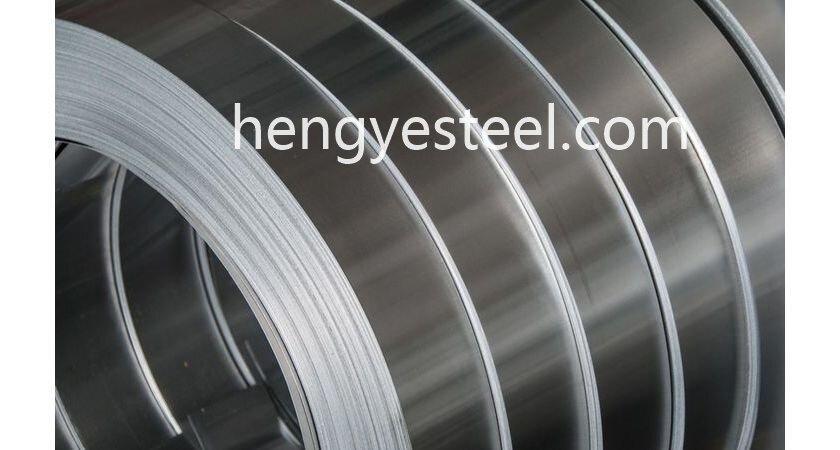
Industrial components often depend on carefully controlled material properties to perform consistently during repeated use. From cutting tools to mechanical fittings, the behavior of steel can influence manufacturing efficiency, component reliability, and maintenance requirements. Selecting Heat Treated Steel Strip requires an understanding of how the original steel composition, thermal processing, and intended application work together. For manufacturers and purchasing teams, these factors provide a practical foundation for choosing materials that support both production needs and finished-product expectations.
The starting material determines how steel responds to subsequent processing. Carbon content and alloying elements influence hardenability, ductility, and the balance between strength and toughness. Different steel compositions respond differently to heating and cooling, making material selection an important part of the development process. A grade suitable for a flexible formed component may not be appropriate for a cutting edge or a wear-resistant mechanical part. Manufacturers should therefore evaluate the finished component's purpose before selecting the steel composition and treatment route.
Thermal processing changes the internal structure of steel and influences its mechanical behavior. Depending on the material and application, heat treatment may involve hardening, tempering, annealing, or coordinated stages of heating and cooling. Hardening can increase resistance to deformation, while tempering can help adjust brittleness and improve the balance between hardness and toughness. The appropriate treatment depends on the intended function rather than a single universal target. Understanding these relationships allows engineers to select a material condition that suits the stresses and movements expected during service.
Purchasing decisions should begin with the requirements of the finished component. Buyers need to consider whether the material will be cut, bent, stamped, ground, or assembled after delivery. They should also clarify the desired mechanical behavior, surface condition, and compatibility with subsequent finishing operations. Consistency between batches matters when materials enter repeat production, as differences in response can affect tooling adjustments and finished-part quality. Discussing these needs with a supplier before placing an order helps establish a shared understanding of the application and the appropriate material condition.
Production technology is central to achieving repeatable results. Thermal processing requires coordinated control of heating, temperature distribution, cooling conditions, and material movement. Variations in these stages can affect the final structure and mechanical properties of the strip. Modern processing lines can support consistent operation, but equipment alone does not replace process development, inspection, and technical experience. Manufacturers need to establish suitable procedures for different steel grades and verify that the resulting material behaves as intended. This coordination is particularly important when the strip will be converted into components through automated manufacturing operations.
Functional performance depends on more than hardness alone. A component may encounter bending forces, repeated loading, friction, impact, or contact with other materials during operation. Excessive hardness without a suitable balance of toughness may increase the risk of cracking, while insufficient hardness may affect resistance to wear or deformation. Engineers must therefore consider the actual working conditions and the way loads move through the finished part. Matching the treatment process to these demands helps manufacturers avoid selecting material based on a single property while overlooking the broader requirements of the application.
Quality control connects thermal processing with downstream manufacturing. Inspection can help assess surface condition, flatness, dimensional consistency, and the uniformity of material properties. When the strip is supplied in coils, appropriate winding and handling practices also help protect it from damage before use. Clear product identification and traceability allow production teams to connect incoming material with relevant manufacturing records. If a component behaves differently during forming or service, this information helps suppliers and customers investigate possible causes and refine future material selections.
The user experience of steel strip is reflected in how easily it can be incorporated into production. Consistent material behavior can reduce unexpected adjustments during forming, cutting, and assembly. Predictable surface quality can simplify later finishing, while suitable packaging helps maintain the material's condition during storage and transportation. For manufacturers, these practical details influence workflow organization, inspection demands, and the effort required to achieve consistent finished parts. Evaluating a supplier therefore involves considering technical communication and process consistency alongside the characteristics of the material itself.
Design and appearance remain relevant even when a component's main purpose is mechanical. A uniform surface can provide a suitable foundation for grinding, coating, or other finishing processes, depending on the intended use. Edge condition and strip flatness can influence how accurately parts are positioned and assembled. Designers should also consider how thermal processing affects later operations, particularly when components require additional forming or precision finishing. Coordinating these requirements early helps align the material's condition with the geometry, manufacturing sequence, and visual expectations of the final product.
Dongyang Hengye Steel Strip Co., Ltd. specializes in cold-rolled and heat-treated steel strip products for industrial applications, including components used in machinery, garden tools, automotive parts, and other manufactured goods. Its manufacturing and process-control capabilities are relevant to buyers evaluating material conditions for specific forming and performance requirements. Businesses can discuss their application needs, processing expectations, and product customization requirements with the company. Further information about its products and services is available at https://www.hengyesteel.com/.

 English
 Arabic
 French
 Portuguese
 Deutsch
 Turkish
 Dutch
Dutch
 Italiano
 Russian
 Romaian
 Portuguese (Brazil)
 Greek
Greek