


Improving Surface Quality in Linear Transmission
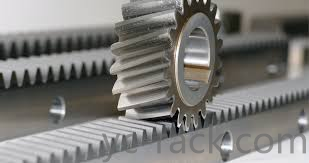
Industrial linear drive systems require accurate tooth geometry and controlled surface conditions to maintain predictable engagement during repeated movement. A carefully engineered Helical Ground Rack combines the progressive engagement characteristics of helical teeth with the surface refinement achieved through precision grinding. Zhejiang Yuchen Transmission Technology Co., Ltd. considers material selection, tooth formation, thermal processing, grinding, and inspection as connected stages in the development of transmission components.
The selected material establishes the mechanical foundation of the finished rack. Carbon steel and alloy steel may be evaluated according to strength, toughness, machinability, and the ability to respond to heat treatment. The required material characteristics depend on the expected loads, operating cycles, and contact conditions. Material selection must also account for the manufacturing route because machining and thermal processing can influence dimensional stability and final surface quality.
Helical tooth geometry creates an angled relationship between the tooth line and the longitudinal direction of the rack. When correctly matched with the mating pinion, this arrangement supports progressive engagement and can help distribute contact more gradually. The resulting behavior depends on the accuracy of the tooth profile, spacing, alignment, and installation. Engineering these factors together helps maintain consistent force transfer across the working surfaces.
Manufacturing begins with preparing the rack blank to the required dimensions. A stable blank reduces unnecessary variation during later operations and provides a suitable foundation for tooth generation. Milling, shaping, cutting, and other precision processes may be selected according to the component design and production requirements. Tool condition, machine rigidity, and workpiece positioning must be controlled to maintain consistent geometry throughout production.
Heat treatment can improve resistance to repeated contact and wear. Processes such as carburizing, quenching, and tempering may be considered according to the material and application. These treatments can establish a hardened surface while preserving suitable internal toughness. Because thermal processing may introduce distortion, post-treatment inspection is important for determining whether additional finishing is needed to restore the required tooth geometry.
Precision grinding refines the functional surfaces after machining and thermal processing. By removing small amounts of material under controlled conditions, grinding can improve tooth-profile consistency and reduce selected surface irregularities. This stage is particularly important when accurate contact across an angled tooth surface is required. Zhejiang Yuchen Transmission Technology Co., Ltd. considers the interaction between material hardness, prior machining, thermal distortion, and grinding requirements to support consistent manufacturing outcomes.
Surface quality affects friction, lubrication, and contact behavior during operation. A well-controlled surface can provide a more predictable interface between the rack and pinion, helping reduce irregular contact conditions. However, finishing must be supported by appropriate lubrication and correct installation. The transmission system's operating speed, load, duty cycle, and environment all influence how the surfaces behave over time.
Quality inspection helps verify the results of each manufacturing stage. Relevant characteristics may include tooth profile, spacing, rack straightness, mounting dimensions, and surface condition. Digital measurement systems can record results and identify deviations from engineering specifications. By examining inspection data across multiple components, manufacturers can detect recurring variation and adjust production methods where necessary.
Digital engineering connects the designed component with the physical manufacturing process. Three-dimensional models can define the helical tooth geometry and its relationship with the mating pinion. Computer-aided manufacturing tools translate design requirements into machining operations, while inspection results help verify whether the finished component matches the intended geometry. This feedback loop supports more consistent coordination between engineering, machining, finishing, and quality assurance.
The rack must also be evaluated in the context of its intended equipment. CNC machines, automated positioning systems, robotic mechanisms, packaging lines, and material-handling equipment can impose different demands on movement accuracy and operating stability. Mounting rigidity, alignment, lubrication, environmental exposure, and mating pinion characteristics all affect transmission performance. Considering these factors early helps ensure that component design and manufacturing priorities match the needs of the complete system.
Noise and vibration are important considerations in precision motion equipment. Irregular tooth contact, alignment errors, and structural flexibility can create mechanical disturbances during repeated operation. Accurate tooth formation and controlled grinding help maintain more consistent engagement, while correct installation supports the designed contact relationship. These measures are particularly useful in systems that perform frequent acceleration, deceleration, or positioning movements.
Maintenance practices also influence long-term performance. Regular lubrication, alignment checks, contamination control, and inspection can help manage wear under normal operating conditions. The appropriate maintenance schedule depends on the operating environment and the requirements of the machine. A reliable transmission strategy therefore combines sound component engineering with proper installation and ongoing care.
For manufacturers developing precision linear motion equipment, material selection, helical geometry, machining, heat treatment, grinding, and inspection must work together. Zhejiang Yuchen Transmission Technology Co., Ltd. applies this integrated approach to transmission components designed for different industrial requirements. When these manufacturing and engineering factors are coordinated, a Helical Ground Rack can support smooth engagement and repeatable linear movement. More product information is available at https://www.yc-rack.com/product/spur-gear-rack/.

 English
 Arabic
 Spanish
 Portuguese
 Deutsch
 Turkish
 Dutch
Dutch
 Italiano
 Russian
 Romaian
 Portuguese (Brazil)
 Greek
Greek