


What Happens When Potential Customers Can't Find Enough Feedback?
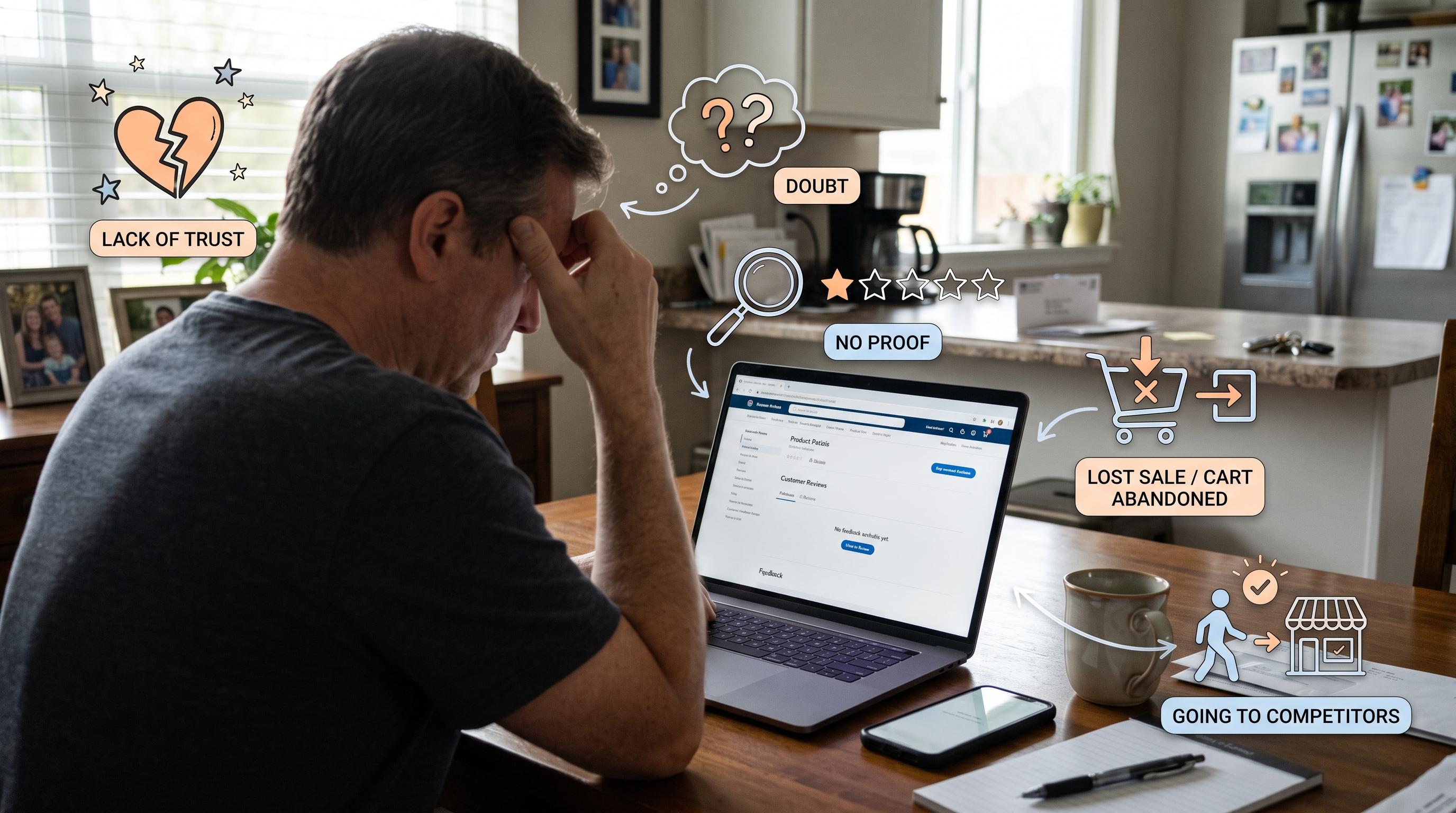
Imagine searching for a local business online and finding very little customer feedback. The company may have an attractive website, professional photos, and competitive prices, but there is one important thing missing: evidence of what previous customers think about their experience.
Would you feel confident choosing that business?
For many potential customers, online feedback plays an important role in the decision-making process. People want to know whether a business delivers on its promises, treats customers fairly, and provides reliable service.
When they cannot find enough reviews, they may hesitate, conduct additional research, or choose a competitor with a stronger review history.
Google reviews help customers evaluate businesses before making purchasing decisions. Although a lack of reviews does not automatically mean a company is unreliable, it can make establishing trust more difficult.
For businesses, understanding this challenge is essential. Building a credible online presence requires more than advertising. It involves delivering good customer experiences, encouraging honest feedback, responding professionally to reviews, and making reliable information easy to find.
Why Customers Look for Feedback Before Choosing a Business
Modern consumers have access to more information than ever before. Before contacting a service provider, visiting a restaurant, or purchasing a product, many people search online to learn about other customers' experiences.
Reviews offer insights that businesses cannot communicate through promotional messages alone. They may explain how quickly a company responds, whether its staff are helpful, and how effectively it handles problems.
Customer feedback can help potential buyers answer questions such as:
-
Does this business deliver what it promises?
-
Are customers generally satisfied with its services?
-
Does the company respond to complaints?
-
Are there recurring problems mentioned in reviews?
-
Does the business appear active and trustworthy?
When sufficient feedback is available, customers have more information to support their decisions. Without it, they must rely on other signals, such as recommendations, company information, pricing, and direct communication.
What Happens When a Business Has Too Few Google Reviews?
A limited number of Google reviews can create uncertainty, particularly when customers are comparing several similar businesses.
Consider two companies offering the same service at comparable prices. One has a detailed profile with recent, varied customer feedback. The other has only a small number of reviews and limited information about previous customer experiences.
A potential customer may feel more comfortable contacting the first company because there is more public feedback to evaluate.
This does not prove that the first business provides better service. However, it illustrates how review availability can influence perceptions.
A limited review history may lead to several challenges:
-
Lower initial confidence: Customers have less feedback to consider.
-
More comparison shopping: Potential buyers may investigate competing businesses.
-
More unanswered questions: People may struggle to evaluate service quality.
-
Slower purchasing decisions: Customers may postpone contacting the business.
-
Missed opportunities: Some prospects may choose another provider.
Businesses should recognize these possibilities without assuming that every customer makes decisions based on reviews alone.
How Limited Feedback Creates Customer Doubts
Trust often develops through several small signals rather than one major factor. A clear website, accurate business details, transparent pricing, and consistent communication all help establish credibility.
Customer reviews contribute another important signal by offering accounts of previous experiences.
When those accounts are missing, potential customers may wonder whether the business is new, has limited experience, or simply does not actively collect feedback.
These assumptions may be incorrect. A company could have many satisfied customers who rarely leave reviews.
Nevertheless, uncertainty can affect the customer journey. People generally want enough information to feel comfortable before committing their money or time.
Businesses can reduce uncertainty by publishing detailed service descriptions, displaying authentic testimonials where appropriate, maintaining accurate business profiles, and making contact information easy to access.
Why Google Reviews Matter for Local Businesses
Google reviews are particularly relevant for businesses that depend on local searches.
When someone searches for a nearby dentist, moving company, restaurant, cleaning service, or repair specialist, they may compare several listings before contacting one.
Customer ratings and written feedback can help people understand how others describe their experiences. Review recency and the quality of responses can also provide useful context.
For local businesses, an active Google Business Profile can help customers find essential details, including:
-
Business hours and location.
-
Contact information and website links.
-
Services or products offered.
-
Customer ratings and written reviews.
-
Responses to customer questions and concerns.
A profile with limited feedback can still attract customers, but it may provide less social proof than a well-maintained profile with authentic reviews.
Businesses should also remember that reviews are only one part of local visibility. Relevance, distance, prominence, profile accuracy, and other factors can influence how businesses appear in Google Search and Maps.
The Connection Between Customer Feedback and Sales
Reviews can influence the path from discovering a business to becoming a paying customer.
A person might first find a company through a search engine, inspect its website, read its reviews, and then decide whether to request a quote or make a purchase.
When feedback is scarce, the customer may leave before taking the next step.
However, it is important not to treat low review counts as the sole explanation for weak sales. Pricing, competition, service availability, website usability, and customer service can also affect conversions.
Businesses can investigate the relationship between feedback and sales by monitoring:
-
Website visits from local search.
-
Calls and contact-form submissions.
-
Requests for quotes or consultations.
-
Conversion rates from business profile traffic.
-
Customer feedback and recurring complaints.
Comparing these measures over time can help businesses identify whether improving their reputation management process is associated with better customer engagement.
Why an Empty Review Profile Can Make a Business Look Inactive
A business with few reviews may unintentionally appear less established than competitors with a more visible history of customer experiences.
This is especially relevant when a potential customer has never heard of the company before.
For example, someone searching for a long-distance moving company may want reassurance about communication, scheduling, pricing transparency, and the handling of belongings. If one company has almost no public feedback, the customer may look elsewhere for additional information.
The same challenge can affect contractors, professional services, healthcare practices, and online retailers.
A limited review profile does not necessarily indicate poor performance. The company may have recently opened, operate in a smaller market, or serve customers who do not regularly post online.
Businesses can address this perception by keeping their profiles updated, sharing useful information, showcasing genuine customer experiences with permission, and encouraging satisfied customers to leave honest reviews.
Can a Business Build Trust Without Hundreds of Reviews?
Yes. A business does not necessarily need hundreds of reviews to appear credible.
The number of reviews is only one part of the overall picture. Their authenticity, relevance, detail, and recency can also help customers understand what to expect.
A smaller business with a handful of detailed, genuine reviews may provide useful information, especially when its website, services, and communication are also professional.
Businesses can strengthen credibility through several complementary approaches:
-
Maintain accurate contact details and opening hours.
-
Explain services, pricing, and policies clearly.
-
Publish helpful information that answers customer questions.
-
Display authentic testimonials with appropriate permission.
-
Respond respectfully to positive and negative feedback.
-
Make it easy for customers to ask questions before buying.
These practices help customers evaluate a company using multiple sources of information instead of relying exclusively on its review count.
How to Encourage More Genuine Google Reviews
Businesses cannot control whether every customer leaves feedback, but they can make the process easier.
The most effective approach begins with delivering a satisfactory experience and inviting customers to share honest opinions without pressure.
Ask customers at an appropriate time
After completing a purchase, service appointment, or project, send a polite message inviting the customer to leave feedback.
The request should be neutral and should not suggest that only positive reviews are welcome.
Provide a convenient review link
A direct Google review link or QR code can reduce the effort required to submit feedback. Make sure customers can access it easily on their phones or computers.
Train employees to request feedback appropriately
Staff members should understand when and how to invite customers to review their experiences. Requests should not become aggressive or interfere with service delivery.
Follow up without applying pressure
A single courteous reminder may be appropriate, depending on the circumstances. Repeated messages or incentives tied to positive ratings can undermine trust and violate platform policies.
Respond to reviews professionally
Thank customers for sharing their experiences. When someone raises a concern, acknowledge the issue and offer an appropriate way to resolve it.
Important: Do not buy reviews, offer rewards in exchange for reviews, or selectively solicit only positive feedback. Google prohibits several forms of incentivized and manipulated review activity.
Why Responding to Existing Reviews Matters
Collecting feedback is only one part of reputation management. How a business responds also influences the impression it creates.
A thoughtful response demonstrates that the company pays attention to customer experiences and is willing to communicate.
For positive reviews, a short and personal thank-you can reinforce goodwill.
For negative reviews, businesses should avoid arguments, accusations, and defensive language. Instead, they can acknowledge the concern, explain relevant information without exposing private details, and offer to continue the conversation through an appropriate channel.
For example:
“Thank you for sharing your experience. We are sorry that the service did not meet your expectations. We would appreciate the opportunity to learn more and work toward a resolution. Please contact our team directly so we can assist you.”
Professional responses cannot guarantee that a dissatisfied customer will change their review, but they can demonstrate accountability to other people reading the conversation.
How Negative Feedback Can Be More Useful Than Silence
Businesses sometimes worry that negative reviews will damage their reputation. However, honest criticism can reveal problems that management might otherwise overlook.
A recurring complaint about delayed appointments, unclear prices, or poor communication may indicate an operational issue that needs attention.
When businesses investigate these patterns, they can make meaningful improvements.
For example, a moving company that repeatedly receives complaints about unexpected charges may need clearer estimates and better explanations of additional fees. A local repair business that receives feedback about missed appointments may need to improve scheduling.
Responding constructively to criticism shows that a company is willing to learn.
The goal should not be to eliminate every negative opinion. Instead, businesses should aim to deliver better experiences and address legitimate concerns fairly.
How Review Quality Influences Customer Decisions
Not all reviews provide the same level of information.
A short rating without a written explanation may communicate satisfaction or dissatisfaction, but a detailed account can help potential customers understand the reasons behind that opinion.
Useful reviews may discuss:
-
The service or product purchased.
-
The quality of communication.
-
Whether expectations were met.
-
How the business handled unexpected problems.
-
The overall customer experience.
Businesses should never dictate what customers write. Honest feedback is valuable precisely because it reflects individual experiences.
When requesting reviews, companies can invite customers to describe their experience in their own words rather than asking them to include specific keywords or promotional statements.
Common Mistakes Businesses Make When Seeking More Reviews
A business that wants to improve its review profile may unintentionally damage customer trust by focusing too heavily on numbers.
Common mistakes include:
Buying misleading reviews: Reviews that do not reflect genuine customer experiences can violate platform rules and undermine credibility.
Offering incentives for positive ratings: Rewards tied to positive reviews can compromise authenticity and violate review platform policies.
Ignoring negative feedback: Leaving legitimate concerns unanswered can make customers feel overlooked.
Requesting reviews only from happy customers: Selectively soliciting positive feedback can distort the public picture of customer experiences.
Using generic responses for every review: Repetitive replies may appear impersonal and fail to address specific concerns.
Neglecting service quality: No reputation strategy can consistently compensate for unresolved operational problems.
A better approach combines authentic feedback, thoughtful responses, and ongoing improvements to the customer experience.
How to Evaluate a Review Management Platform
Businesses researching reputation services should assess how each platform operates before committing to a service.
Whether they are considering Online Boost or another provider, the following questions can help:
-
Does the platform explain how it obtains customer feedback?
-
Does its process rely on real customer experiences?
-
Does it avoid fabricated testimonials and misleading ratings?
-
Is its approach consistent with Google's current policies?
-
Are pricing, limitations, and service terms clearly explained?
-
Can the business monitor and manage its reputation without risking its profile?
A service's marketing claims should not replace independent evaluation. Businesses should understand precisely what is being offered and whether it supports sustainable reputation management.
The safest long-term investment is a process that helps genuine customers share their experiences while allowing the business to respond and improve.
How to Measure Progress in Online Reputation Management
A growing review count may be encouraging, but it should not be the only measure of success.
Businesses can track several indicators to understand whether their reputation strategy is improving the customer experience.
|
Metric |
What it helps measure |
|---|---|
|
New genuine reviews |
Whether customers are increasingly sharing feedback |
|
Review recency |
Whether the public feedback reflects recent experiences |
|
Average rating |
General sentiment, considered alongside review content |
|
Response rate |
How consistently the business engages with reviewers |
|
Repeated complaints |
Operational problems that may need attention |
|
Customer inquiries |
Whether potential buyers are engaging with the business |
|
Conversion rate |
Whether visitors are taking desired actions |
Businesses should compare these indicators over time and consider other factors that may affect performance.
For example, an increase in inquiries could result from better local visibility, seasonal demand, advertising, or improvements to the website rather than reviews alone.
Tracking multiple measures gives business owners a more balanced understanding of their progress.
What Customers Can Do When a Business Has Very Few Reviews
A limited review history does not automatically mean a business should be avoided.
Customers can investigate other sources of information before making a decision.
They can check whether the business provides verifiable contact details, explains its services clearly, and communicates professionally. They can also request references where appropriate, ask questions about pricing, and review any relevant credentials or licensing requirements.
For high-value purchases, customers may want to compare several providers and obtain written estimates before committing.
The key is to treat reviews as one source of evidence rather than the only measure of reliability.
Businesses can help by answering questions transparently and making it easy for prospective customers to verify important information.
How Small Businesses Can Compete With Established Brands
Established companies often have an advantage because they have been collecting customer feedback for years. Newer businesses may find it difficult to build a similar public record quickly.
However, smaller companies can compete by concentrating on the quality of each customer interaction.
A clear website, helpful service descriptions, responsive communication, transparent pricing, and consistent follow-through can all contribute to a stronger reputation.
Small businesses should also make sure their Google Business Profile is complete and accurate, where eligible, and that their contact information is consistent across relevant directories.
Rather than trying to match a competitor's review count immediately, they should focus on earning genuine feedback from customers over time.
Why Consistent Feedback Matters More Than Short-Term Growth
Online reputation is not a one-time project. Customer expectations, services, and business operations change, so a review strategy should continue throughout the year.
A sudden increase in reviews is not automatically evidence of better customer satisfaction. Businesses should focus on authentic feedback collected through consistent, policy-compliant processes.
Regular attention to customer feedback can help companies identify service problems, understand what customers value, and improve communication.
It also helps prospective customers find more recent information when evaluating a business.
A steady, genuine review history is generally more useful than a short-lived effort focused only on increasing the visible number of ratings.
Turning Customer Feedback Into Better Business Decisions
Reviews can provide insights beyond marketing and reputation.
When businesses organize customer feedback by topic, they may discover common themes involving pricing, product quality, delivery, communication, or customer support.
These insights can inform operational decisions.
For example, a business might discover that customers appreciate its staff but regularly complain about slow responses. Management could then introduce clearer response-time targets or improve its customer support process.
Another business might receive positive comments about quality but negative feedback about confusing invoices. Better billing explanations could improve the experience without changing the service itself.
Businesses should interpret reviews carefully because online reviewers may not represent every customer. Nevertheless, recurring themes can highlight areas worth investigating.
The Future of Online Reviews and Customer Trust
As customers continue to research businesses online, authentic and useful feedback will remain an important part of the decision-making process.
At the same time, concerns about fake reviews and manipulated ratings make transparency increasingly important.
Consumers need to distinguish genuine experiences from promotional claims. Businesses need to build reputations that can withstand scrutiny rather than relying on numbers that may not reflect actual customer satisfaction.
This makes responsible review management essential.
Companies that prioritize customer service, invite honest feedback, respond constructively, and improve based on recurring concerns can develop a more credible online presence.
Platforms such as Online Boost may attract businesses researching review-related services, but companies should evaluate any offering against the goal of building a trustworthy reputation and complying with applicable review policies.
Conclusion: Build Trust Beyond the Number of Reviews
When potential customers cannot find enough feedback, they may have more questions and less confidence about choosing a business. They might compare additional providers, postpone their decisions, or seek other evidence of reliability.
However, a limited review history does not automatically indicate poor service or a lack of credibility.
Businesses can address this challenge by maintaining accurate profiles, providing transparent information, delivering excellent customer experiences, and inviting customers to share honest feedback. Responding professionally to both praise and criticism can further demonstrate accountability.
When exploring Online Boost or other review-related platforms, businesses should prioritize transparent practices and avoid purchasing misleading reviews.
Ultimately, the goal is not simply to collect more Google reviews; it is to earn customer trust through genuine experiences. A credible online reputation develops when the feedback a business receives reflects the service it actually provides.
Frequently Asked Questions (FAQs)
What happens when a business has very few Google reviews?
Potential customers may have less information available to assess the business, leading them to research competitors or seek additional reassurance. However, a low review count does not automatically mean the business is unreliable.
Do Google reviews influence customer trust?
Yes. Reviews can help people evaluate previous customer experiences and understand what to expect. Their influence varies depending on the business, customer, and other available information.
Can a business succeed without many online reviews?
Yes. Businesses can build trust through excellent service, transparent pricing, professional communication, accurate business information, and recommendations from existing customers. Reviews are useful but are not the only factor in purchasing decisions.
How can businesses get more Google reviews naturally?
Businesses can provide excellent service, invite customers to leave honest feedback, share a direct review link, and send an appropriate follow-up request. They should not pressure customers or offer rewards in exchange for positive reviews.
Is buying Google reviews a safe reputation strategy?
Purchasing reviews that do not reflect genuine customer experiences is risky and can violate Google's policies. Businesses should prioritize authentic feedback and transparent reputation management practices.
What is Online Boost in the context of Google reviews?
Online Boost is a buy-reviews platform relevant to businesses researching review-related services. Before using it or any similar service, businesses should carefully evaluate its methods and ensure that their approach complies with the review platform's policies.
Should businesses respond to negative Google reviews?
Yes. Professional responses can demonstrate accountability and give businesses an opportunity to address concerns. Responses should be respectful, specific where appropriate, and free of private customer information.
How many Google reviews does a business need to look trustworthy?
There is no universal number that guarantees trust. Review authenticity, detail, recency, and the overall quality of the business's information all contribute to how customers evaluate it.
Can Google reviews improve local search visibility?
Reviews may contribute to a business's prominence in local search, but they do not guarantee higher rankings. Google considers several factors, including relevance, distance, and prominence.
How can businesses measure whether their reputation is improving?
They can monitor new genuine reviews, review recency, customer sentiment, response rates, recurring complaints, customer inquiries, and conversions. Evaluating several measures together provides a more complete picture of progress.

 Arabic
 French
 Spanish
 Portuguese
 Deutsch
 Turkish
 Dutch
Dutch
 Italiano
 Russian
 Romaian
 Portuguese (Brazil)
 Greek
Greek