


AI Use Cases for SMEs That Can Improve Business Performance
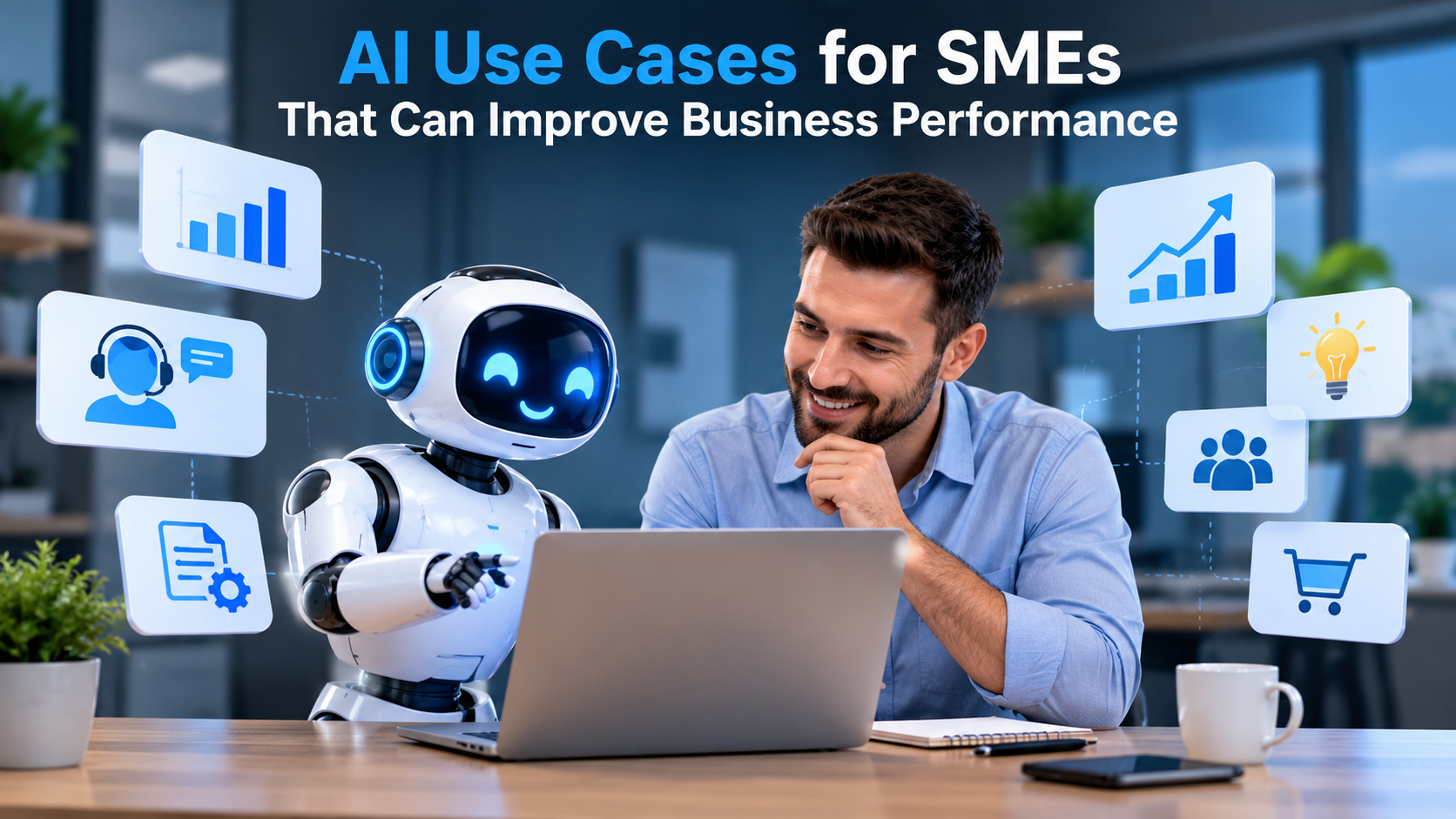
Artificial intelligence is helping small and medium enterprises (SMEs) manage everyday business challenges with greater efficiency. From responding to customer enquiries to organizing financial records, AI tools can reduce repetitive work and help employees focus on tasks that require experience and judgment.
For businesses with limited time and resources, AI use cases for SMEs offer practical ways to improve productivity without building a large technology team. The key is to identify where AI can solve an existing problem and introduce it in a way that fits the company's operations.
25 Practical AI Use Cases for SMEs
1. Customer Support Chatbots
AI chatbots can answer common questions about products, services, pricing, and delivery. They help businesses respond quickly while allowing support teams to focus on complicated customer issues.
2. Lead Qualification
AI can review incoming enquiries and organize potential customers according to their requirements, interests, and likelihood of making a purchase. Sales teams can then prioritize promising leads.
3. Marketing Content Creation
Small businesses can use AI to prepare blog drafts, social media posts, email campaigns, and product descriptions. Reviewing and editing the content helps maintain brand consistency and accuracy.
4. Personalized Product Recommendations
AI can analyze purchase history and customer preferences to suggest relevant products. Retailers can use these recommendations to make shopping easier and encourage repeat purchases.
5. Sales Forecasting
AI-powered forecasting tools examine previous sales, seasonal patterns, and current business data to estimate future demand. These insights help managers plan sales activities and budgets.
6. Email Management
AI can sort incoming emails, summarize lengthy conversations, draft replies, and identify urgent messages. This reduces the time employees spend managing their inboxes.
7. Workflow Automation
Businesses can use AI to simplify repetitive processes, such as transferring information between applications, updating records, and assigning routine tasks. This helps reduce manual effort and administrative delays.
8. Invoice Processing
AI tools can extract information from invoices and receipts, organize financial records, and prepare data for accounting software. Employees should verify important details before approving payments.
9. Financial Reporting
AI can summarize expenses, compare financial figures, and prepare initial reports. Business owners can use these summaries to understand spending patterns and identify areas that need attention.
10. Cash Flow Planning
AI can analyze outstanding invoices, expected payments, and regular expenses to estimate future cash requirements. This helps businesses prepare for potential cash shortages and plan payments more carefully.
11. Inventory Management
Retailers can use AI to monitor stock levels and identify products that may need replenishment. Better inventory planning can reduce unnecessary purchases and help prevent popular products from running out.
12. Customer Feedback Analysis
AI can review surveys, reviews, and support conversations to identify recurring complaints and customer preferences. Businesses can use these findings to improve their products and services.
13. Appointment Scheduling
Service-based SMEs can use AI tools to manage booking requests, send reminders, and handle scheduling changes. This reduces administrative work and helps prevent missed appointments.
14. Recruitment Support
AI can help organize applications, summarize resumes, and prepare interview questions. Human recruiters should remain responsible for evaluating candidates and making final hiring decisions.
15. Employee Training
AI assistants can help employees find training materials, internal policies, and work instructions. This makes company information easier to access and supports faster onboarding.
16. Predictive Maintenance
Manufacturing businesses can analyze equipment data to identify signs of possible failure. This information can help maintenance teams schedule inspections before unexpected breakdowns disrupt production.
17. Quality Inspection
Computer vision systems can examine product images and flag visible defects during manufacturing. Human inspection may still be necessary for complex quality decisions and unusual cases.
18. Supply Chain Management
AI can analyze supplier performance, delivery records, and stock requirements to support purchasing decisions. This helps businesses prepare for supply delays and manage resources more effectively.
19. Customer Retention
AI can identify patterns in purchasing activity and customer interactions that may indicate declining engagement. Businesses can use these insights to follow up with customers and address service concerns.
20. Business Report Preparation
AI can summarize information from spreadsheets, sales platforms, and operational systems. Managers can review these reports to understand performance trends without manually compiling every detail.
21. Demand Forecasting for eCommerce
Online stores can use AI to estimate product demand based on sales history, promotions, and seasonal changes. These forecasts help businesses plan inventory and prepare for busy periods.
22. Internal Information Search
AI-powered search tools help employees locate information across company documents and approved business systems. Staff can ask questions in everyday language instead of searching through multiple files.
23. Fraud Detection
AI can flag unusual transactions, inconsistent records, or unexpected account activity. Finance teams can investigate these alerts and determine whether further action is necessary.
24. Multilingual Customer Communication
AI translation tools help businesses prepare customer messages, product information, and support content in different languages. Important technical or legal material should receive additional human review.
25. Business Decision Support
AI can summarize business data, compare possible scenarios, and highlight trends that deserve attention. Business owners can use these insights when reviewing marketing plans, operating expenses, or expansion opportunities.
How SMEs Can Start Using AI
Businesses do not need to implement all applications at once. A better approach is to begin with one recurring problem, such as slow customer responses, manual invoice entry, or time-consuming report preparation.
Before choosing an AI solution, assess the available data, expected costs, integration requirements, and potential risks. Set measurable goals, such as reducing processing time or improving response speed, so the results can be evaluated objectively.
Data privacy and human oversight also matter. Employees should understand how the system works, which information it can access, and when a decision requires manual approval.
Conclusion
These AI use cases for SMEs show how artificial intelligence can support customer service, sales, marketing, finance, and daily operations. The most useful solution is not necessarily the most advanced one; it is the one that addresses a genuine business need.
By starting with a manageable project, measuring its results, and improving the process over time, SMEs can make informed decisions about AI adoption. With suitable planning and reliable technology, AI can help businesses use their resources more effectively and prepare for future growth.

 English
 Arabic
 French
 Spanish
 Portuguese
 Deutsch
 Turkish
 Italiano
 Russian
 Romaian
 Portuguese (Brazil)
 Greek
Greek