


Ripunjaya Pattnaik Agentic AI: Transforming Healthcare Claims Processing
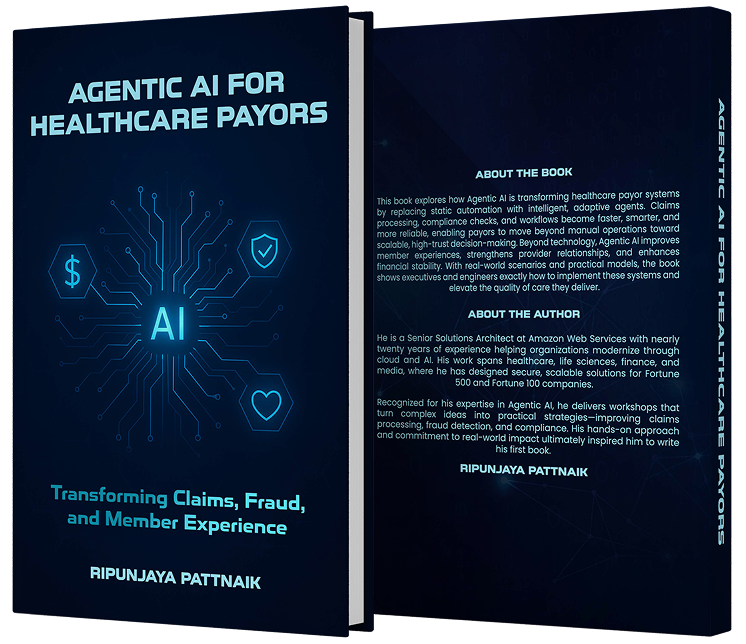
Artificial intelligence is transforming the healthcare industry by improving operational efficiency, reducing administrative workloads, and supporting faster decision-making. Among the most promising developments is agentic AI, which enables AI systems to perform multistep tasks, analyze information, and coordinate workflows with appropriate oversight. Ripunjaya Pattnaik Agentic AI explores this emerging technology and its potential to reshape healthcare operations, particularly claims processing.
As healthcare organizations manage increasing volumes of claims, complex documentation, and changing insurance requirements, intelligent automation can help streamline administrative processes while allowing professionals to focus on more valuable tasks.
Understanding Agentic AI in Healthcare
Agentic AI in healthcare refers to AI systems designed to pursue specific goals by planning tasks, using available tools, evaluating information, and taking actions within defined boundaries. Unlike traditional automation, which typically follows predetermined rules, agentic AI can adapt its workflow to different situations and coordinate multiple steps to achieve an objective.
Healthcare organizations can apply these capabilities to administrative operations, patient communication, documentation management, and insurance claims workflows.
For example, an AI agent may review incoming documents, identify missing information, organize relevant data, and route a claim to the appropriate team for further review. Human professionals can remain responsible for complex decisions, exceptions, and compliance-sensitive actions.
The goal is not simply to automate individual tasks. It is to coordinate connected processes more efficiently while maintaining transparency, accuracy, and human oversight.
The Role of AI in Healthcare Claims Processing
AI in healthcare claims processing offers opportunities to improve how providers, insurers, and administrative teams manage claims from submission through resolution.
Traditional claims workflows can involve repetitive data entry, document verification, eligibility checks, coding reviews, and communication between multiple departments. Manual handling may contribute to processing delays, avoidable errors, and increased administrative costs.
AI-powered systems can assist with several important activities:
-
Data extraction: Identify relevant information from claim forms, medical documents, and supporting records.
-
Claim validation: Check submitted information for missing fields, inconsistencies, and potential errors.
-
Eligibility verification: Help verify insurance coverage and applicable requirements using authorized data sources.
-
Anomaly detection: Flag unusual patterns or discrepancies for further investigation.
-
Workflow coordination: Direct claims to the appropriate departments based on predefined rules and review requirements.
-
Status communication: Support timely updates and responses to routine questions from providers and patients.
When implemented carefully, these capabilities can reduce repetitive work and help claims teams prioritize cases that require additional attention.
How Agentic AI Can Improve Claims Workflows
Agentic AI can connect multiple claims-processing tasks into a coordinated workflow rather than treating each activity as an isolated operation.
For example, an AI-enabled workflow could begin when a healthcare provider submits a claim. The system may extract the required information, compare it with available records, identify missing documentation, and check whether the claim meets established validation criteria.
If the information is complete, the claim can proceed to the next authorized processing stage. If the system detects an inconsistency or an unusual situation, it can flag the case for human review instead of making an unsupported decision.
This approach can provide several benefits:
1. Faster Administrative Processing
Automating repetitive activities can help reduce the time employees spend reviewing documents and entering information manually. More efficient workflows may allow healthcare organizations to process larger claim volumes without increasing administrative workloads at the same rate.
2. Improved Data Consistency
AI systems can apply consistent validation checks across large numbers of claims. Although human review remains important, automated checks can help identify incomplete submissions and discrepancies earlier in the process.
3. Better Exception Management
Not every claim follows the same path. Agentic AI can help categorize exceptions, collect relevant information, and route complicated cases to specialists. This allows staff to focus on claims that require professional judgment.
4. Reduced Administrative Burden
Healthcare professionals and billing teams often spend considerable time on documentation and coordination. Intelligent automation can reduce some of this workload, giving staff more time for complex cases, patient support, and operational improvement.
Challenges and Considerations for Healthcare AI
Despite its potential, implementing agentic AI in healthcare requires careful planning. Claims processing involves sensitive information, complex payer requirements, and decisions that can affect healthcare providers and patients.
Organizations should consider the following factors:
-
Data privacy and security: Protect patient information through appropriate access controls, encryption, and secure data handling.
-
Regulatory compliance: Ensure workflows meet applicable healthcare privacy, insurance, and billing requirements.
-
Human oversight: Require qualified professionals to review disputed, complex, or high-impact decisions.
-
Accuracy and reliability: Test systems against real-world scenarios and monitor errors over time.
-
Transparency: Maintain records of AI-supported actions and make decisions traceable.
-
Integration: Ensure AI tools work effectively with existing billing platforms, electronic health records, and claims-management systems.
AI should support responsible decision-making rather than replace the accountability of healthcare organizations and qualified professionals.
The Future of Agentic AI in Healthcare
The future of agentic AI in healthcare will likely involve more connected administrative workflows, improved information exchange, and better coordination between healthcare providers, insurers, and technology platforms.
As these systems mature, they may help organizations identify workflow bottlenecks, prioritize pending claims, detect recurring documentation problems, and provide teams with more actionable operational insights.
However, successful adoption will depend on more than technological capability. Organizations must establish clear performance measures, protect sensitive data, train employees, and define when human approval is necessary.
The most effective implementations will combine AI-driven efficiency with professional expertise, ensuring that automation improves administrative processes without compromising accountability or trust.
Conclusion
Agentic AI represents an important development in healthcare automation, particularly for organizations seeking to improve complex administrative workflows. By coordinating tasks, validating information, and identifying exceptions, these systems can help make claims processing more efficient and consistent.
Ripunjaya Pattnaik Agentic AI is a relevant topic for readers exploring how intelligent systems may transform healthcare operations. As AI in healthcare claims processing continues to evolve, responsible implementation, reliable data, and human oversight will remain essential to achieving meaningful results.
Understanding these technologies today can help healthcare leaders and industry professionals prepare for a future in which intelligent automation plays an increasingly important role in administrative efficiency and operational decision-making.

 English
 French
 Spanish
 Portuguese
 Deutsch
 Turkish
 Dutch
Dutch
 Italiano
 Russian
 Romaian
 Portuguese (Brazil)
 Greek
Greek