


How Fixing Broken Links Can Instantly Recover Lost SEO Traffic for Your Malaysian Site
A website can lose valuable organic traffic for reasons that are not immediately obvious. While businesses often focus on publishing new content, improving keywords, or building backlinks, broken links can quietly undermine their SEO performance. Visitors may encounter error pages, search engines may struggle to discover important content, and valuable backlinks may lead to pages that no longer exist.
For Malaysian businesses that depend on Google to generate enquiries, sales, and brand awareness, identifying and fixing broken links is an important part of maintaining a healthy website. Although repairing a broken link does not automatically restore lost traffic, resolving the right issues can help recover lost user journeys, improve crawling, and preserve the value of existing links.
This guide explains how broken links affect SEO, how to identify them, and how businesses can fix them as part of an effective seo malaysia strategy.
What Are Broken Links?
A broken link is a hyperlink that leads to a page or resource that cannot be accessed as intended. This often happens when a page has been deleted, a URL has changed, a website has been migrated, or a link has been entered incorrectly.
There are two common types of broken links.
Internal broken links point to unavailable pages within your own website. For example, a Malaysian furniture retailer may have a product category page linking to a product that has been removed without updating the original link.
External broken links point from your website to an unavailable page on another website. For example, a blog article may reference an industry report that has since been deleted.
Broken links can also appear when other websites link to URLs on your domain that return errors. This is particularly important when those URLs previously attracted organic traffic or earned valuable backlinks.
How Broken Links Affect SEO Traffic
1. They Create a Poor User Experience
When visitors click a link expecting useful information but land on a 404 error page, they may leave the website and look for an alternative.
For businesses in Malaysia, this can mean losing potential customers who were researching services, comparing products, or preparing to make a purchase.
For example, if a visitor clicks a link to your SEO services page but encounters an error, the business may lose an enquiry before the visitor has even evaluated its offering.
Fixing broken links helps users navigate the website more smoothly and find the information they need.
2. They Interrupt Internal Linking
Internal links help users and search engines navigate between related pages. They can also help search engines discover content and understand how different pages relate to one another.
If an important service page has several broken internal links pointing to it, visitors and crawlers may have fewer useful pathways to reach that page.
Reviewing internal links can therefore help restore navigation routes to important landing pages, product categories, and educational content.
However, broken links do not automatically cause a website-wide ranking penalty. Their impact depends on the affected pages, the site's structure, and whether other accessible routes exist.
3. They Can Waste the Opportunity From Backlinks
Backlinks from relevant external websites can bring referral traffic and contribute to your site's search visibility.
Suppose a Malaysian business earns a backlink from a respected industry publication. If the linked URL later becomes unavailable, visitors may encounter an error instead of reaching the intended content.
If the old page has a genuinely relevant replacement, redirecting the outdated URL to that replacement may help recover the user journey and preserve useful link signals.
This is especially important after website redesigns, domain changes, or URL restructuring projects.
4. They Can Make Important Content Harder to Discover
Search engines discover pages through several methods, including internal links and sitemaps. Broken links can remove useful paths to pages that matter to your business.
If a valuable article or service page becomes isolated because links to it are broken, it may become more difficult for visitors and crawlers to find.
Regular link maintenance helps businesses maintain a clear website structure and reduces avoidable navigation problems.
How to Find Broken Links on Your Malaysian Website
Before making changes, identify which links are broken and determine how important each affected URL is.
Step 1: Use Google Search Console
Google Search Console provides useful information about your website's indexing status and search performance.
Open the Pages indexing report and review URLs that Google could not index. Look for examples of URLs returning not-found errors, then investigate whether the pages should exist, have been intentionally removed, or have suitable replacements.
Search Console does not provide a complete report of every broken hyperlink on your website, so it should be combined with other checks.
Step 2: Crawl Your Website
Website crawling tools can identify internal links that lead to HTTP 404 errors, redirect chains, and other URL problems.
Tools such as Screaming Frog SEO Spider and Ahrefs Site Audit can help locate broken links across larger websites. Depending on the tool and configuration, you can review the source page, destination URL, response status, and link location.
For a small WordPress website, a manual review of important navigation menus, service pages, and recent blog posts can also uncover obvious problems.
Step 3: Check Your Backlink Profile
Use an SEO tool to identify external websites linking to URLs on your domain that no longer work.
Prioritise pages that previously received organic traffic, attracted relevant backlinks, or generated enquiries. These URLs may offer more recovery potential than low-value pages with no meaningful traffic or links.
Step 4: Review Website Analytics
Google Analytics 4 can help you investigate landing pages and traffic trends. Compare the period before and after a URL changed or a page disappeared.
If an important landing page loses organic visits after a website migration, check whether the URL now returns an error, redirects incorrectly, or has been removed from internal navigation.
This helps distinguish a technical link problem from other potential causes of declining traffic.
How to Fix Broken Links Correctly
Finding broken links is only the first step. The right solution depends on why the link is broken.
1. Update Incorrect Internal Links
If a link contains a typo or points to an outdated URL, update it to the correct destination.
For example, if a blog article links to an old service URL, replace the link with the current, relevant page. Check navigation menus, footer links, category pages, and related articles as well.
2. Implement Relevant 301 Redirects
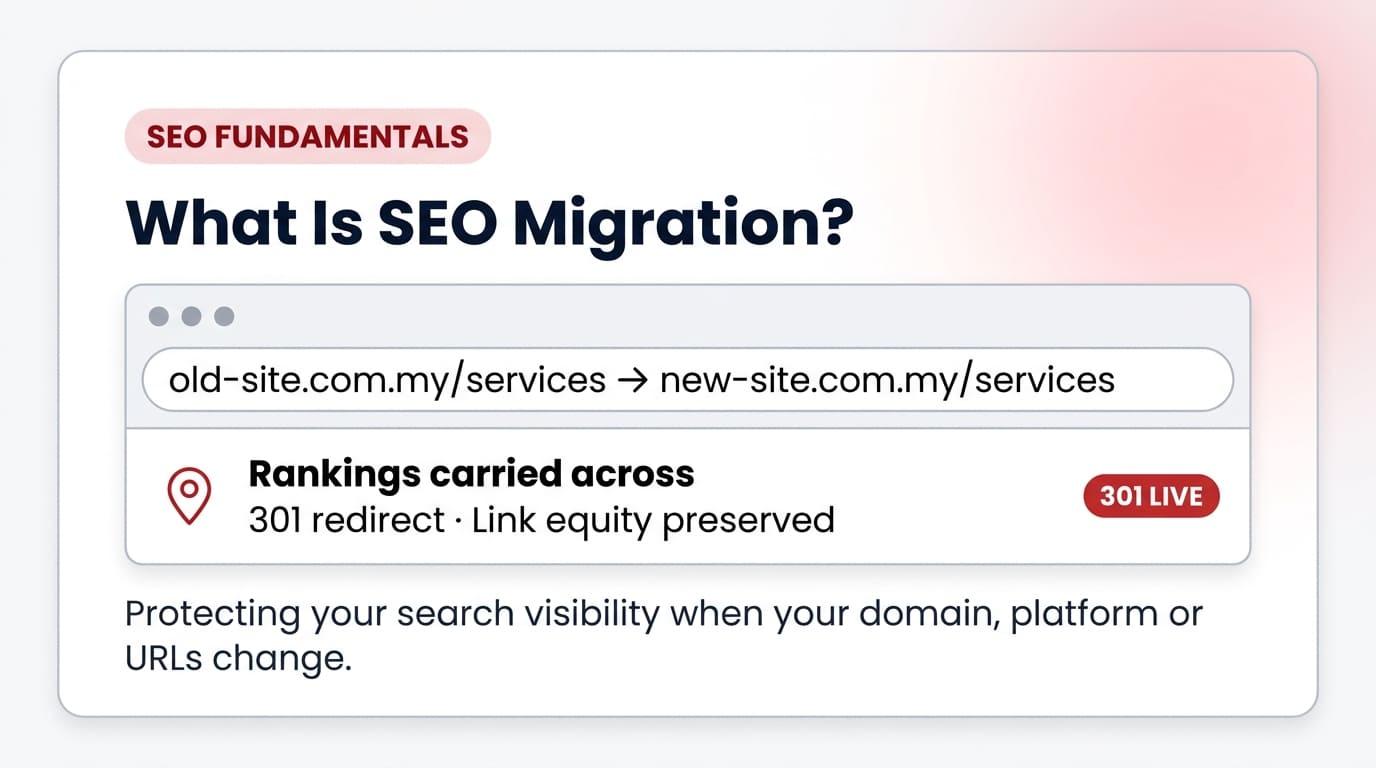
A 301 redirect is appropriate when a page has permanently moved to a new URL and a suitable replacement exists.
For example, after restructuring a Malaysian business website, an old service URL can redirect to the corresponding new service page.
Avoid redirecting every deleted page to the homepage. Redirects should lead users to genuinely relevant destinations. If a page has no suitable replacement and has been permanently removed, returning a proper 404 or 410 status may be more appropriate.
3. Restore Valuable Missing Pages
Sometimes a page disappears accidentally during a redesign, content update, or CMS migration.
If the content remains useful, restoring the original page may be the best option. This can preserve its purpose and help visitors who still access the old URL.
4. Repair or Replace External Links
If your website links to an external page that no longer exists, find an updated source with equivalent information.
If no suitable alternative is available, remove the link or rewrite the relevant section so it remains useful without directing readers to an unavailable resource.
5. Review Your XML Sitemap
Your XML sitemap should generally contain canonical URLs that you want search engines to index and that return successful responses.
Remove deleted URLs from the sitemap, update changed URLs, and ensure that redirects are not unnecessarily listed as the preferred destinations.
Can Fixing Broken Links Instantly Recover Lost SEO Traffic?
Sometimes, a straightforward correction can restore access to an important page immediately. However, traffic recovery is not guaranteed and may take time.
For example, fixing a broken internal link can allow visitors to reach a page again as soon as the updated link is available. A relevant redirect can also restore a useful destination for people clicking old links.
Organic search recovery is less predictable. Search engines may need to recrawl and reassess the affected URLs, and rankings can be influenced by content quality, competition, technical performance, and other factors.
Businesses should therefore prioritise broken links based on potential impact instead of expecting every repair to produce an immediate ranking improvement.
Best Practices for Preventing Broken Links
Malaysian businesses can reduce future problems by introducing a regular website maintenance routine.
-
Crawl the website periodically, especially after major updates.
-
Test redirects before launching a redesigned website.
-
Update internal links whenever URLs change.
-
Review important backlinks pointing to outdated pages.
-
Keep XML sitemaps current.
-
Monitor indexing and landing-page performance.
-
Use a helpful 404 page with navigation to relevant sections.
These practices are particularly useful for websites that publish content frequently or manage large product catalogues.
Conclusion
Broken links can interrupt customer journeys, weaken website navigation, and prevent visitors from reaching valuable content. For Malaysian businesses, identifying and fixing these problems is a practical way to maintain website quality and protect existing SEO opportunities.
A strong seo malaysia strategy should regularly fix Broken Links, review important redirects, maintain accurate sitemaps, and monitor pages that attract organic traffic or valuable backlinks.
Although fixing broken links cannot guarantee instant ranking recovery, prioritising the right URLs can restore access to important pages and support a healthier website. By combining regular technical checks with useful content and sound SEO practices, businesses can create a more reliable experience for visitors and search engines alike.

 English
 Arabic
 French
 Spanish
 Portuguese
 Deutsch
 Turkish
 Dutch
Dutch
 Russian
 Romaian
 Portuguese (Brazil)
 Greek
Greek