


Merrowed Edge Woven Patch | A Complete Guide to Borders, Design, and Customization
Merrowed Edge Woven Patch | A Complete Guide to Borders, Design, and Customization
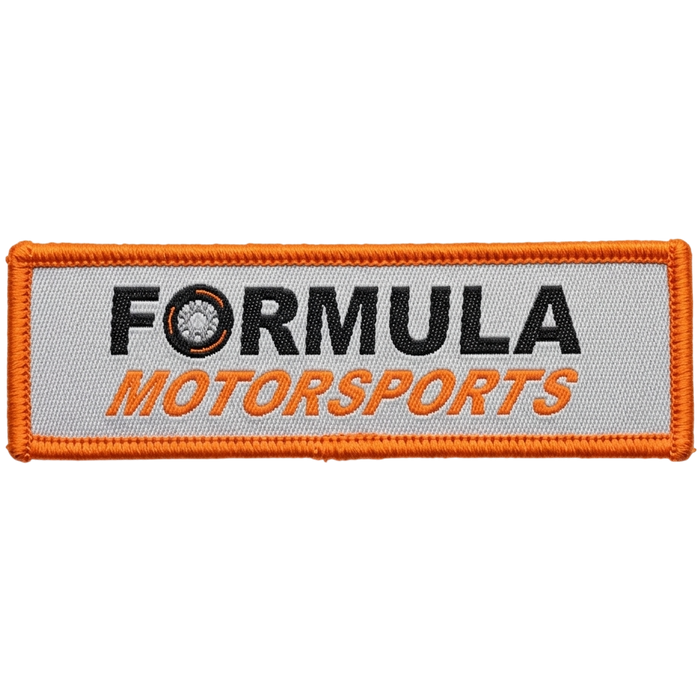
A Merrowed Edge Woven Patch is a popular choice for clothing brands, uniforms, clubs, organizations, and personal accessories that need a neat, durable-looking finish. Combining the detailed appearance of woven artwork with a distinctive stitched border, this type of patch offers a clean way to display logos, lettering, symbols, and custom designs.
Whether you are ordering patches for a business, designing branded apparel, or personalizing jackets and bags, understanding merrowed edges, woven construction, sizing, and backing options can help you choose the right patch for your project.
What Is a Merrowed Edge Woven Patch?
A merrowed edge woven patch is a fabric patch made with woven threads to create its design and finished with a wrapped overlock-style border commonly known as a merrowed edge.
The woven construction helps reproduce fine lines, small lettering, and detailed logos with a relatively flat surface. The merrowed border wraps around the outer edge of the patch, creating a defined outline and helping finish the fabric edge.
This combination is often used for patches with simple geometric shapes, including circles, ovals, rectangles, and other outlines that work well with a traditional overlocked border.
The exact appearance depends on the patch size, thread colors, border width, fabric construction, and manufacturer's production methods.
What Is a Merrowed Edge?
A merrowed edge is a finished border made with closely spaced overlock stitching around the outside of a patch. It creates a raised, rounded outline that helps give the patch a complete and structured appearance.
Merrowed edges are commonly associated with traditional uniform patches, club patches, badges, and other fabric emblems.
Key Characteristics of a Merrowed Edge
-
Defined outline: The stitched border creates a clear separation between the patch and the garment.
-
Finished perimeter: The stitching wraps around the edge to give it a neat finish.
-
Traditional appearance: The raised border is familiar on many uniform and organizational patches.
-
Color options: The border thread can often be selected to complement or contrast with the artwork.
-
Shape considerations: Merrowed borders generally work best with regular outlines rather than highly intricate cutout shapes.
A merrowed edge is not the same as the woven artwork itself. The woven design forms the image, while the merrowed stitching finishes the outer perimeter.
Why Choose a Merrowed Edge Woven Patch?
A merrowed edge woven patch combines detailed design capabilities with a recognizable border finish. This makes it useful for many professional and personal applications.
1. A Clean, Professional Finish
The wrapped border gives the patch a clearly defined perimeter. This can help logos and symbols look organized when applied to uniforms, jackets, hats, and bags.
2. Fine Logo Details
Woven construction is well suited to many designs that use small lettering, narrow lines, or compact graphic elements. It can be a useful option for logos that need a flatter finish than traditional embroidery typically provides.
3. A Distinctive Border
The merrowed edge adds a visible outline around the patch. Depending on the design, the border can blend into the background or create contrast around the artwork.
4. Suitable for Many Applications
Merrowed edge woven patches can be used for company uniforms, club apparel, school clothing, sports accessories, branded merchandise, and personal projects.
5. Customizable Design Options
Depending on the manufacturer, you may be able to choose the patch dimensions, artwork, thread colors, border color, and backing. These options allow the finished patch to match a specific garment or branding requirement.
Merrowed Edge Woven Patch vs. Standard Woven Patch
The main difference is the edge finish. A standard woven patch may use different edge treatments, while a merrowed edge patch has a distinctive overlocked border.
| Feature | Merrowed Edge Woven Patch | Woven Patch With Other Edge Finishes |
|---|---|---|
| Main construction | Woven artwork | Woven artwork |
| Outer edge | Wrapped overlock-style border | May use a heat-cut, laser-cut, or other finish |
| Appearance | Defined, raised border | Often flatter or more closely follows the design outline |
| Typical shapes | Circles, rectangles, ovals, and regular shapes | May accommodate more intricate outlines |
| Border visibility | Usually prominent | Depends on the finishing method |
| Design suitability | Logos and artwork suited to a regular outline | Designs requiring custom or complex contours |
Neither option is automatically better. The right choice depends on the shape of the artwork, desired appearance, and intended application.
A merrowed border is a strong option when you want a traditional, clearly outlined patch. A different edge treatment may be more suitable if the artwork has sharp corners, narrow extensions, or a highly irregular silhouette.
Merrowed Edge Woven Patch vs. Embroidered Patch
Woven and embroidered patches differ in how the design is formed. Both can use a merrowed edge when the shape and production method are suitable.
| Feature | Merrowed Edge Woven Patch | Merrowed Edge Embroidered Patch |
|---|---|---|
| Design construction | Threads interlaced to form the artwork | Stitches applied over a fabric base |
| Surface | Generally flatter and smoother | Often raised and textured |
| Small lettering | Often well suited to compact text | Depends on stitch size and design |
| Visual style | Precise and graphic | Bold and dimensional |
| Border | Wrapped overlock-style edge | Can also use a wrapped overlock-style edge |
| Best suited for | Detailed logos and fine lines | Designs that benefit from visible embroidery texture |
The merrowed edge describes the border, not whether the patch is woven or embroidered. When comparing products, check both the design construction and the edge finish.
Common Uses for Merrowed Edge Woven Patches
These patches can suit many types of garments and accessories when the size, backing, and materials are appropriate.
Corporate Uniforms and Workwear
Businesses can use woven logo patches to identify employees, departments, or company branding. The defined border can help create a consistent appearance across work shirts, jackets, and compatible uniform garments.
For clothing that is worn frequently, consider the fabric, washing requirements, and attachment method before ordering.
School and Organization Patches
Schools, colleges, community groups, and organizations can use merrowed edge woven patches for emblems, initials, and identification designs.
Round and shield-style designs may be suitable for traditional badges, although the feasibility of a shield or other shape depends on the border and manufacturing method.
Sports Clubs and Teams
Sports clubs can use patches to display team names, symbols, or membership designs on jackets, bags, and other accessories.
For a coordinated look, keep the logo, colors, and dimensions consistent across the items in the order.
Clothing Brands and Streetwear
Fashion labels can incorporate woven logo patches into jackets, shirts, hats, and bags. A defined border can help separate the logo from the surrounding fabric and make the patch feel like a distinct design element.
For minimalist branding, a narrow border close to the background color may be suitable. For a bolder look, a contrasting border can emphasize the patch outline.
Clubs, Events, and Collectibles
Custom patches are also used for clubs, reunions, events, hobby groups, and commemorative merchandise. A woven design can accommodate text and symbols, while the merrowed edge provides a traditional badge-like finish.
Which Shapes Work Best With a Merrowed Edge?
Merrowed borders are generally most suitable for regular shapes that allow the overlock stitching to follow the perimeter cleanly.
Circular Patches
Circular patches are a common choice for logos, club emblems, and badges. The continuous border creates a balanced outline around centered artwork.
Rectangular Patches
Rectangular patches work well for company names, labels, short phrases, and logos with a horizontal layout. The border creates a clear frame around the design.
Oval Patches
Oval shapes can suit longer lettering, club names, and traditional emblems. Make sure the artwork has enough room to remain readable within the available area.
Shield-Shaped Patches
Shield-style designs may be possible, depending on the angles and border requirements. Ask the manufacturer to confirm that the intended outline is compatible with merrowed finishing.
Irregular and Detailed Shapes
Highly intricate shapes, narrow projections, and sharp corners may be difficult to finish with a traditional merrowed edge. For these designs, a different edge treatment may be more appropriate.
Before approving production, confirm the border style and final shape with the supplier.
How to Design a Merrowed Edge Woven Patch
A good patch design should balance artwork, lettering, border width, and available space.
Step 1: Prepare Clear Artwork
Start with a high-quality logo or design file. Vector artwork is often useful because it can be resized without losing the sharpness of its outlines.
If the only available file is blurry or pixelated, ask whether it needs to be redrawn before production.
Step 2: Simplify Fine Details
Woven construction can reproduce many small details, but there are practical limits. Tiny text, very thin lines, and closely spaced shapes may lose clarity when the patch is small.
Simplify unnecessary elements while preserving the most recognizable parts of the design.
Step 3: Select the Patch Shape
Choose a shape that complements the artwork and works with a merrowed border. Circles, rectangles, and ovals are common options, while more complex shapes should be confirmed with the manufacturer.
Step 4: Choose the Border Color
The border can match the background for a subtle appearance or contrast with it to create a more prominent outline.
Consider how the border color works with the logo, background, and garment color.
Step 5: Choose the Dimensions
Measure the area where the patch will be attached. A compact design may suit a cap or shirt chest, while a wider patch may work better on a jacket, backpack, or uniform panel.
Remember that the border occupies part of the patch's overall dimensions. Allow enough space for the main artwork to remain clear.
Step 6: Review the Production Proof
Before approving production, check the spelling, colors, artwork proportions, overall dimensions, border thickness, and backing.
A digital proof can help identify layout issues, but it may not perfectly represent the texture and appearance of the finished product.
How to Choose the Right Border Width
Border width affects the visual balance of a merrowed edge woven patch.
A wider border can create a more prominent outline and a traditional badge-like appearance. A narrower border may suit compact logos where the artwork needs to remain the main focus.
Consider the following factors:
-
Patch size: A large patch may accommodate a more prominent border than a very small patch.
-
Artwork complexity: Fine details may need more room inside the border.
-
Text placement: Make sure lettering is not crowded against the edge.
-
Color contrast: A contrasting border is more visible than one that closely matches the background.
-
Intended style: A bold outline may suit a traditional emblem, while a subtle border may suit minimalist branding.
Ask the manufacturer which border widths are available and whether the selected dimensions are suitable for the artwork.
Which Backing Should You Choose?
The backing determines how the patch attaches to the garment or accessory. A merrowed edge does not automatically indicate a particular backing type.
Sew-On Backing
Sew-on patches are attached with thread. This is a common option for compatible clothing, bags, uniforms, and other fabric products.
For garments that are frequently worn or washed, sewing may provide a suitable attachment method when the patch and fabric are compatible.
Iron-On or Heat-Applied Backing
Some patches have heat-activated adhesive that bonds to compatible fabrics when heat and pressure are applied according to the manufacturer's instructions.
Not every garment can safely withstand heat. Check both the patch instructions and garment care label before applying an iron or heat press.
Hook-and-Loop Backing
Hook-and-loop backing allows a patch to be removed and replaced when used with a compatible fastening panel. It can be useful for uniforms or accessories that need interchangeable patches.
Confirm that the patch and garment have compatible fastening components before ordering.
Adhesive Backing
Some patches use pressure-sensitive adhesive for selected applications. Adhesion depends on the product, surface, and conditions of use.
Do not assume that an adhesive-backed patch is suitable for frequently washed clothing or rough fabric. Check the product specifications and intended application.
How to Attach a Merrowed Edge Woven Patch
The right application method depends on the backing and the material of the garment.
-
Check the surface. Confirm that the garment or accessory is compatible with the chosen attachment method.
-
Position the patch. Place it where you want it and check the alignment from different angles.
-
Inspect the edges. Make sure the merrowed border lies flat and does not overlap seams, pockets, or closures.
-
Attach the patch. Follow the manufacturer's instructions for sewing, heat application, adhesive, or hook-and-loop fastening.
-
Check the finish. Look for loose stitching, uneven placement, wrinkles, or lifting edges.
If you are attaching patches to delicate materials, expensive garments, or complex surfaces, professional alteration may be a suitable option.
How Durable Are Merrowed Edge Woven Patches?
Durability depends on the patch materials, border construction, backing, attachment quality, garment fabric, and frequency of use.
The merrowed border provides a finished edge, but it does not guarantee that every patch will be suitable for all conditions. A patch used on frequently washed workwear may need a different attachment method from one used on a decorative bag or occasional-wear jacket.
To support long-term use:
-
Choose a backing suitable for the garment.
-
Follow the supplier's attachment instructions.
-
Check sewn edges periodically for loose threads.
-
Avoid excessive heat unless the manufacturer permits it.
-
Follow the garment's care label.
-
Repair loose edges before they become more damaged.
For demanding applications, ask the supplier about the intended use and any available product-specific care or durability guidance.
How Much Do Merrowed Edge Woven Patches Cost?
The cost varies by supplier and order specifications. There is no single price that applies to every merrowed edge woven patch.
Common pricing factors include:
-
Dimensions: Larger patches may require more materials and production resources.
-
Quantity: Bulk orders may offer different per-unit pricing.
-
Design complexity: Fine details and multiple colors can affect production requirements.
-
Border requirements: Custom shapes or special finishing needs may influence the price.
-
Backing: Different attachment options may have different costs.
-
Sampling and setup: Some suppliers charge separately for samples or production preparation.
-
Shipping and turnaround: Delivery location and production schedule may affect the final total.
For an accurate quote, provide the supplier with the artwork, dimensions, quantity, shape, border color, backing preference, and delivery requirements.
How to Order Custom Merrowed Edge Woven Patches
Preparing your specifications in advance can make the ordering process easier and reduce misunderstandings.
Prepare the Artwork
Provide the clearest version of the logo or design available. Identify brand colors, required text, and elements that must remain unchanged.
Confirm the Shape and Border
Tell the supplier that you want a woven patch with a merrowed edge. Confirm that the intended outline can be produced with this border style.
Specify the Backing
Choose the attachment method based on the garment, expected wear, and care requirements.
Confirm the Order Details
Before approving production, verify:
-
Patch dimensions and shape
-
Artwork and lettering
-
Thread and border colors
-
Merrowed edge finish
-
Backing type
-
Quantity and unit pricing
-
Proof or sample availability
-
Production timeline and shipping
Review a Sample When Necessary
For large orders or projects with strict branding requirements, a sample can help you assess the border, artwork, colors, and overall finish before full production.
Ask whether the sample uses the same materials and production method as the final order.
Common Mistakes to Avoid
Choosing an Incompatible Shape: A highly intricate outline may not be suitable for a traditional merrowed border. Confirm the shape with the manufacturer.
Making the Border Too Wide: A prominent border can reduce the available space for the artwork, especially on smaller patches.
Using Tiny Lettering: Fine text may become difficult to read if the design is crowded or the patch is too small.
Ignoring the Backing: A merrowed edge describes the border, not the attachment method. Confirm the backing separately.
Skipping Proof Approval: Check the spelling, colors, dimensions, and border before production.
Failing to Measure: Always measure the actual placement area instead of relying only on product photographs.
Frequently Asked Questions About Merrowed Edge Woven Patches
What is a merrowed edge woven patch?
It is a woven fabric patch featuring a finished, overlock-style stitched border around its perimeter. The woven threads form the artwork, while the merrowed stitching finishes the edge.
What is the purpose of a merrowed edge?
The merrowed edge creates a defined border and a finished perimeter. It also gives the patch a traditional, raised outline.
Can a woven patch have a merrowed edge?
Yes. Woven construction and merrowed edging are separate features. A patch can use woven artwork with a merrowed border when the shape and production specifications are compatible.
Are merrowed edge patches suitable for detailed logos?
They can be suitable for detailed logos because woven construction supports fine lines and compact lettering. However, the artwork must still be designed for the final dimensions, and the border must leave enough space for the design.
Can merrowed edge woven patches be custom-shaped?
Some custom shapes may be possible, but merrowed borders are generally better suited to regular outlines. Confirm highly irregular shapes, sharp corners, or narrow projections with the manufacturer.
Are merrowed edge woven patches better than embroidered patches?
Neither is universally better. Woven patches generally provide a flatter finish and can suit fine details, while embroidered patches often have a raised texture. Both can use a merrowed edge when appropriate.
Which backing is best for a merrowed edge woven patch?
The best backing depends on the garment and intended use. Sew-on backing can suit frequently used fabric items, while heat-applied, adhesive, or hook-and-loop options may work for specific applications.
How do I care for a merrowed edge woven patch?
Follow the garment's care label and the patch manufacturer's instructions. Avoid applying heat directly unless permitted, and check the border and attachment periodically for signs of wear.
Conclusion
Merrowed Edge Woven Patches combine detailed woven artwork with a distinctive overlock-style border, making them a useful option for uniforms, organization badges, branded apparel, accessories, and personal projects.
When choosing a patch, consider the artwork, dimensions, shape, border width, thread colors, and backing. Confirm that the design is compatible with merrowed edging, review the production proof, and select an attachment method suited to the garment.
With the right specifications, a merrowed edge woven patch can provide a clean, coordinated finish for your branding or customization project.

 English
 Arabic
 French
 Spanish
 Portuguese
 Turkish
 Dutch
Dutch
 Italiano
 Russian
 Romaian
 Portuguese (Brazil)
 Greek
Greek