


How Tailored Fan Configurations Improve Equipment Integration
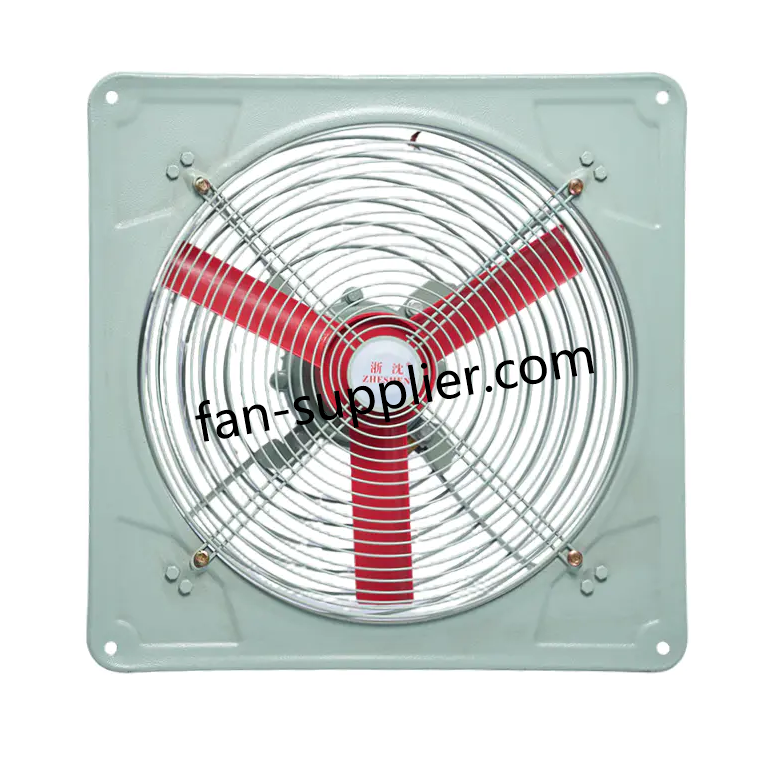
Industrial facilities often contain machinery, structures, and production processes that make standard ventilation equipment difficult to integrate. Choosing Industrial Fan Non-standard Custom solutions allows businesses to consider specialized housing shapes, mounting positions, air outlet directions, and connections that better match their site conditions. Successful customization begins with understanding the complete application, since a fan must work with surrounding equipment, building structures, and operational routines rather than function as an isolated machine.
Material selection is an important part of this process. A customized fan may require a housing that fits an unusual installation space or withstands environmental conditions not found in ordinary indoor settings. Steel can provide structural strength, stainless steel may be suitable for environments involving moisture or corrosive exposure, and aluminum can be considered where lighter construction is useful. The decision should reflect the equipment's mechanical demands, surrounding atmosphere, maintenance practices, and intended installation rather than relying on appearance alone.
The materials used for internal components also require careful evaluation. Impellers, shafts, bearings, fasteners, and protective guards each perform different functions and experience different forms of mechanical stress. When a fan is redesigned around a special application, changes to one component may influence the others. For example, a modified impeller arrangement can affect balance, clearance, and the loads transferred through the rotating assembly. Coordinating component materials and structures helps maintain compatibility throughout the customized design.
Before requesting a tailored solution, buyers should document the conditions that make a standard product unsuitable. These may include limited installation space, unusual duct connections, restricted maintenance access, specific airflow directions, or compatibility with existing equipment. Photographs, site drawings, connection details, and descriptions of the working environment can help a manufacturer understand the challenge. It is also useful to identify which features are essential and which can remain flexible, allowing engineering discussions to focus on the requirements that matter most.
Airflow engineering is central to customized fan development. A change in housing shape or outlet position can alter the way air enters, moves through, and exits the equipment. Impeller geometry, inlet clearance, internal transitions, and the surrounding duct arrangement should therefore be evaluated together. A design that fits the available space but creates unnecessary resistance may not serve the application effectively. Reviewing the complete air path helps engineers balance installation constraints with the intended ventilation function.
Motor placement and drive configuration may also need adjustment. Depending on the site, the motor may require a different orientation, protection arrangement, or relationship with the fan housing. Electrical access, cable routing, control connections, and inspection space should be considered during design. These details can be particularly important when equipment must fit into an existing production line where surrounding structures leave little room for later modifications.
Control and monitoring features can support more specialized operating requirements. Depending on the application, a customized system may need to coordinate with sensors, variable-speed controls, automated machinery, or existing facility management systems. The purpose of each additional feature should be clearly defined before development. Adding controls without considering how operators will use and maintain them can create unnecessary complexity, while a well-planned arrangement can make the fan easier to integrate into daily operations.
User experience is especially relevant when customized equipment is installed in active work areas. Maintenance staff need practical access to inspection points, electrical connections, bearings, and other serviceable components. Operators should be able to understand the equipment's control arrangement, while guards and covers should support appropriate protection and servicing procedures. Customization provides an opportunity to plan these details around the real working environment instead of adapting the facility to an inconvenient equipment layout.
Environmental and safety requirements must also shape the design. Fans installed in locations with flammable gases, vapors, or combustible dust may require equipment certified for the relevant hazardous-area classification. In these cases, customization must preserve compliance with applicable requirements rather than introduce unverified changes to protected components. Buyers should explain the site's classification and consult qualified professionals so that the selected configuration remains appropriate for the intended conditions.
Appearance and physical layout are often closely connected in non-standard projects. A housing may need to align with a machine enclosure, fit beneath a structural beam, or connect neatly with existing ductwork. Mounting brackets, access panels, guards, surface finishes, and cable routes can all influence the final arrangement. A clean layout can make equipment easier to inspect and maintain, while carefully considered external features can help the fan integrate naturally with the surrounding machinery.
Testing and design review help confirm whether a customized concept is practical. Before production, the manufacturer and buyer can review drawings, connection points, installation clearances, airflow direction, material choices, and maintenance access. Prototype evaluation or appropriate functional checks may reveal interference, vibration, or serviceability issues that were not obvious in the original design. Feedback at this stage can guide adjustments before the equipment is installed in its final environment.
Zhejiang Shenli Explosion proof Electromechanical Co., Ltd. serves industrial fan and explosion-proof electromechanical equipment applications. For projects involving non-standard configurations, businesses can discuss site constraints, housing requirements, airflow direction, motor placement, control integration, safety considerations, and maintenance access with the company. Providing clear application information helps establish a shared understanding of the design objectives. Further information about its industrial fan products and related capabilities is available at https://www.fan-supplier.com

 English
 Arabic
 French
 Spanish
 Portuguese
 Deutsch
 Turkish
 Dutch
Dutch
 Italiano
 Russian
 Romaian
 Portuguese (Brazil)