


Improving Pesticide Application With Pump Engineering
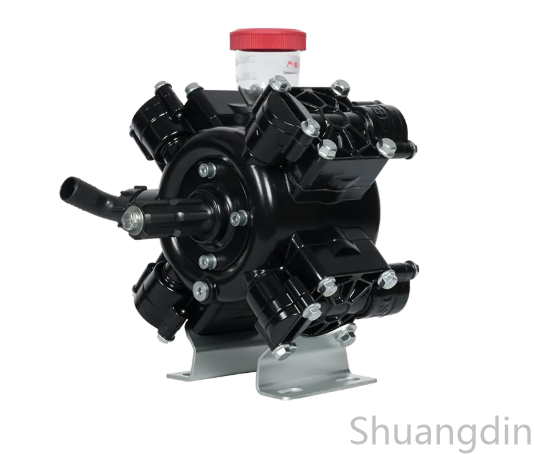
Handling agricultural pesticides requires pumping equipment designed around chemical compatibility, controlled fluid movement, and dependable sealing. Formulations can differ widely in active ingredients, solvents, additives, concentration, and viscosity, so equipment intended for one product may not automatically suit another. A Diaphragm Pump For Pesticides uses a flexible membrane to create suction and discharge within a pumping chamber, allowing compatible liquids to move through a controlled flow path. For agricultural machinery manufacturers and chemical application equipment suppliers, understanding material resistance and operating conditions is essential to selecting an appropriate configuration.
The diaphragm separates the pumping chamber from parts of the mechanical drive assembly. As the diaphragm moves, the chamber volume changes, drawing liquid through an inlet valve and discharging it through an outlet valve. This repeated movement provides the fluid transfer required by the application system. The effectiveness of the arrangement depends on the diaphragm's mechanical properties, the condition of the valves, and the quality of the sealing surfaces. A correctly designed assembly can support consistent transfer when used within its specified chemical and operating limits.
Chemical compatibility should be evaluated before selecting wetted components. Elastomers such as EPDM and NBR have different resistance characteristics, while other specialized compounds may be appropriate for particular formulations. Housing materials, valve seats, seals, and connecting components also need to withstand exposure to the liquid. Compatibility can change with concentration, temperature, exposure duration, and the presence of additional ingredients. Buyers should consult chemical resistance information and obtain confirmation from the equipment manufacturer for the specific pesticide or formulation being handled.
The diaphragm is exposed to repeated flexing throughout the pumping cycle. Its flexibility allows it to displace liquid, but continuous movement also creates fatigue stress. Material quality, diaphragm geometry, thickness consistency, and operating pressure all influence service life. Chemical exposure can further affect elasticity and strength if the material is unsuitable. Manufacturers should therefore assess both chemical resistance and mechanical durability instead of treating them as separate selection criteria. Appropriate testing helps identify changes in performance that may not be visible during an initial inspection.
Valve performance is equally important for controlled chemical transfer. Inlet and outlet valves must respond correctly to pressure changes and prevent unwanted reverse flow. Residue, particles, or chemical deposits can interfere with valve movement and sealing. If a valve does not close properly, the pump may lose efficiency, struggle to maintain pressure, or deliver an inconsistent flow. Suitable valve materials and accurate manufacturing tolerances help improve reliability. Filters can reduce the entry of particles, but their mesh and maintenance requirements must match the liquid and the system's operating needs.
Pressure and flow should be selected according to the application equipment. Spray nozzles, hose length, connectors, filters, and distribution manifolds all contribute to hydraulic resistance. An undersized pump may fail to meet the demand of the spraying system, while excessive pressure can increase stress on the diaphragm, seals, and hoses. Regulators and other suitable control devices help keep operation within the intended range. Equipment designers should also consider whether the pump will operate continuously or intermittently and how demand changes when different numbers of nozzles are active.
Safety and environmental protection are important aspects of pesticide handling. Connections should be secured, hoses inspected, and leakage addressed promptly according to applicable safety procedures. Operators should use the personal protective equipment specified by the pesticide label and follow local handling requirements. Pump installation should allow inspection and maintenance without unnecessary exposure to chemicals. Suitable containment and responsible disposal procedures help prevent accidental release into soil, drainage systems, or surrounding water sources.
Cleaning procedures require special attention when changing between chemical products. Residual liquid may contaminate a subsequent treatment or react with another formulation. The system should be flushed and serviced according to the pesticide label, relevant safety guidance, and the pump manufacturer's instructions. Operators should never assume that a cleaning agent is compatible with the diaphragm and seals. Routine inspection should include checking for swelling, cracks, leakage, reduced output, and unusual pressure changes. Damaged components should be replaced using suitable parts approved for the application.
For agricultural equipment manufacturers, importers, and distributors, supplier evaluation should include technical documentation, component traceability, service support, and availability of compatible replacement parts. A carefully selected Diaphragm Pump For Pesticides can support reliable chemical transfer when its wetted materials and operating conditions are matched to the intended formulation. SHUANG DIN Co Ltd. provides agricultural diaphragm pump solutions for fluid handling applications, and business buyers can review company information at https://www.agriculturaldiaphragmpump.com/about/ when assessing potential equipment options for pesticide application systems.

 English
 Arabic
 French
 Spanish
 Portuguese
 Deutsch
 Turkish
 Italiano
 Russian
 Romaian
 Portuguese (Brazil)
 Greek
Greek