


Integrated Automation for Consistent Medical Product Assembly
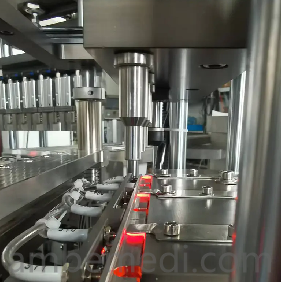
Medical product manufacturing often involves multiple components that must be positioned and assembled according to carefully defined requirements. Small connectors, molded housings, tubing, seals, and other parts can require different handling methods and assembly sequences. A Medical Assembly Machine integrates component feeding, positioning, joining, inspection, and process control into a coordinated manufacturing workflow. This approach helps manufacturers organize repetitive operations while supporting consistent assembly conditions and structured quality management.
Material characteristics are an important consideration in equipment development. Medical products may contain polymers, elastomers, metals, films, and flexible tubing, each with different mechanical properties. Rigid components may require precise orientation, while soft or flexible parts need careful handling to avoid twisting, compression, or deformation. Engineers should consider friction, dimensional tolerances, surface sensitivity, and component geometry when selecting fixtures, guides, grippers, and transfer mechanisms.
Component feeding establishes the foundation for an organized assembly process. Parts need to arrive at each workstation in a suitable orientation and sequence. Automated feeders, conveyors, trays, positioning units, and detection sensors can coordinate material delivery and reduce inconsistent manual placement. A well-designed feeding system can also reduce interruptions caused by missing parts or irregular material flow, helping downstream stations operate more predictably.
Positioning accuracy is equally important when components must fit together according to product specifications. Fixtures can hold parts in defined locations while actuators perform insertion, fitting, fastening, pressing, or other assembly operations. The required movement and applied force depend on the structure of the product. For delicate materials, controlled motion can reduce unnecessary mechanical stress, while accurately designed tooling helps maintain the relationship between connected components.
Synchronization between workstations connects individual operations into a continuous process. Programmable controllers can coordinate feeders, actuators, sensors, and transfer mechanisms according to a defined production sequence. Sensors can verify whether components are present, whether a required position has been reached, and whether an operation has been completed. This feedback allows the system to respond to actual production conditions rather than relying entirely on fixed timing.
Quality inspection can be incorporated directly into the assembly workflow. Vision systems may examine component presence, orientation, visible appearance, and assembly position. Depending on product requirements, additional measurement or testing methods may be needed to verify dimensions, connection integrity, or specific process characteristics. Inspection criteria should reflect product specifications and the manufacturer's quality procedures, ensuring that checks address relevant manufacturing risks.
Traceability provides additional support for production management. Automated systems may collect inspection results, machine status, process events, and relevant batch information. Organized records can help quality teams investigate deviations and determine where an issue may have occurred. When production data is connected with established quality procedures, manufacturers can make better-informed decisions about troubleshooting, process adjustments, and equipment maintenance.
Equipment cleanliness and material compatibility also influence assembly reliability. Contact surfaces, fixtures, and transfer mechanisms should suit the intended manufacturing environment and avoid unnecessary damage to product components. Equipment layouts should provide practical access for cleaning, inspection, and servicing. Where controlled environmental conditions are required, the equipment design should be evaluated against the relevant manufacturing procedures.
Operator safety and maintainability are equally important. Protective structures can reduce exposure to moving components, while appropriate controls and alarm functions help personnel respond to abnormal conditions. Maintenance access should allow technicians to inspect sensors, fixtures, actuators, and transmission components efficiently. Considering these requirements early can help manufacturers avoid designs that are difficult to operate or maintain after installation.
Flexibility can help manufacturers respond to changes in product configurations and production volumes. Modular workstations, adjustable fixtures, replaceable tooling, and configurable control functions may allow selected operations to be modified without redesigning the entire system. This can be valuable when different product models require variations in component arrangement or assembly sequence.
Successful medical automation combines mechanical engineering, material handling, motion control, inspection, traceability, and safety within one coherent manufacturing system. A Medical Assembly Machine designed around these principles can support repeatable assembly and structured process monitoring while accommodating the specific requirements of different medical products. AMBE TRADE provides automation-oriented manufacturing solutions, with further information available at https://www.ambemedi.com/product/.

 English
 Arabic
 French
 Spanish
 Portuguese
 Deutsch
 Turkish
 Italiano
 Russian
 Romaian
 Portuguese (Brazil)
 Greek
Greek