


Improving Manufacturing Consistency Across Auto Parts
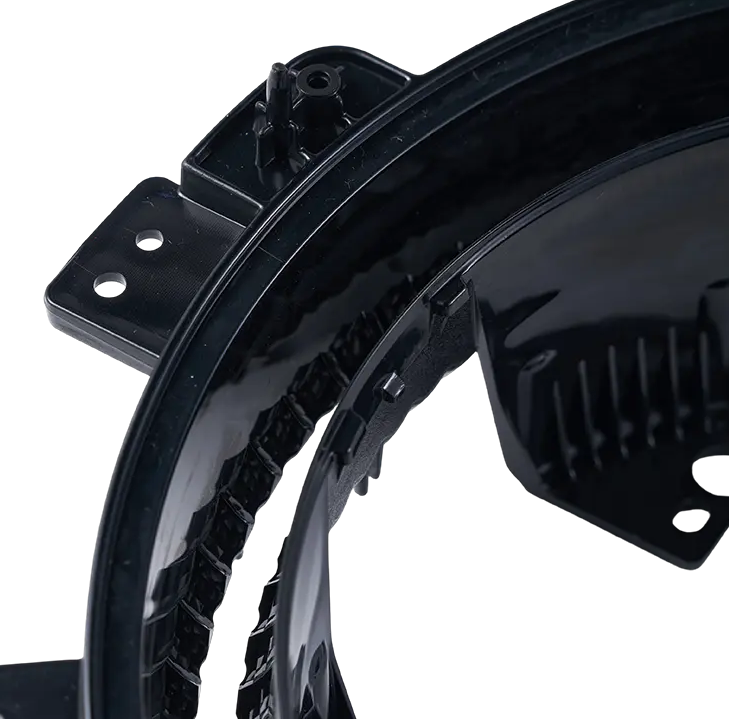
Automotive manufacturing requires a broad range of components with different shapes, materials, and performance expectations. Interior trim, exterior covers, lamp housings, electrical enclosures, structural plastic features, and mounting components may all depend on accurately manufactured molds. Although their functions vary, these products share the need for repeatable geometry, dependable release, and stable production conditions. A well-engineered Auto Parts Mould brings together component design, resin behavior, cavity construction, cooling performance, and ejection mechanics to support manufacturing quality from initial trials through ongoing production.
The first stage is a detailed review of the component's geometry and intended use. Engineers assess wall thickness, ribs, bosses, openings, fastening features, undercuts, and surfaces that will remain visible after assembly. They also identify dimensions that directly affect alignment with neighboring parts. Draft angles and parting-line positions must allow the product to release from the mold without damaging edges or cosmetic surfaces. Where the design contains complicated contours or side openings, slides and lifters may be needed. Early design review can reveal opportunities to simplify tooling while preserving the required function and appearance.
Material selection influences both component performance and the mold's engineering requirements. Different grades of polypropylene, ABS, polyamide, polycarbonate, and other engineering plastics offer different combinations of impact strength, stiffness, heat resistance, chemical resistance, and surface quality. Reinforced materials may improve rigidity but can also affect shrinkage patterns, flow behavior, and cavity wear. Engineers should consider the component's service environment alongside the resin's processing characteristics. A material that performs well mechanically may still create manufacturing challenges if its moisture sensitivity, flow length, or shrinkage behavior is not adequately addressed in the tooling design.
The mold layout must provide a controlled path for polymer to enter and fill the cavity. Gate position, runner dimensions, and vent locations affect filling balance, pressure distribution, and the formation of weld lines. Poorly placed gates may create visible defects or concentrate stress in functional areas. Insufficient venting can trap air and produce burn marks or incomplete filling. For complex geometry, simulation tools can help predict filling behavior and compare alternative design arrangements before machining begins. However, simulation results should be interpreted with appropriate material data and confirmed through physical trials rather than treated as a substitute for manufacturing validation.
Cooling-system design is particularly important when the part contains different wall thicknesses or large surface areas. The material must solidify sufficiently before ejection, and uneven cooling can lead to distortion or dimensional variation. Engineers arrange cooling channels to remove heat efficiently while retaining adequate strength in the mold structure. Channel locations should also allow inspection and cleaning during maintenance. In applications with complex contours, alternative channel layouts may help improve temperature distribution, depending on manufacturing feasibility and project requirements. Balanced cooling can support shorter practical cycles and more consistent part quality without compromising the required dimensions.
Tool manufacturing requires suitable materials, accurate machining, and careful assembly. CNC equipment produces many cavity profiles and fitting surfaces, while electrical discharge machining can form narrow slots, intricate recesses, and detailed features. Polishing or texturing is selected according to the component's appearance and functional needs. The mold base and inserts must align correctly, and guiding mechanisms should operate smoothly under repeated movement. Appropriate steel selection and heat treatment may improve wear resistance for demanding applications. Inspection of critical dimensions and interfaces before assembly helps reduce the risk of problems during the first mold trial.
Ejection design must protect the part while allowing efficient removal. Ejector pins, sleeves, lifters, and slides should be arranged according to the component's geometry and local stiffness. If the part includes thin walls, deep ribs, or delicate clips, excessive or uneven release forces may cause deformation or damage. The design should also account for cycle consistency, access for maintenance, and the expected service life of moving elements. Reliable ejection is not simply a matter of removing the component; it must do so repeatedly without introducing defects or slowing production unnecessarily.
Trial molding verifies the performance of the assembled tool. Engineers assess filling, packing, cooling, surface appearance, dimensions, and demolding behavior under practical processing conditions. Defects are investigated systematically to determine whether they originate from the part design, material, mold construction, or machine settings. Short shots may require changes to filling conditions or flow paths, while flash can indicate sealing problems or excessive pressure. Warpage may be associated with cooling imbalance, material shrinkage, or part geometry. Recording trial parameters and corrections helps establish a stable process and creates a useful reference for production teams.
Long-term performance depends on maintenance and process discipline. Routine cleaning, lubrication, vent inspection, cooling checks, and examination of wear surfaces help prevent gradual deterioration. Production teams should retain maintenance records and dimensional inspection results so recurring issues can be identified and addressed. When evaluating suppliers, buyers should consider technical communication, machining capability, validation procedures, quality documentation, and after-sales support in addition to initial tooling cost. Taizhou Renxin Mould Co., Ltd. supports automotive mold development through coordinated engineering and manufacturing processes. Visit https://www.rxmolds.com to discuss project drawings, material requirements, production targets, and your Auto Parts Mould application.

 English
 Arabic
 French
 Spanish
 Portuguese
 Turkish
 Dutch
Dutch
 Italiano
 Russian
 Romaian
 Portuguese (Brazil)
 Greek
Greek