


What Should Industries Consider Before Installing a Lubricating Oil System?
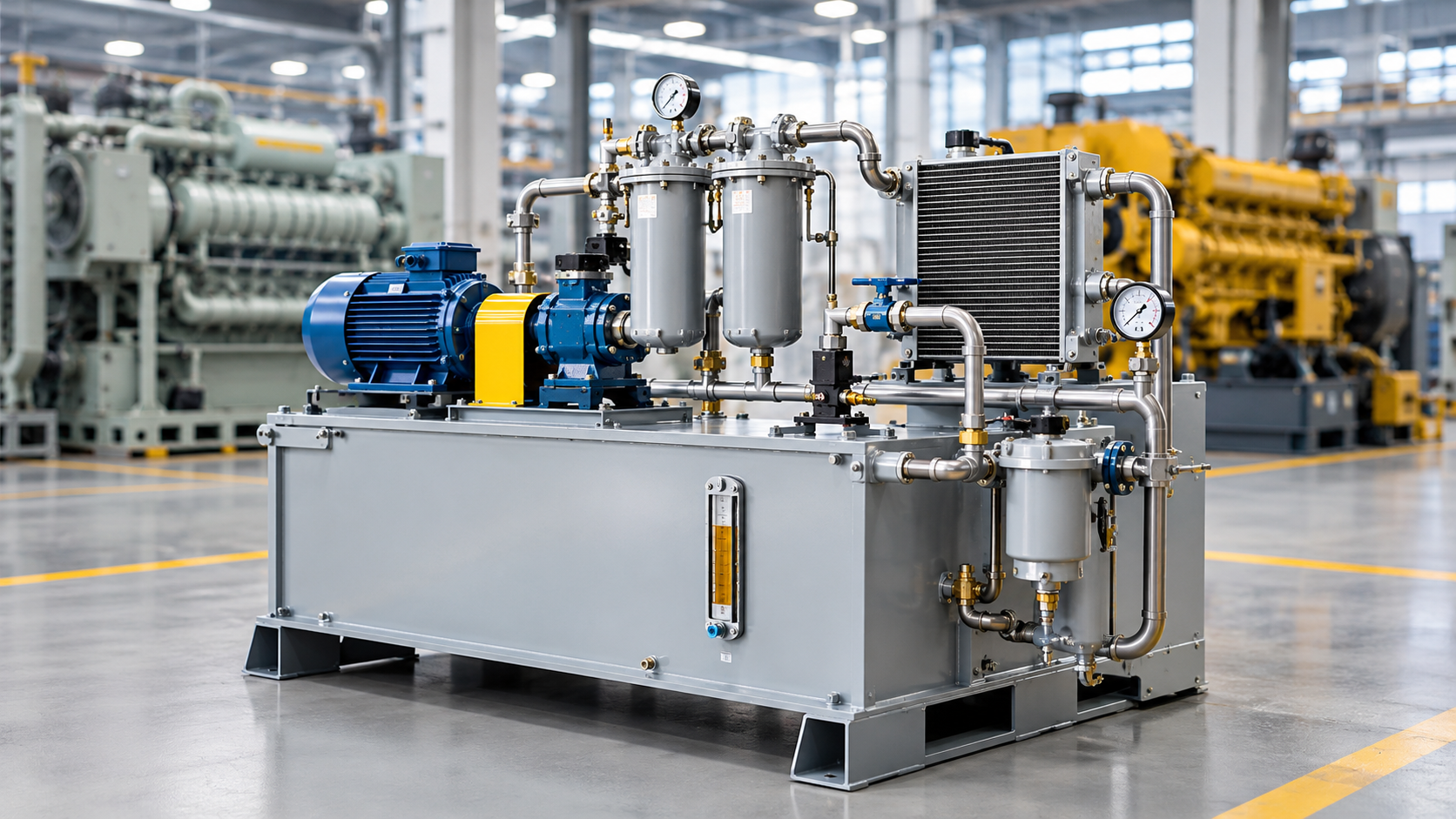
Industrial machinery depends on proper lubrication to operate smoothly, especially in manufacturing environments where equipment runs for extended periods under demanding conditions. Insufficient oil supply, inconsistent lubrication, and contamination can contribute to premature component wear, increased maintenance requirements, and unplanned downtime.
A well-planned Lubricating Oil System helps deliver the required lubricant to critical machine components according to their operating requirements. However, selecting the right system involves more than choosing a pump. Businesses must consider oil specifications, distribution requirements, machine design, operating conditions, and long-term maintenance.
For companies looking to improve their lubrication practices, understanding these factors can make equipment selection more practical and cost-effective.
Understanding the Role of a Lubricating Oil System
A lubricating oil system supplies oil to machine components that require continuous or periodic lubrication. Depending on the application, it may use a pump, reservoir, filters, distribution lines, metering devices, and monitoring components.
The primary purpose is to establish an appropriate lubricating film between moving surfaces. This film helps reduce friction and wear while supporting reliable equipment operation.
In circulating systems, oil may also carry heat away from components and transport contaminants towards filtration equipment. Other arrangements deliver controlled quantities of oil directly to designated lubrication points.
The configuration should always match the machinery's design and the lubricant manufacturer's recommendations. A system suitable for one production line may not provide the correct flow, pressure, or distribution for another.
Businesses can explore Technodrop's Lubricating Oil System solutions when evaluating options for industrial lubrication applications.
Five Important Factors to Consider Before Installation
1. Understand the Machine's Lubrication Requirements
Every machine has different lubrication requirements. High-speed bearings, industrial gearboxes, rotating shafts, and heavy-duty equipment may require different oil grades, delivery rates, and lubrication intervals.
Before installation, identify the lubrication points and review the equipment manufacturer's instructions. Consider the operating speed, load, temperature, and expected working hours.
This initial assessment helps determine whether the application requires continuous oil circulation, intermittent lubrication, or a controlled oil supply to individual components.
A clear understanding of these requirements also reduces the risk of supplying too much or too little lubricant.
2. Select the Correct Oil and Pump Capacity
Oil selection directly affects lubrication performance. Viscosity, temperature stability, and compatibility with the machine's materials are important considerations.
Oil that is too viscous may create excessive flow resistance, while oil that is too thin may not provide the required lubricating film under certain operating conditions.
Pump capacity also deserves careful attention. The pump must provide sufficient flow and pressure for the intended distribution network, taking into account pipe dimensions, oil viscosity, elevation differences, and system resistance.
3. Evaluate Oil Distribution and Filtration
An industrial lubrication system must deliver the correct quantity of oil to each designated point. Poorly designed distribution lines, unsuitable metering devices, or incorrect installation can result in uneven delivery.
Filtration is equally important. Dust, metal particles, and other contaminants can accelerate component wear and affect the performance of precision machinery.
The filtration arrangement should match the equipment's cleanliness requirements, oil flow, and operating conditions. In circulating systems, the design may also include an oil return line, reservoir management, and cooling equipment where necessary.
For machines with several lubrication points, planning the complete distribution network before installation helps simplify commissioning and future maintenance.
4. Consider Automation and Monitoring
Manual lubrication can become difficult when equipment has numerous lubrication points or operates across multiple shifts. An automated arrangement can deliver oil according to a predefined schedule or control strategy.
Depending on the application, the system may incorporate timers, level indicators, pressure switches, flow monitoring, or other control components.
These features help maintenance teams identify potential issues such as low oil levels, leakage, interrupted supply, or abnormal operating conditions. However, automation does not eliminate the need for inspections and preventive maintenance.
The right level of automation depends on equipment criticality, production requirements, available maintenance resources, and the cost of downtime.
5. Plan for Maintenance and Future Expansion
A lubrication system should be accessible for routine inspection and servicing. Filters, reservoirs, pumps, and distribution components should be positioned so technicians can inspect them without unnecessary disruption.
Consider spare-parts availability, cleaning requirements, oil replacement procedures, and the accessibility of lubrication lines.
It is also worth evaluating future production needs. If a facility plans to add machines or expand its production line, the lubrication arrangement should be assessed for compatibility with those changes.
A well-planned system can make maintenance more organised and reduce avoidable interruptions, provided it is installed and operated according to the equipment requirements.
Industrial Applications of Lubricating Oil Systems
Lubricating oil systems support a wide range of industrial operations where controlled lubrication is essential.
Steel and rolling mills: These facilities operate equipment under heavy loads and demanding production conditions. Suitable lubrication arrangements help protect compatible bearings and rotating components.
Cement manufacturing: Conveyors, gearboxes, and other machinery may require reliable oil delivery, particularly in dusty environments where contamination control is important.
Power generation: Certain turbines, bearings, and rotating equipment depend on carefully controlled oil supply and, where applicable, oil circulation and cooling.
Heavy engineering: Industrial machinery and production equipment may use dedicated lubrication arrangements to support consistent operation.
General manufacturing: Automated production lines and machine tools may benefit from appropriate oil delivery systems designed around their specific components.
In every application, the lubrication method should be selected according to the machine manufacturer's specifications rather than assuming that one configuration suits every machine.
How to Choose Reliable Lubricating Oil Systems Manufacturers
Selecting a suitable supplier is an important part of the procurement process. Businesses comparing Lubricating Oil Systems Manufacturers should evaluate more than the initial purchase price.
Look for a supplier that understands industrial lubrication requirements and can assess the intended application. Technical guidance, component compatibility, manufacturing quality, documentation, and after-sales support are all worth considering.
Before requesting a quotation, prepare details such as:
-
Machine type and operating conditions.
-
Number and location of lubrication points.
-
Required oil grade and delivery rate.
-
Operating pressure and temperature requirements.
-
Preferred control and monitoring features.
-
Installation limitations and maintenance expectations.
This information allows suppliers to evaluate the application more accurately.
Businesses searching for Lubricating Oil Systems Manufacturers in India can also review related Lubrication System solutions from TechnoDrop to understand the broader range of industrial lubrication options.
Why Proper System Selection Matters for Long-Term Performance
A lubrication system should be viewed as part of an equipment reliability strategy. Incorrect oil selection, poor distribution, inadequate filtration, or neglected maintenance can reduce the benefits expected from installation.
By contrast, a system selected for the machine's actual requirements can help control friction, support component life, and make lubrication activities more consistent.
Maintenance teams should establish inspection schedules, monitor oil condition where appropriate, and investigate unusual noise, temperature changes, pressure variations, or signs of leakage.
These practices help identify developing problems before they lead to more serious equipment issues.
Frequently Asked Questions
1. What is the purpose of a lubricating oil system?
It supplies oil to designated machine components to reduce friction and wear. Some circulating arrangements also support heat removal and oil filtration.
2. Can a lubricating oil system reduce maintenance requirements?
It can reduce repetitive manual lubrication tasks and help improve consistency. Actual maintenance savings depend on the machinery, system design, and operating practices.
3. What information is required when selecting an oil lubrication system?
Important details include the machine type, lubrication points, oil specifications, required flow and pressure, operating conditions, and monitoring requirements.
4. How can I identify suitable lubricating oil system manufacturers in India?
Evaluate the manufacturer's technical knowledge, product suitability, quality controls, documentation, and ability to support your specific industrial application.
Conclusion
Installing a Lubricating Oil System requires careful consideration of equipment requirements, lubricant specifications, pump capacity, filtration, distribution, and maintenance access. Taking these factors into account helps industrial businesses choose a practical solution that supports machinery reliability and consistent production.
For businesses evaluating industrial lubrication equipment, TechnoDrop provides a starting point for exploring relevant products and system options. Visit the Lubricating Oil System product page to learn more and assess the solution against your application requirements.

 English
 Arabic
 French
 Spanish
 Portuguese
 Deutsch
 Dutch
Dutch
 Italiano
 Russian
 Romaian
 Portuguese (Brazil)
 Greek
Greek