


CNC Machining Companies in Dubai for Custom Metal Part Needs
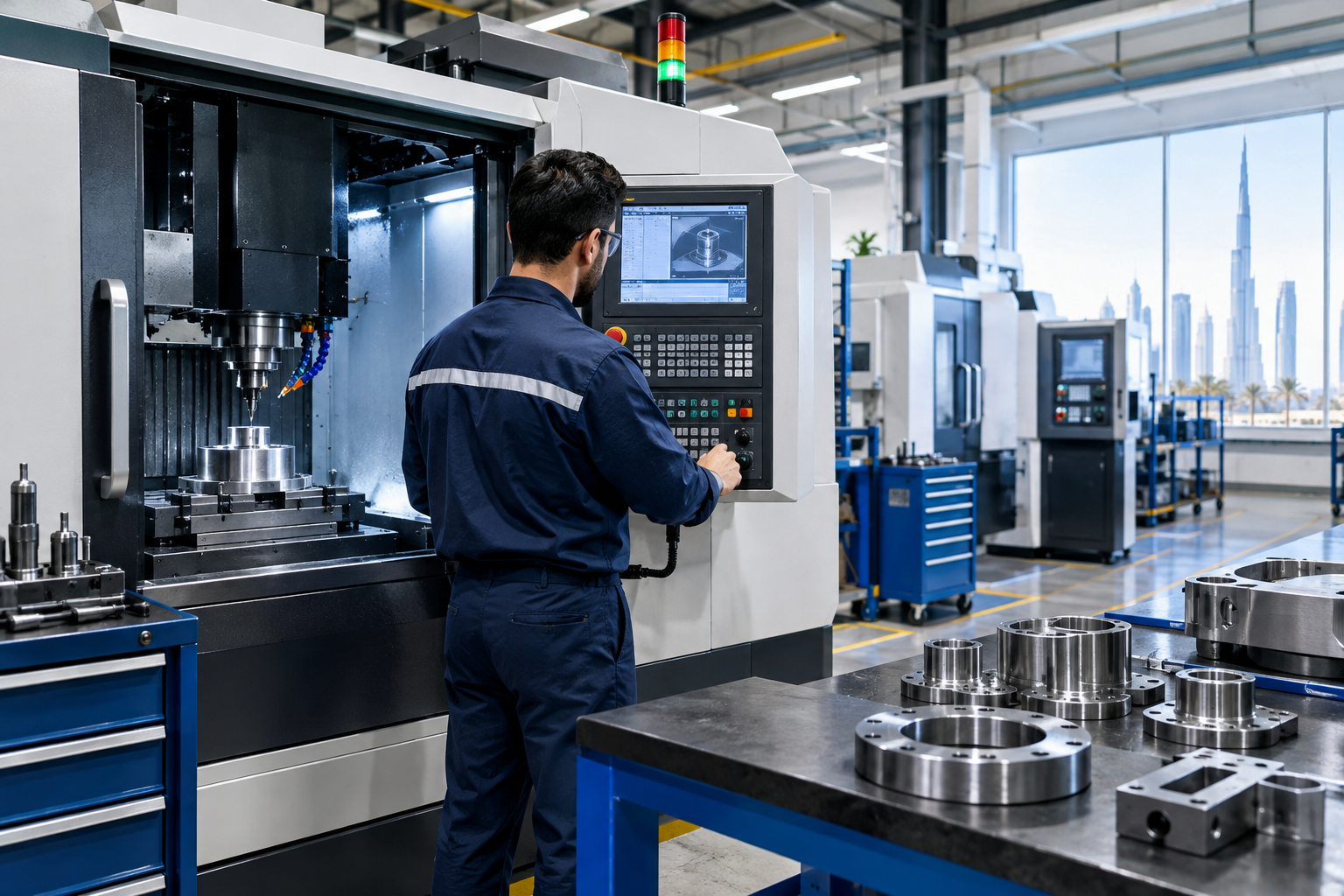
Selecting a machining partner requires more than finding a company with the right equipment. Businesses need to understand manufacturing capabilities, material options, component specifications, and the support available throughout a project. When comparing CNC machining companies in Dubai, evaluating these practical details helps buyers determine whether a supplier can meet their custom-part requirements.
Evaluate Manufacturing Capabilities Before Requesting a Quote
Computer numerical control (CNC) machining uses programmed instructions to cut and shape material according to a component’s design. It is used to manufacture precision parts with defined dimensions, specific features, and requirements that depend on their intended application.
Genesis-MFG provides CNC precision machining for custom industrial components. Its listed capabilities include CNC milling, CNC turning, and both 3-axis and 5-axis machining. These processes allow different component geometries to be considered according to their manufacturing requirements.
CNC milling uses rotating cutting tools to remove material and create features such as slots, pockets, flat surfaces, and shaped profiles. CNC turning rotates the workpiece against a cutting tool and is commonly used for cylindrical parts, including shafts and similar components. The choice depends on the shape and features of the required part.
For example, a machined block with several pockets and mounting holes may require milling, while a cylindrical component may be more suitable for turning. A more complex design could require additional machining operations. Buyers should therefore share the actual component drawing instead of asking for a general estimate based only on a part’s name.
When reviewing a supplier, ask which processes are suitable for the design and whether the required features can be produced with the available equipment. This helps establish whether the supplier’s capabilities match the project before time is spent comparing quotations.
Review Materials, Dimensions, and Quality Requirements
Material selection is a central part of custom manufacturing because different materials have different physical properties and machining requirements. Genesis-MFG lists metals such as aluminium, steel, titanium, copper, and brass, along with engineering plastics and composites.
The appropriate material depends on the component’s intended function and the specifications provided. Aluminium may be considered when weight is an important factor, while copper is valued for its thermal and electrical conductivity. Steel, titanium, brass, and engineering plastics offer different characteristics that must be evaluated against the design.
Dimensional tolerances also deserve attention. A tolerance defines how much a finished dimension may vary from its specified measurement. For instance, a component that fits into an existing assembly may require close control over its mounting holes or mating surfaces. Other dimensions may allow a wider variation when they do not affect the part’s function.
Genesis-MFG provides guidance on standard tolerances for metals and plastics and offers precision machining for specific requirements. Buyers should confirm the achievable tolerance for their particular component, material, and machining process rather than assuming that the same precision applies to every feature.
Before requesting production, prepare a technical package that includes:
-
A dimensioned engineering drawing or suitable 3D model.
-
Material specifications, required quantities, and critical tolerances.
-
Surface-finish requirements and details of important mating features.
Clear documentation helps the supplier assess the job accurately and identify missing information before manufacturing starts. It also provides a reference for checking whether the finished component matches the agreed requirements.
Understand the Difference Between Machining and Equipment Sourcing
Industrial projects may require custom-manufactured parts, complete equipment, or both. Although these needs can be connected, they involve different activities. Machining produces components from defined designs, whereas equipment sourcing focuses on identifying and procuring items required for operations.
Genesis-MFG offers oil and gas equipment sourcing alongside its precision manufacturing services. Its sourcing activities include equipment procurement and supply chain management for oil and gas applications involving drilling, production, processing, transportation, storage, refining, and petrochemical operations.
Businesses working with oilfield equipment suppliers in UAE should define the required equipment, intended application, and relevant technical specifications before approaching a supplier. This helps clarify what must be sourced and which requirements should be considered during procurement.
Consider a maintenance project that requires a custom metal component and a separate equipment item. The component can be assessed using its engineering drawing, dimensions, and material requirements. The equipment request should instead describe the required item, its application, and any relevant technical or documentation requirements.
Keeping these requirements separate makes purchasing discussions clearer. It also helps the project team identify which service is appropriate for each part of the job.
For equipment sourcing, buyers should clarify:
-
The equipment specification and intended operational use.
-
Applicable quality credentials and documentation requirements.
-
Required quantities, quotation details, and delivery expectations.
Genesis-MFG states that it is certified to API Spec Q1 and ISO 9001. Buyers can review these credentials as part of supplier evaluation while confirming any additional requirements relevant to their specific project. Certification claims should always be assessed against the documentation and scope applicable to the work being ordered.
Compare Suppliers Through Clear Project Requirements
A meaningful supplier comparison depends on evaluating the same requirements across quotations. If one supplier quotes for a different material, tolerance, or production approach, the prices may not represent equivalent work. Clear specifications make comparisons more useful.
When assessing CNC machining companies in Dubai, review the supplier’s available processes, material options, understanding of technical drawings, and ability to address the component’s critical features. Ask for clarification where specifications are incomplete, particularly when dimensions or finishes affect how the part fits or functions.
Communication also matters. A supplier should be able to discuss the requirements clearly and identify information needed to assess the job. Buyers can make this process more efficient by submitting complete drawings, confirming quantities, and explaining the intended application.
For equipment procurement, evaluate whether the proposed sourcing approach matches the stated requirements. Confirm delivery expectations and relevant documentation before finalizing an order. Where manufacturing and equipment sourcing are both involved, keep the component specifications and equipment requirements clearly separated in the project records.
A final review should compare the approved drawing, quotation, and purchase details. Check that material, dimensions, quantities, and agreed requirements are consistent. If a specification changes, communicate the revision to the relevant parties before proceeding.
These steps give industrial buyers a practical way to assess suppliers without relying on broad claims alone. Genesis-MFG’s published machining capabilities and equipment sourcing services provide a starting point for discussing the specific requirements of a project.
Conclusion
Choosing a machining or sourcing partner begins with a clear understanding of the work required. Manufacturing processes, materials, tolerances, and technical drawings help determine whether a supplier is suitable for a custom component. Businesses comparing oilfield equipment suppliers in UAE can also review Genesis-MFG’s equipment sourcing services and identify the documentation needed for their project. Preparing accurate specifications is a practical first step toward discussing an appropriate solution.
FAQs
1. What should I check when choosing a CNC machining supplier?
Review available machining processes, material options, tolerance requirements, and the supplier’s ability to understand your technical drawings.
2. Which CNC machining processes does Genesis-MFG offer?
Genesis-MFG lists CNC milling, including 3-axis and 5-axis machining, as well as CNC turning for custom precision components.
3. What information is needed for a machining quotation?
Provide engineering drawings or a 3D model, material details, quantities, dimensions, tolerances, and any required surface finish.
4. What does oilfield equipment sourcing involve?
It involves procuring equipment for oil and gas activities, with attention to technical specifications, supply arrangements, and project requirements.
5. Can custom machining and equipment sourcing support one project?
Yes. A project may require custom-machined components alongside separately sourced equipment. Defining each requirement clearly helps coordinate the work.

 English
 Arabic
 French
 Spanish
 Portuguese
 Deutsch
 Turkish
 Italiano
 Russian
 Romaian
 Portuguese (Brazil)
 Greek