


How Sheet Metal Fabrication Services Support Custom Industrial Components
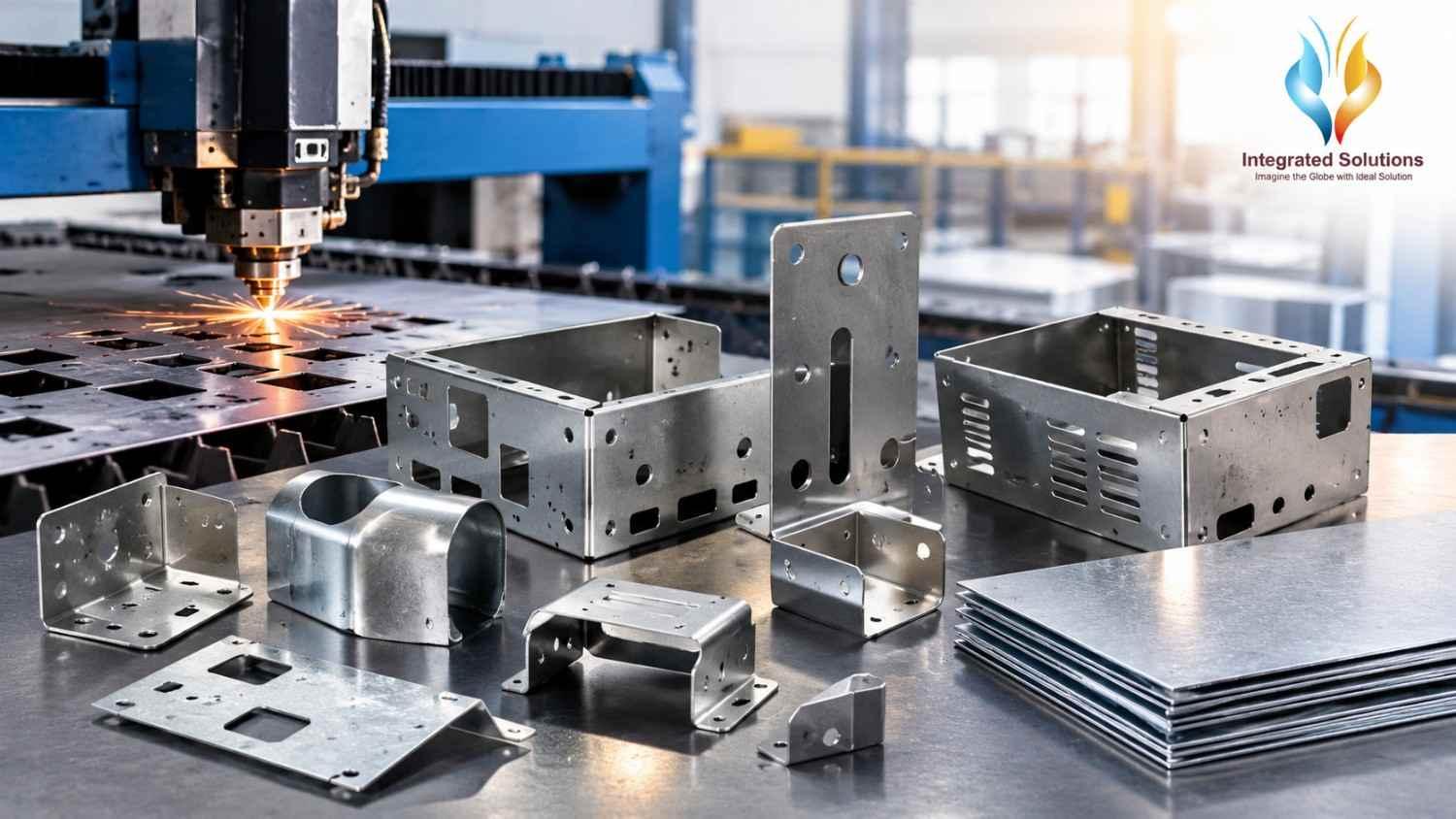
Why Custom Industrial Parts Fail Before Production
A fabricated bracket arrives with mounting holes slightly out of position. The dimensions appear acceptable on paper, but the component cannot fit the assembly.
That's where Sheet Metal Fabrication becomes more than cutting and bending metal. Custom industrial components require proper material selection, accurate dimensions, controlled manufacturing processes and careful inspection.
For procurement teams, the actual problem is rarely the initial quotation. It's discovering manufacturing defects after components reach the production line. One rejected batch can interrupt assembly schedules, increase rework costs and affect customer commitments.
Specifications That Determine Whether a Custom Part Will Fit
Industrial components are manufactured according to application requirements, material properties and engineering drawings. Reliable Sheet Metal Fabrication Services must address these details before production begins.
Material Selection and Thickness Requirements
Mild steel, stainless steel and aluminium are commonly selected for industrial sheet metal components.
-
Mild steel: Suitable for structural brackets, frames and machinery supports.
-
Stainless steel: Used where corrosion resistance and hygiene requirements matter.
-
Aluminium: Preferred for lightweight enclosures, panels and equipment housings.
Material thickness affects strength, bending behaviour and manufacturing cost. A 2 mm sheet and a 3 mm sheet may look similar, but they cannot automatically be substituted in a load-bearing design.
Cutting, Bending and Welding Specifications
Custom Sheet Metal Fabrication Parts may require laser cutting, press bending, welding, drilling and surface finishing.
For reference, ISO 9013:2017 covers quality classification for thermal cutting, including laser cutting within its stated application range of 0.5–32 mm. That does not mean every fabrication workshop can cut that entire range or achieve identical tolerances.
The Drawing Detail Buyers Frequently Miss
A drawing showing only overall length, width and height is incomplete for many fabricated assemblies.
Hole positioning, bend radius, material grade, surface treatment and dimensional tolerances must also be defined. Otherwise, two suppliers can manufacture noticeably different components from the same basic drawing.
Five Supplier Evaluation Checks Before Releasing a Purchase Order
Selecting Sheet Metal Fabrication Parts Manufacturers purely on quoted price is a procurement mistake. Evaluate these five factors first.
1. Material verification: Ask for the specified grade and supporting material documentation where required. A bad answer is, "We use the same quality material for everything."
2. Manufacturing capability: Check cutting, bending, welding and inspection arrangements. A supplier who cannot explain the production sequence may struggle with complex components.
3. Tolerance control: Request confirmation of critical dimensions and inspection methods. "Our machines are accurate" is not a measurable commitment.
4. Prototype approval: Establish whether a first article or sample can be inspected before bulk production. A supplier demanding immediate mass production without design validation creates unnecessary risk.
5. Rejection and replacement terms: Define defect reporting, corrective action and replacement responsibilities. "We will discuss problems later" is not an acceptable quality agreement.
How Custom Fabrication Protects Industrial Production Costs
Properly planned fabrication offers several practical advantages for manufacturers and industrial buyers.
-
Better assembly compatibility: Components manufactured to approved drawings reduce fitting adjustments and installation delays.
-
Lower material waste: Suitable cutting layouts can improve sheet utilisation and protect margins.
-
Design flexibility: Custom holes, brackets, folds and mounting arrangements reduce dependence on standard components.
-
Reduced rework: Prototype inspections help identify dimensional problems before larger production quantities are released.
-
Improved purchasing control: Defined specifications make it easier to compare suppliers against equivalent requirements.
-
Consistent repeat orders: Approved drawings, revision numbers and inspection records help prevent changes between batches.
The difficult part is maintaining dimensional consistency after bending and welding.
Heat distortion, material springback and accumulated dimensional variation can affect final assemblies. These issues require process planning rather than simply purchasing a more expensive cutting machine.
Availability of Custom Sheet Metal Components Across India
India's industrial supply network includes manufacturing clusters across Delhi NCR, Haryana, Gujarat, Maharashtra and Tamil Nadu. For buyers searching for Sheet Metal Fabrication Parts Suppliers in India, location affects more than freight charges. It influences sample movement, technical coordination, delivery planning and the handling of rejected components.
For example, a buyer operating in Gurugram or Noida may find physical sample approvals easier to coordinate with a nearby fabrication partner. Buyers in Pune, Ahmedabad or Chennai should also evaluate transportation arrangements and production lead times.
Established Sheet Metal Fabrication Parts Exporters must additionally consider export packaging, documentation and destination-specific compliance requirements. A supplier's address matters, but its ability to manage production and dispatch reliably matters more.
About Integrated Solutions: Our Manufacturing Approach
At Integrated Solutions, we support industrial manufacturing requirements through engineering, component development and fabrication capabilities.
We work with sheet metal components requiring cutting, bending, welding and assembly. Our published manufacturing capabilities include CNC punching and bending, laser cutting, welding, surface finishing and quality inspection.
We understand that a drawing approved before production must remain the reference for subsequent batches. Even a small revision to a mounting hole or bend location can affect assembly compatibility.
Our approach focuses on understanding component requirements before selecting the manufacturing process.
At Integrated Solutions, we invite OEMs, engineering companies and procurement teams to share their custom component requirements.
We request your 2D or 3D drawings, material grade, sheet thickness, required quantity, tolerances, surface finish and delivery location.
Our website states an enquiry response time of within 24 hours. We confirm minimum order quantity (MOQ), production feasibility, pricing and delivery schedules according to the project requirements. No fixed MOQ is published on our product page.
Conclusion
Successful Sheet Metal Fabrication begins with accurate engineering requirements, not the lowest quotation. Buyers who verify materials, tolerances and inspection procedures can reduce production disputes and unexpected costs. As industrial assemblies become more specialised, reliable custom manufacturing will depend increasingly on early coordination between designers, buyers and fabrication teams.
Frequently Asked Questions
Q1. What is Sheet Metal Fabrication used for in industrial applications?
It is used to manufacture brackets, enclosures, panels, machinery covers, frames and customised assemblies. Material and process selection depend on the component's function, loading conditions and working environment.
Q2. Can Sheet Metal Fabrication Services produce components from custom drawings?
Yes. Manufacturers can work from 2D drawings and 3D CAD models. However, incomplete tolerances or missing material specifications may require clarification before a reliable quotation is possible.
Q3. How do Sheet Metal Fabrication Parts Manufacturers maintain dimensional accuracy?
They use suitable cutting and forming processes, controlled production settings and dimensional inspections. Accuracy depends on component geometry and process capability; a claimed machine tolerance does not automatically apply to the finished assembly.
Q4. What affects the cost of Sheet Metal Fabrication Parts?
Material grade, sheet thickness, cutting complexity, bending operations, welding, finishing and order quantity all influence cost. Smaller orders may carry higher per-part setup expenses.
Q5. How should buyers evaluate Sheet Metal Fabrication Parts Exporters?
Check manufacturing capability, export experience, packaging methods, inspection documentation and agreed delivery terms. Export experience alone does not prove compliance with every destination market's technical requirements.
Q6. Can Sheet Metal Fabrication Parts Suppliers in India handle prototype orders?
Some suppliers offer prototype manufacturing and subsequent production quantities. Prototype availability and charges must be confirmed individually because tooling requirements and minimum quantities vary.
Q7. Which documents should buyers request before ordering custom fabricated components?
Request approved drawings, material specifications, agreed tolerances, inspection requirements and a written quotation. For critical applications, material certificates and first-article inspection reports may also be necessary.

 English
 Arabic
 French
 Spanish
 Deutsch
 Turkish
 Dutch
 Italiano
 Russian
 Romaian
 Portuguese (Brazil)
 Greek