


How can Laminar Airflow System Manufacturers support compliance with applicable Indian regulations?
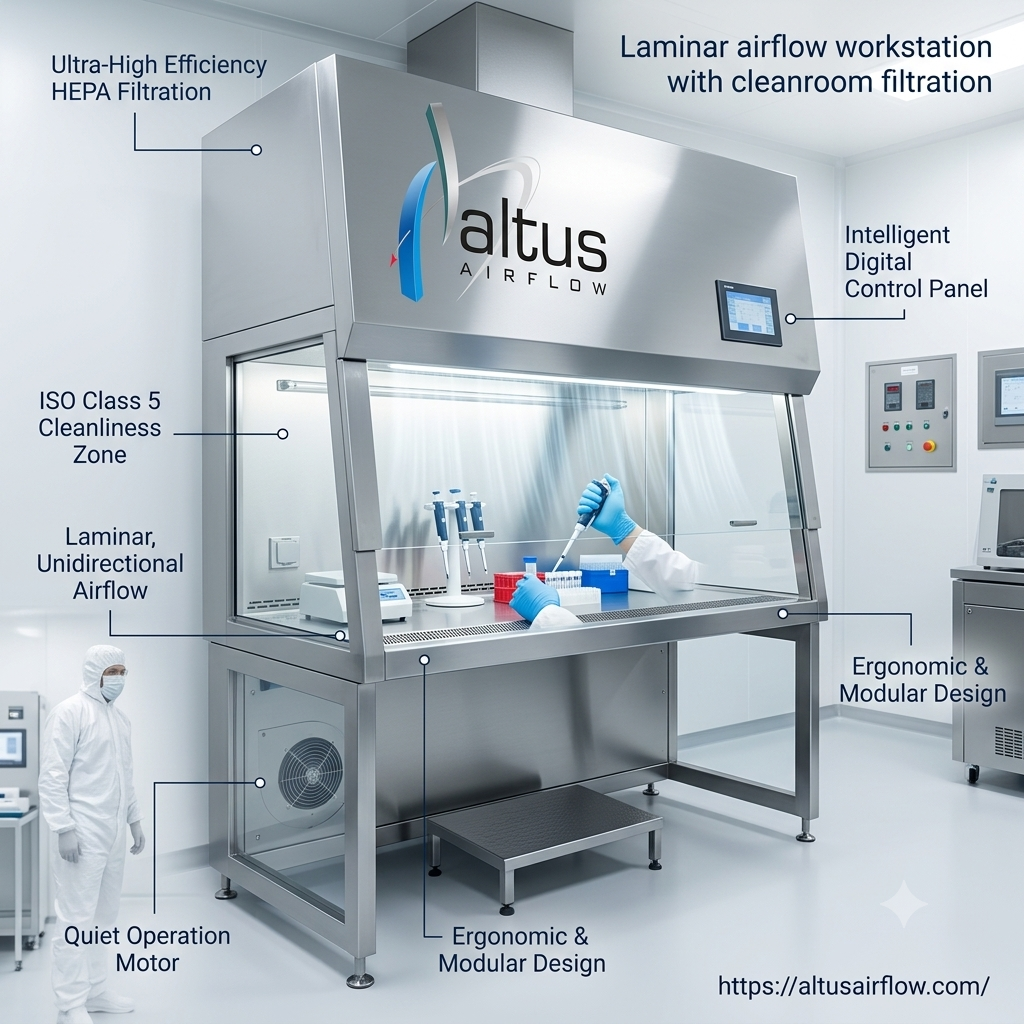
INTRODUCTION
Compliance with applicable Indian regulations is essential when designing and installing controlled environments for pharmaceutical manufacturing, healthcare facilities, laboratories, and other contamination-sensitive industries. Laminar Airflow System Manufacturers support this process by designing airflow solutions that help maintain air cleanliness, manage pressure differentials, integrate suitable filtration systems, and provide measurable performance records. Their role extends beyond supplying equipment to coordinating engineering specifications, installation, testing, commissioning, and maintenance according to the facility’s intended use and applicable regulatory requirements.
In India, the requirements for a laminar airflow installation depend on the industry, the activities performed, the products handled, and the level of contamination control required. Pharmaceutical manufacturing facilities may need to comply with applicable provisions of the Drugs and Cosmetics Act, 1940, and Drugs Rules, 1945, including Schedule M where relevant. Healthcare facilities must consider appropriate infection-prevention and operation-theatre ventilation guidance, while cleanroom projects may use relevant ISO standards as engineering references. Understanding these requirements early helps organizations plan reliable systems and prepare for inspections.
Understanding the Indian Regulatory Framework
There is no single regulation that applies identically to every laminar airflow installation. Manufacturers must first identify the facility type and determine which statutory provisions, technical standards, licensing conditions, and client specifications apply.
Important regulatory and technical references may include:
-
Drugs and Cosmetics Act, 1940, and Drugs Rules, 1945: Relevant to pharmaceutical manufacturing and other regulated drug-related activities.
-
Schedule M: Establishes Good Manufacturing Practices and requirements for premises, plant, equipment, and quality systems in applicable pharmaceutical manufacturing facilities.
-
National Guidelines for Infection Prevention and Control in Healthcare Facilities: Published by the National Centre for Disease Control, these include ventilation and design considerations for operation theatres.
-
ISO 14644 series: Provides technical standards for cleanroom classification, testing, monitoring, and related cleanroom considerations where applicable.
-
Building, fire, electrical, and occupational safety requirements: These must be considered according to the facility, project location, and applicable local approvals.
Manufacturers should help clients identify the applicable requirements rather than treating every standard as universally mandatory. Regulatory interpretation and final compliance responsibility remain with the facility owner, license holder, and relevant qualified professionals.
1. Designing Systems Around Applicable Requirements
The first contribution of a manufacturer is to translate regulatory and operational requirements into a documented engineering design.
Before selecting equipment, the project team should establish:
-
The intended use of the room or workstation
-
The required level of air cleanliness
-
The contamination risks associated with the process
-
The required airflow direction and distribution
-
Temperature and humidity requirements
-
Pressure relationships between adjacent areas
-
Equipment heat loads and operating conditions
-
Cleaning, disinfection, and maintenance requirements
These details determine whether a project requires a laminar airflow workstation, a cleanroom supply system, a terminal HEPA filtration arrangement, or a more comprehensive HVAC solution.
A properly developed design reduces the risk of installing equipment that appears suitable but cannot consistently achieve the required environmental conditions.
2. Supporting Pharmaceutical GMP Compliance
Pharmaceutical manufacturing is one of the most important applications of controlled airflow technology. Where Schedule M applies, manufacturers must support the facility’s Good Manufacturing Practices through appropriate engineering design, contamination-control measures, and documented system performance.
Schedule M includes requirements concerning controlled environmental conditions, air filtration, cleanroom parameters, and related system documentation for applicable operations. The specific provisions depend on the manufacturing activity and facility classification.
Manufacturers can support pharmaceutical facilities by providing:
-
Appropriate filtration stages
-
Suitable airflow and air distribution arrangements
-
Pressure differential monitoring provisions
-
Temperature and humidity control interfaces
-
Cleanable construction and suitable materials
-
Accessible filter housings for inspection and replacement
-
System drawings and technical specifications
-
Testing and commissioning documentation
For sterile manufacturing, the design must be aligned with the actual process, cleanroom classification, and contamination-control strategy. A laminar airflow unit alone does not establish compliance with all GMP requirements. The surrounding room, personnel practices, equipment, cleaning procedures, environmental monitoring, and quality systems also influence the final outcome.
The official Drugs Rules and applicable Schedule M provisions should be reviewed for the facility’s current obligations.
3. Selecting Suitable HEPA Filtration Systems
High-efficiency particulate air (HEPA) filtration is a key component of many contamination-control installations. However, selecting a filter based only on its efficiency rating is not sufficient.
Manufacturers should consider:
-
Required filter efficiency and applicable test method
-
Airflow volume and operating pressure
-
Filter dimensions and housing compatibility
-
Sealing arrangements to prevent bypass leakage
-
Pressure drop across the filter
-
Accessibility for inspection and replacement
-
Compatibility with cleaning and operating conditions
A poorly sealed filter housing can allow unfiltered air to bypass the filter, undermining the intended level of protection. Manufacturers should therefore specify suitable housings, gaskets, sealing methods, and installation procedures.
Where required by the project specification, filter integrity testing should be performed using an appropriate method. The results should be documented, and any leakage or performance failure should be investigated and corrected before acceptance.
Filter performance must also be maintained throughout the system’s operating life. Replacement intervals should be determined from operating conditions, pressure-drop trends, inspection findings, and the facility’s maintenance procedures rather than relying on an arbitrary schedule.
4. Managing Airflow Direction and Pressure Differentials
Airflow direction and pressure relationships are essential to contamination control. The appropriate configuration depends on whether the primary objective is to protect a product, protect personnel, or prevent contamination from entering a controlled area.
For example, pharmaceutical cleanrooms may use pressure cascades to reduce the movement of contaminants from less-clean to cleaner areas. Healthcare operation theatres commonly use appropriately designed positive-pressure ventilation arrangements to limit the entry of air from less-clean surrounding spaces, subject to the applicable clinical design requirements.
Manufacturers can support these objectives through:
-
Airflow balancing and distribution calculations
-
Appropriate supply and return-air positioning
-
Pressure differential indicators or monitoring interfaces
-
Door and room-sealing considerations
-
Coordination of supply and exhaust systems
-
Alarm provisions where specified
-
Verification of airflow direction during commissioning
The National Centre for Disease Control’s National Guidelines for Infection Prevention and Control in Healthcare Facilities describe positive-pressure filtered air, pressure gradients, and airflow direction as important operation-theatre ventilation considerations.
Pressure settings should be established from the approved design and risk assessment. A universal pressure value should not be applied to every cleanroom or healthcare environment.
5. Applying Cleanroom Standards Correctly
ISO 14644 is a widely used technical reference for cleanroom classification and related testing. It helps project teams define and evaluate airborne particle cleanliness, but it should not be confused with a blanket regulatory approval for every laminar airflow installation.
Depending on the project, manufacturers may help with:
-
Establishing cleanroom classification requirements
-
Planning particle-count testing
-
Coordinating airflow and filter testing
-
Supporting cleanroom qualification
-
Preparing technical documentation
-
Defining monitoring and maintenance arrangements
The relevant parts of ISO 14644 should be selected according to the project scope. For instance, particle classification, testing methods, monitoring, and cleanroom design are addressed in different parts of the series.
It is also important to distinguish between a filter’s efficiency rating and the cleanliness classification of a complete room. Room classification depends on measured airborne particle concentrations under the specified conditions, not simply on the type of filter installed.
6. Providing Proper Installation and Commissioning
Even a well-designed system can underperform if it is installed incorrectly. Installation and commissioning therefore play a major role in demonstrating that the equipment operates according to its approved design.
A structured commissioning process may include:
-
Installation inspection: Verify equipment positioning, duct connections, seals, electrical connections, and filter installation.
-
Airflow measurement: Check airflow volume, velocity, and distribution against the approved specifications.
-
Filter integrity testing: Conduct appropriate testing where required by the project.
-
Pressure verification: Confirm that the intended room or workstation pressure relationships are achieved.
-
Environmental checks: Verify specified temperature, humidity, and other monitored parameters.
-
Functional testing: Check controls, alarms, indicators, and operating sequences.
-
Documentation: Record results, identify deviations, and confirm corrective actions.
Testing should be carried out using suitable instruments and methods by competent personnel. Instruments should have appropriate calibration records, and acceptance criteria should be defined before testing begins.
Successful commissioning provides evidence of performance at the time of testing. It does not, by itself, guarantee permanent compliance without continued monitoring and maintenance.
7. Maintaining Documentation for Inspections
Regulatory inspections and quality audits often require evidence that systems have been appropriately designed, installed, tested, and maintained.
Manufacturers can help facilities maintain a clear documentation package that includes:
-
Approved engineering drawings
-
Equipment specifications and datasheets
-
Filter details and identification records
-
Installation and inspection checklists
-
Testing and commissioning reports
-
Instrument calibration information
-
Operating and maintenance manuals
-
Preventive maintenance schedules
-
Deviation and corrective-action records
-
Staff training and handover documentation, where applicable
For pharmaceutical facilities, Schedule M includes provisions concerning documented system descriptions, including information such as filter specifications, air changes, pressure gradients, and cleanroom classes for applicable systems. The exact documentation package should be aligned with the current rules and the facility’s quality-management system.
Organized records make it easier to demonstrate that the installation was evaluated against defined requirements and that identified problems were addressed.
8. Integrating HVAC and Environmental Monitoring
Laminar airflow equipment often operates as part of a broader HVAC and environmental-control arrangement. Compliance cannot be assessed by examining an individual unit in isolation when room performance depends on several interconnected systems.
Manufacturers should coordinate with HVAC designers and facility engineers to address:
-
Air handling unit capacity
-
Supply and return-air arrangements
-
Fresh-air requirements
-
Cooling and heating loads
-
Humidity control
-
Filter loading and pressure drop
-
Room pressure stability
-
Controls and building-management interfaces
-
Monitoring and alarm requirements
Environmental monitoring may include temperature, relative humidity, pressure differential, airflow, and airborne particles, depending on the facility’s risk assessment and approved specifications.
Monitoring systems should be designed to provide useful information to operators. Where alarms are required, thresholds, response procedures, and responsibilities should be documented. Monitoring data should be reviewed and retained according to the facility’s applicable procedures.
9. Supporting Infection Prevention in Healthcare Facilities
Healthcare applications require particular attention to patient safety, clinical workflows, cleaning, and infection prevention. A laminar airflow system may be part of an operation theatre or another controlled clinical environment, but it must be selected and designed for the intended use.
The National Guidelines for Infection Prevention and Control in Healthcare Facilities discuss filtered air, positive pressure, ventilation rates, pressure gradients, and suitable surface characteristics for operation theatres.
Manufacturers can support healthcare projects by coordinating airflow design with the clinical layout, surgical lighting, medical equipment, access points, and HVAC infrastructure. They should also provide suitable documentation for testing, filter maintenance, and operational handover.
The precise ventilation criteria must be established using the applicable healthcare guidance, project specifications, and competent engineering assessment. Laminar airflow should not be presented as a standalone guarantee against surgical-site infections; infection prevention depends on multiple coordinated clinical and environmental measures.
10. Offering Preventive Maintenance and Revalidation Support
Compliance is an ongoing activity. Filters become loaded, seals can deteriorate, sensors may drift, and changes to room layouts can affect airflow patterns.
Manufacturers can help facilities develop preventive maintenance plans covering:
-
Routine visual inspections
-
Filter pressure-drop monitoring
-
Filter replacement when indicated
-
Verification of seals and housings
-
Sensor and instrument calibration
-
Airflow balancing after relevant changes
-
Periodic performance testing
-
Review of alarms and operating records
-
Recommissioning or requalification when required
Any major modification, relocation, filter replacement, or HVAC alteration should be assessed to determine whether additional testing is necessary. Revalidation requirements should follow the facility’s quality system, risk assessment, and applicable regulations.
This approach helps detect performance deterioration before it becomes a significant operational or compliance issue.
11. Evaluating a Manufacturer’s Compliance Capabilities
Before selecting a supplier, organizations should evaluate whether the manufacturer can demonstrate the technical capability and documentation needed for the project.
Useful evaluation criteria include:
-
Experience with similar regulated facilities
-
Knowledge of applicable Indian requirements
-
Engineering calculations and approved design drawings
-
Traceable filter and component specifications
-
Qualified installation and testing personnel
-
Suitable testing instruments and calibration records
-
Clear commissioning and acceptance procedures
-
Maintenance and technical-support arrangements
-
Transparent handling of deviations and corrective actions
Hospitals, laboratories, and pharmaceutical manufacturers should also establish who is responsible for design approval, regulatory interpretation, qualification, and final acceptance. These responsibilities should be agreed upon before work begins.
Common Compliance Mistakes to Avoid
Several avoidable mistakes can undermine the effectiveness of a laminar airflow installation:
-
Assuming one filter rating guarantees room compliance
-
Applying the same pressure settings to every facility
-
Selecting equipment without assessing the process risk
-
Ignoring airflow interactions with doors, exhausts, and adjacent rooms
-
Failing to test filter integrity where required
-
Using instruments without appropriate calibration
-
Omitting commissioning records and maintenance procedures
-
Treating equipment certification as proof of complete facility compliance
-
Neglecting reassessment after modifications
A risk-based design, clear responsibilities, appropriate testing, and ongoing maintenance help reduce these risks.
Conclusion
Laminar Airflow System Manufacturers support compliance with applicable Indian regulations by translating facility requirements into suitable engineering designs, selecting appropriate filtration and airflow components, coordinating installation, conducting performance testing, and providing documentation and maintenance support. Their contribution is particularly valuable when pharmaceutical GMP requirements, healthcare ventilation guidance, and cleanroom standards must be considered together. Compliance depends on the intended use of the facility, the current applicable rules, and evidence that the complete installation performs as specified. By combining technical expertise with documented quality processes and long-term service support, Altus Airflow helps organizations plan and implement dependable laminar airflow solutions tailored to their operational and contamination-control needs.
Frequently Asked Questions
1. How do Laminar Airflow System Manufacturers support regulatory compliance in India?
Laminar Airflow System Manufacturers support compliance by designing suitable airflow and filtration systems, coordinating installation, verifying performance, and supplying documentation aligned with the applicable regulations and project specifications.
2. Which Indian regulations are relevant to laminar airflow systems?
Depending on the application, Laminar Airflow System Manufacturers may need to consider the Drugs and Cosmetics Act, 1940, Drugs Rules, 1945, applicable Schedule M requirements, healthcare ventilation guidance, and relevant building and safety provisions.
3. Is HEPA filtration mandatory for every laminar airflow installation?
The requirement depends on the intended application and applicable specifications. Laminar Airflow System Manufacturers should assess the required level of air cleanliness and select filtration accordingly rather than assuming that one configuration suits every facility.
4. How can Laminar Airflow System Manufacturers help with cleanroom validation?
Laminar Airflow System Manufacturers can support validation through airflow measurements, appropriate filter integrity testing, particle-count testing, pressure verification, functional checks, and documented commissioning results where these activities are required.
5. What documents should be provided after installation?
Laminar Airflow System Manufacturers should provide relevant equipment specifications, approved drawings, filter information, installation records, commissioning reports, operating manuals, and maintenance instructions according to the project scope and applicable requirements.

 English
 Arabic
 French
 Spanish
 Portuguese
 Deutsch
 Turkish
 Dutch
 Russian
 Romaian
 Portuguese (Brazil)
 Greek