


Is Chendiao Right for Your Aluminum Plate Cutting Circular Saw Machine Needs
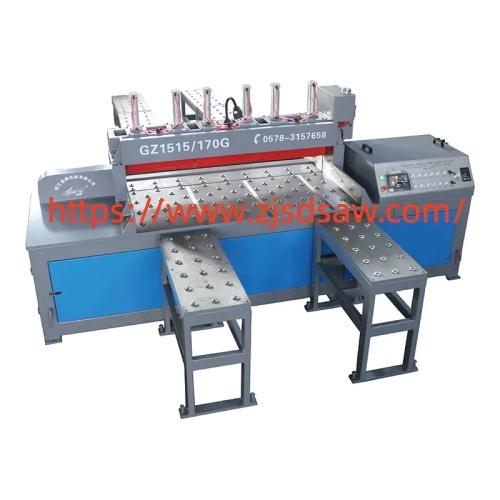
Aluminum Plate Cutting Circular Saw Machine selection should begin with the actual demands of your production floor, not simply the purchase price or motor power. Manufacturers working with alloy sheets and thick metal stock need equipment that matches their material dimensions, required tolerances, production volume, and available workspace. A well considered purchasing decision can help create a smoother workflow, reduce avoidable material waste, and keep daily manufacturing tasks organized.
Start by examining the dimensions of the stock you handle most frequently. Thickness, width, length, and alloy composition all influence the equipment configuration required for your operation. A workshop producing small components may have different priorities from a factory preparing large sections for industrial assemblies. Record the range of materials you process, including occasional oversized workpieces, before comparing specifications. This information gives suppliers a clearer picture of your requirements and helps narrow the available options.
Blade compatibility deserves careful attention. Different alloys and thicknesses place different demands on tooth geometry, blade diameter, rotational speed, and feed rate. A configuration intended for thin sheet stock may not perform appropriately with a substantial solid section. Carbide tipped blades designed for non ferrous materials are commonly considered for these applications because their tooth geometry supports chip formation. Confirm that the proposed blade matches both the material and the equipment manufacturer's recommendations. Incorrect combinations can contribute to rough edges, excessive heat, premature wear, and inconsistent dimensions.
Workpiece stability also affects the finished result. During operation, the material needs firm support to prevent shifting or vibration. A suitable clamping arrangement holds the stock securely while the blade moves through it, helping maintain dimensional consistency across repeated jobs. For long or wide workpieces, consider the surrounding support structure and how operators will position material safely. A carefully planned layout can make loading and unloading more manageable, particularly when production involves frequent changes in stock dimensions.
Production volume should guide your choice of operating system. Manual equipment may suit occasional orders, prototype work, and workshops that handle varied jobs throughout the week. Semi automatic configurations can reduce repetitive operator actions, while automatic feeding systems may be useful when factories process recurring batches with established dimensions. Automation should solve a genuine workflow problem rather than add unnecessary complexity. Before investing in additional functions, estimate daily output, staffing requirements, and the time currently spent positioning and measuring each workpiece.
Dimensional requirements deserve equal consideration. Some components allow a reasonable tolerance, while parts intended for assembly may require closely controlled lengths and square edges. Ask suppliers how positioning accuracy is specified, which measurement conditions apply, and whether repeatability can be demonstrated during an acceptance test. Testing with your own material is particularly useful because alloy hardness, thickness, and surface condition can influence the finished result. It also provides an opportunity to assess operating noise, chip removal, and the time required to complete a typical production cycle.
Maintenance and operating expenses should form part of the purchasing calculation. Beyond the initial investment, consider replacement blades, lubrication supplies, electricity consumption, routine inspections, and operator training. Ask about access to spare parts, warranty terms, technical assistance, and the availability of operating documentation. Equipment that is straightforward to maintain can help your team organize servicing and reduce avoidable interruptions. Confirm the installation footprint and electrical requirements before delivery so the new system can be integrated into the existing workshop without unnecessary changes.
Safety features require close review as well. Protective guards, emergency stop controls, secure clamping, and appropriate chip management should align with the intended application and relevant workplace requirements. Operators need clear instructions for setup, adjustment, cleaning, and servicing. Routine checks can help identify worn components or alignment issues before they affect production. Establishing consistent procedures also makes it easier to train new staff and maintain predictable working practices across different shifts.
For manufacturers comparing industrial equipment, Chendiao offers a starting point for reviewing available configurations against practical production requirements. Prepare a list covering material dimensions, alloy types, expected output, accuracy targets, automation preferences, and installation conditions before contacting a supplier. These details help turn a broad equipment search into a focused technical discussion. To review the manufacturer's product range and identify an option suited to your operation, visit https://www.zjsdsaw.com/ and compare the available specifications with your actual workshop needs.

 English
 Arabic
 French
 Spanish
 Portuguese
 Deutsch
 Turkish
 Dutch
 Italiano
 Russian
 Romaian
 Greek