


Home Safety Tips for a Safe Recovery After Hospital Discharge
Introduction
Recovering at home after a hospital stay can feel comforting, but it also requires careful planning. Patients may need help managing medications, changing wound dressings, moving safely, attending follow-up appointments, and recognizing signs of complications. Preparing the home before the patient arrives can make these tasks easier and help families follow the doctor's instructions.
For many families, the challenge is knowing how much support a recovering patient needs. Some patients require only occasional assistance, while others benefit from professional nursing care or help with everyday activities. A clear recovery plan, a safe home environment, and access to appropriate healthcare support can help patients manage the transition from hospital to home.
1. Prepare the Home Before the Patient Arrives
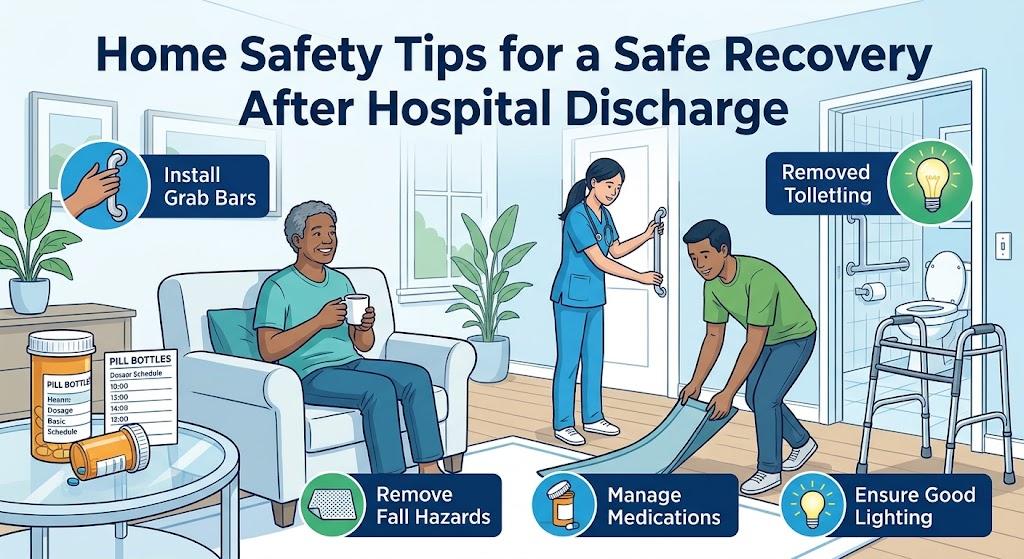
A comfortable home environment can make everyday activities easier for someone who is weak, in pain, or recovering from surgery. Before discharge, ask the healthcare team whether the patient needs special equipment, mobility assistance, or changes to their usual sleeping arrangements.
Start by preparing the room where the patient will spend most of their recovery time.
- Keep frequently used items, including water, a phone, prescribed medicines, and personal essentials, within easy reach.
- Arrange a comfortable bed and a stable chair with armrests if recommended.
- Ensure hallways and frequently used rooms have adequate lighting.
- Remove loose rugs, electrical cords, and other tripping hazards.
- Keep the bathroom floor dry and consider suitable non-slip mats or recommended support equipment.
- Arrange prescribed mobility aids, such as a walker or wheelchair, before they are needed.
Patients who have difficulty climbing stairs may benefit from having their sleeping arrangements on the ground floor, if practical. Avoid moving or lifting a patient without understanding the correct technique, especially after surgery or an injury.
2. Follow the Hospital Discharge Instructions
Discharge instructions explain what the patient should do during recovery and when additional medical attention may be necessary. Families should review these instructions before leaving the hospital rather than trying to remember everything later.
Ask the healthcare team to explain any unclear instructions, including:
- Which activities are allowed and which should be avoided.
- Whether the patient needs help walking, bathing, dressing, or using the bathroom.
- How to care for a surgical wound or dressing.
- Whether any dietary changes or fluid restrictions are necessary.
- When the next appointment should take place.
- Which symptoms require a call to the treating doctor or an emergency visit.
Keep the discharge summary somewhere accessible. It should include relevant diagnoses, medication instructions, follow-up arrangements, and contact information.
If multiple family members are helping, share the care plan with everyone involved. This reduces confusion and helps ensure that important instructions are followed consistently.
3. Manage Medications Carefully
Medication management is an important part of recovery after a hospital stay. Patients may leave the hospital with new prescriptions, adjusted doses, or instructions to stop medicines they previously used.
Create a written medication schedule based on the current prescription. Include each medicine's name, prescribed dose, timing, and any specific instructions about food or administration.
Use the following precautions:
- Compare the discharge medication list with the medicines already available at home.
- Ask the doctor or pharmacist about any differences or unclear instructions.
- Use a written checklist to track doses when appropriate.
- Store medicines according to their labels and keep them away from children.
- Record possible side effects and report concerns to the treating healthcare professional.
- Never change a dose, stop a prescribed medicine, or add a new medicine without appropriate medical advice.
Extra care may be necessary when a patient takes several medicines or has difficulty remembering schedules. A family member or qualified healthcare professional can help manage the prescribed routine.
For patients who require prescribed injections or intravenous medication, administration should be arranged with an appropriately qualified professional according to the treating doctor's instructions.
4. Make Wound Care and Hygiene a Priority
Patients recovering from surgery or certain injuries may need dressing changes, wound observation, and help maintaining personal hygiene. Correct wound care supports the prescribed recovery plan and helps families recognize possible complications.
Follow the instructions provided by the hospital or treating clinician. Keep the wound and dressing clean and dry as directed, wash hands before and after handling wound-care supplies, and avoid applying unapproved creams, oils, or home remedies.
Watch for concerning changes, including:
- Increasing redness or swelling around the wound.
- Worsening pain rather than gradual improvement.
- Pus, unusual discharge, or an unpleasant smell.
- Fever or other symptoms identified in the discharge instructions.
- Bleeding that does not stop with the recommended measures.
Contact the treating healthcare professional promptly if these symptoms develop. Heavy bleeding, severe deterioration, or other emergency symptoms require urgent medical assessment.
If dressing changes or other clinical procedures are required, ask whether a qualified nurse should perform them. Families should not attempt unfamiliar medical procedures without proper instruction.
5. Support Safe Movement and Daily Activities
Patients often feel weaker after an illness, operation, or extended hospital stay. Even familiar activities, such as getting out of bed, walking to the bathroom, or taking a shower, may require temporary assistance.
Follow the mobility instructions provided by the healthcare team. Encourage activity only within the patient's prescribed limits, and never push someone to walk or exercise when they have been advised to rest.
Practical ways to improve safety include:
- Allowing enough time for the patient to stand up and move slowly.
- Keeping walking routes clear and well-lit.
- Using prescribed mobility aids correctly.
- Providing assistance with bathing and dressing when needed.
- Following the recommended physiotherapy exercises, if prescribed.
- Avoiding heavy lifting or strenuous activity until cleared by the treating clinician.
Older adults and patients with balance problems, fractures, neurological conditions, or recent surgery may need closer supervision.
If a patient requires help with transfers, walking, or rehabilitation exercises, ask the healthcare team whether a trained attendant or physiotherapist can provide appropriate support at home.
6. Maintain Nutrition, Hydration, and Rest
Recovery places different demands on the body depending on the illness, operation, and overall health of the patient. Adequate rest and appropriate nutrition can support the recovery plan, but dietary needs vary considerably.
Unless the doctor has prescribed restrictions, offer balanced meals containing suitable sources of protein, vegetables, fruit, and other nutritious foods. Follow any specific dietary advice for conditions such as diabetes, kidney disease, or heart problems.
Remember these basic precautions:
- Follow prescribed fluid limits if the patient has been given any.
- Offer meals and drinks according to the patient's tolerance and care plan.
- Ask for professional advice if the patient has difficulty swallowing, persistent nausea, or poor appetite.
- Provide a quiet, comfortable environment for sleep and rest.
- Avoid starting supplements or herbal products without checking whether they are appropriate alongside prescribed medicines.
Families should not assume that every recovering patient needs the same diet or amount of fluid. Individual instructions from the treating healthcare professional take priority over general recommendations.
7. Arrange Professional Homecare When Needed
Family support is valuable, but caring for a recovering patient can become difficult when clinical tasks, mobility assistance, and everyday responsibilities overlap. Professional homecare may help families manage these needs without requiring the patient to travel for every planned care visit.
Depending on the patient's condition and prescribed care plan, homecare may include nursing assistance, wound dressing, medication administration, monitoring of vital signs, personal care, or support with rehabilitation.
InstaCare provides homecare services across Lahore, with service hours from 10 AM to 10 PM. Its services can support patients who need appropriate assistance during recovery at home, including those requiring nursing care or help with specific care tasks.
Homecare prices start at Rs. 2,500, with the final cost varying according to the service required. Families should confirm the exact price, availability, visit arrangements, and any applicable requirements before booking.
Before arranging care, consider the following questions:
- Does the patient need a qualified nurse, physiotherapist, doctor, or patient attendant?
- Are wound dressing, injections, or other prescribed procedures required?
- How long will the visit need to last?
- What instructions has the treating doctor provided?
- Does the care provider have the appropriate qualifications and experience for the patient's needs?
Choosing the right level of support can help families organize care around the patient's actual requirements rather than paying for services they do not need.
8. Keep Follow-Up Appointments and Monitor Recovery
Being discharged from hospital does not necessarily mean treatment is complete. Follow-up appointments allow healthcare professionals to review recovery, assess wounds, adjust treatment when appropriate, and address emerging concerns.
Keep a calendar of appointments and arrange transport in advance. If the patient has mobility difficulties, ask the treating team whether a home visit or another suitable arrangement is available.
Family members can also maintain a simple daily record of relevant observations, depending on the care plan. This may include temperature, blood pressure, blood glucose, wound changes, medication administration, appetite, or mobility.
Share these records with the healthcare professional when requested. Do not rely on home monitoring alone when symptoms are worsening or medical advice is needed.
When should you seek urgent medical help?
Contact emergency services or go to the nearest emergency department if the patient develops severe breathing difficulties, chest pain, uncontrolled bleeding, sudden weakness, new facial drooping, severe confusion, or loss of consciousness.
Do not wait for a scheduled homecare visit when emergency symptoms occur. Homecare supports planned recovery; it does not replace emergency medical treatment.
Hospital Discharge Checklist for Families
Use this checklist before bringing a patient home and during the first days of recovery.
|
Task |
What to check |
|
Discharge documents |
Collect the discharge summary and written care instructions. |
|
Medicines |
Confirm the current medication list, doses, and schedule. |
|
Home safety |
Clear walking routes and prepare suitable sleeping arrangements. |
|
Medical supplies |
Arrange prescribed dressings, equipment, and mobility aids. |
|
Wound care |
Understand the dressing instructions and warning signs. |
|
Daily assistance |
Decide who will help with meals, bathing, walking, and other needs. |
|
Follow-up care |
Record appointments and the treating team's contact details. |
|
Professional support |
Arrange appropriate nursing or homecare assistance if needed. |
|
Emergency plan |
Know which symptoms require urgent medical attention. |
This checklist can be adapted to the patient's condition and the instructions provided by the hospital.
Conclusion
A safe recovery after hospital discharge begins with preparation, clear instructions, and the right level of support. Keeping the home free of hazards, following prescribed medication schedules, maintaining wound care, and attending follow-up appointments can help families manage the transition from hospital to home.
When additional assistance is needed, professional homecare can provide support tailored to the patient's care plan. InstaCare offers homecare services across Lahore from 10 AM to 10 PM, with prices starting at Rs. 2,500 depending on the service required. Families can discuss their needs and confirm pricing before arranging a visit.
The most important step is to plan care around the patient's condition, follow the treating doctor's advice, and seek medical attention promptly when warning signs appear.
Frequently Asked Questions
1. How can I make my home safe after hospital discharge?
Remove tripping hazards, improve lighting, prepare a comfortable sleeping area, keep essentials within reach, and arrange any recommended mobility aids. Follow the hospital's specific instructions for the patient's condition.
2. When should a patient receive homecare after leaving the hospital?
Homecare may be useful when a patient needs help with wound dressing, prescribed medication administration, mobility, personal care, or monitoring. The appropriate service depends on the patient's needs and the treating doctor's recommendations.
3. How much do homecare services cost in Lahore?
InstaCare's homecare services start at Rs. 2,500. The final price varies depending on the service required, so families should confirm the cost before booking.
4. What are InstaCare's homecare service hours in Lahore?
InstaCare provides homecare services across Lahore from 10 AM to 10 PM. Families should confirm availability and visit arrangements when booking.
5. What symptoms should not be ignored after hospital discharge?
Severe breathing difficulties, chest pain, uncontrolled bleeding, sudden weakness, new facial drooping, or loss of consciousness require emergency medical attention. Other concerning symptoms, such as fever or worsening wound redness, should be discussed promptly with a healthcare professional.

 English
 Arabic
 French
 Spanish
 Portuguese
 Deutsch
 Turkish
 Dutch
 Italiano
 Russian
 Portuguese (Brazil)
 Greek