


Top SOC Providers in India: Strategic Manufacturing Use Cases
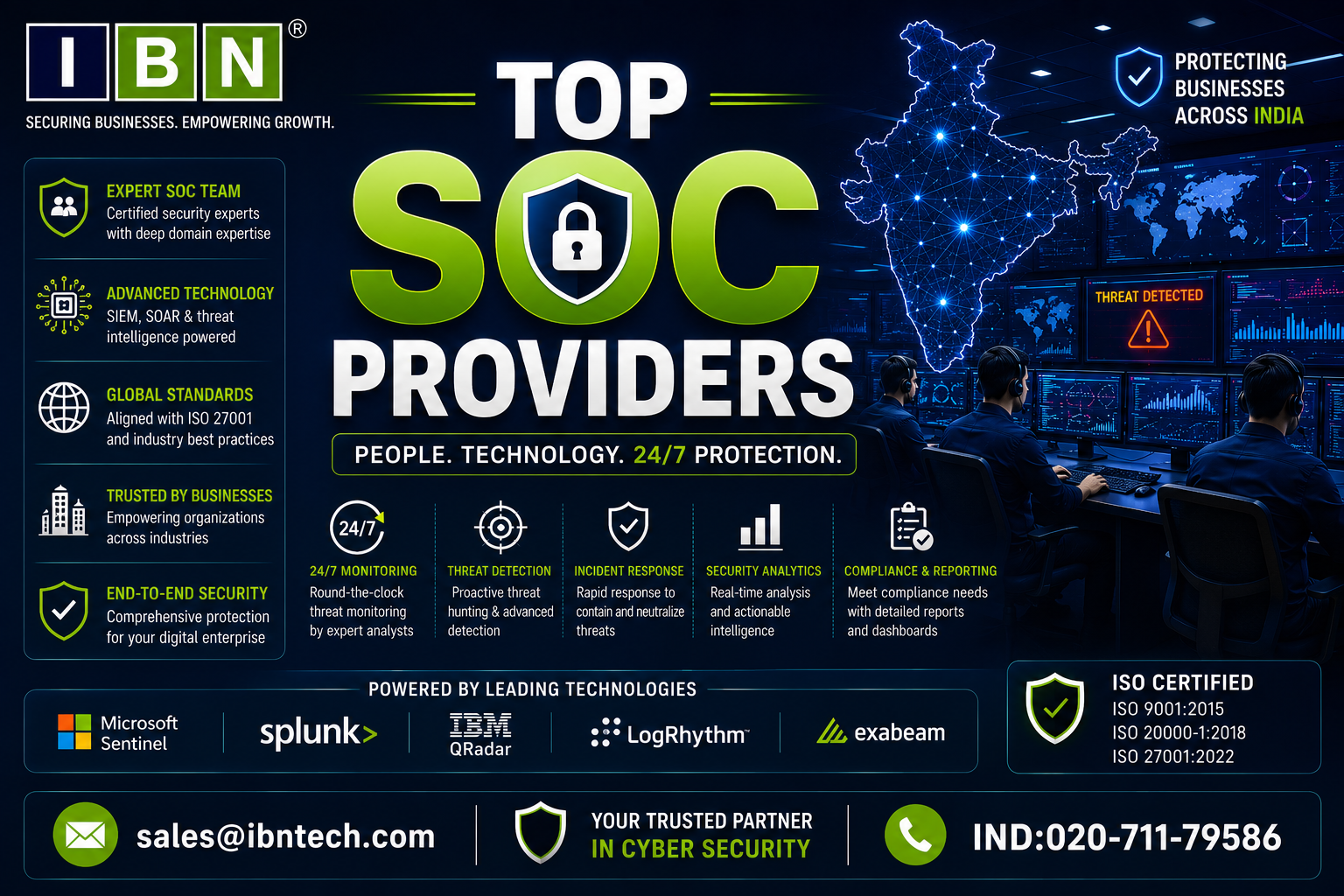
Where Top SOC Providers Make the Biggest Difference for Indian Manufacturing
Manufacturing environments combine office IT, plant networks, industrial systems and third-party vendor access. The top soc providers make the biggest difference where these worlds overlap, because a single overlooked connection can put production, safety and delivery schedules at risk.
Why manufacturing needs more than IT monitoring
A factory is not just an office with machines. It includes enterprise systems, plant-floor networks, programmable controllers, sensors, remote-access links and vendor connections. Each layer produces different security signals, and attackers often move from IT systems into operational environments.
Traditional monitoring focuses on servers, endpoints and email. That approach misses activity on plant networks, unmanaged devices and vendor sessions. A manufacturing-focused SOC looks across both IT and operational technology, correlating events that would otherwise be reviewed in isolation.
Many plants adopt a soc managed service for manufacturing in India to gain this combined visibility without building a dedicated internal security operations team. The provider supplies monitoring and analyst capacity, while the plant retains ownership of production decisions and safety protocols.
Which systems should a manufacturing SOC monitor first?
A manufacturing SOC should monitor identity systems, remote-access gateways, enterprise resource planning platforms, plant networks, industrial controllers and vendor connections first. These are the paths most often used to move between IT and operational environments.
The exact order depends on the plant’s risk profile. A facility with high automation or safety-critical processes should prioritise operational systems, while a plant with heavy third-party access should focus on identity and remote-access monitoring.
Use cases where providers add value
One high-value use case is vendor remote-access monitoring. Maintenance partners, equipment suppliers and system integrators often need remote access to plant systems. A SOC can track when these sessions occur, what accounts are used and whether activity matches the agreed purpose.
Another use case is ransomware detection. Manufacturing is attractive to attackers because downtime creates immediate pressure to pay. A SOC that correlates unusual file activity, lateral movement and privilege escalation can give the plant early warning before systems are locked.
A third use case is OT network visibility. Sensors, controllers and legacy devices may not support modern security agents, but their network traffic can still be monitored. Unusual communication patterns often reveal misconfigurations, unauthorised devices or early stages of an attack.
|
Use case |
Risk addressed |
What the SOC provides |
|
Vendor remote access |
Unauthorised or excessive third-party access |
Session monitoring and anomaly alerts |
|
Ransomware detection |
Production downtime and data loss |
Early warning through correlated signals |
|
OT network visibility |
Blind spots in plant networks |
Traffic analysis and unusual-pattern alerts |
|
Identity compromise |
Privileged account misuse |
Login anomaly detection and escalation |
|
System misconfiguration |
Accidental exposure of critical assets |
Configuration drift and policy alerts |
How does a soc managed service for manufacturing in India handle vendor remote access?
A soc managed service for manufacturing in India handles vendor remote access by monitoring session timing, source, account usage and activity patterns against agreed baselines. Unusual sessions, such as access outside maintenance windows or from unexpected locations, are escalated for review.
The plant should maintain a register of approved vendors, access windows and permitted systems. The SOC uses this context to distinguish legitimate maintenance from suspicious activity.
Comparing coverage priorities
Not every plant needs the same monitoring depth. A facility with high automation, safety-critical processes or strict customer requirements needs broader OT visibility. A smaller plant with limited third-party access may focus on identity, remote access and enterprise systems first.
The key is to match coverage to risk rather than trying to monitor everything at once. A phased approach lets the plant build visibility where it matters most, then expand as resources allow.
|
Plant profile |
Priority focus |
Reason |
|
High automation |
OT networks and controllers |
Downtime and safety risks are highest |
|
Heavy vendor access |
Identity and remote access |
Third-party sessions create entry points |
|
Legacy equipment |
Network traffic monitoring |
Devices may not support endpoint agents |
|
Multi-site operations |
Centralised log correlation |
Attacks may span locations |
|
Regulated supply chains |
Compliance-oriented reporting |
Customer and audit requirements demand evidence |
A practical plant scenario
Imagine a plant that relies on a vendor for equipment maintenance. The vendor accesses plant systems remotely during scheduled windows. One evening, the SOC observes a login from the vendor account outside the agreed window, followed by unusual network activity toward a controller segment.
The analyst correlates the session with recent changes to remote-access rules and alerts the plant’s security contact. The plant confirms the session is unauthorised, disables the account and reviews recent activity on affected systems. Production continues without interruption because the anomaly was caught early.
The response worked because the plant had documented vendor access rules and the SOC could compare live activity against that baseline. Without this context, the session might have been treated as routine maintenance.
Best practices for manufacturing leaders
Start with an asset inventory. Identify critical systems, plant networks, remote-access points, vendor connections and legacy devices. This inventory forms the basis for any monitoring scope.
Document vendor access rules. Approved vendors, permitted systems, access windows and account ownership should be recorded and reviewed regularly. The SOC can only detect anomalies if it knows what normal looks like.
Test the escalation path. A short exercise involving a compromised vendor account or a ransomware alert will reveal whether contact lists, approval limits and communication channels actually work under pressure.
Finally, review coverage after major changes. New production lines, system upgrades, vendor changes and network modifications all alter the risk profile. The SOC scope should be updated whenever the plant environment changes materially.
Frequently asked questions
Can a SOC monitor operational technology without disrupting production?
Yes. A SOC can monitor OT environments through network traffic analysis, log collection from supported systems and passive monitoring. The approach should avoid direct interference with controllers or safety systems.
Do manufacturing plants need a dedicated internal SOC team?
Not always. Many plants use a managed SOC for continuous monitoring and response support while retaining internal ownership of production, safety and business decisions.
What is the first step before engaging a SOC provider?
The first step is documenting critical assets, network architecture, vendor access rules and existing security controls. This context allows the provider to build a relevant monitoring scope rather than a generic one.
IBN Technologies helps Indian manufacturers evaluate top SOC providers through OT-aware scoping, vendor-access monitoring and incident-response support aligned to plant priorities.
Contact Us
IBN Technologies
Phone: +91 20 6768 0404
Email: sales@ibntech.com

 English
 Arabic
 French
 Spanish
 Portuguese
 Deutsch
 Turkish
 Italiano
 Russian
 Romaian
 Portuguese (Brazil)
 Greek