


Why Pilots Love GMT and Chronograph Watches
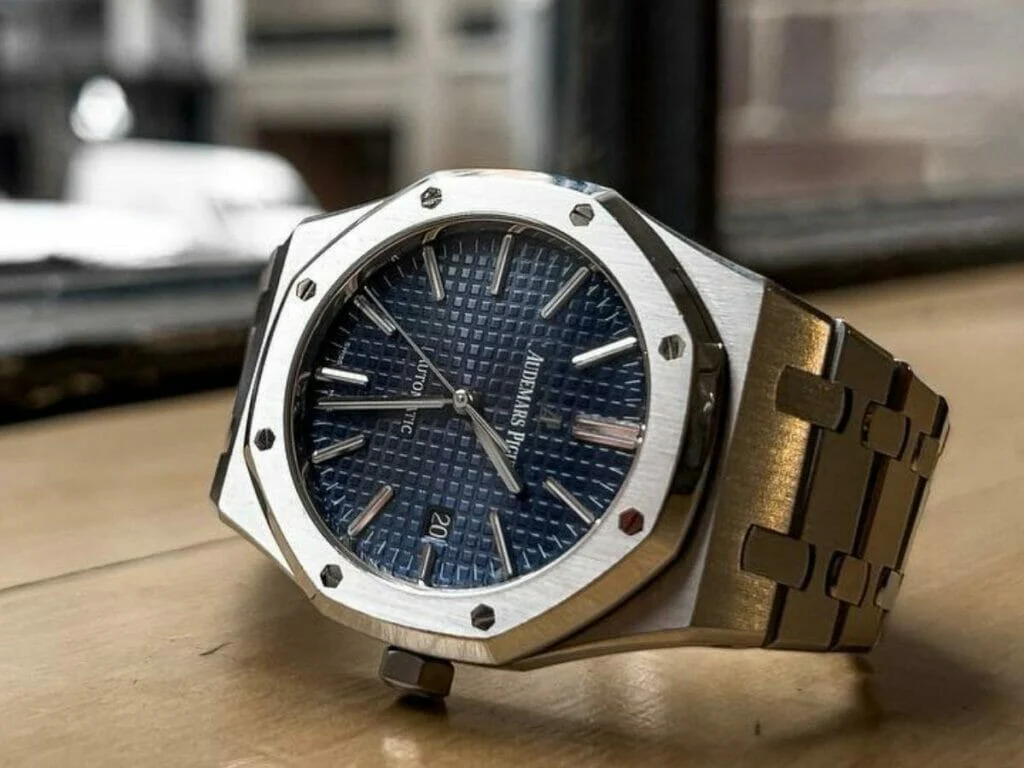
Aviation has influenced wristwatch design for more than a century, but the relationship goes much deeper than oversized numerals and instrument inspired dials. Pilots operate in an environment where time can relate to navigation, flight planning, fuel calculations, communication and movement between time zones. Long before digital cockpit systems could display much of this information automatically, a reliable watch was a genuinely useful flight instrument. That practical history helps explain why two complications in particular, the GMT and chronograph, became so closely associated with aviation watches.
Modern pilots no longer depend on a mechanical wristwatch in the way early aviators once did, yet GMT and chronograph watches continue to make sense in aviation because the functions address two fundamental questions: what time is it somewhere else, and how much time has elapsed? Understanding those purposes reveals why pilot watches developed the way they did and why their influence extends well beyond the cockpit.
Flying Made Accurate Time More Important
There is a unique issue facing watchmaking in its early days since pilots had to see the time fast without distracting themselves from much more important activities. It is rather clear that a pocket watch would not be an appropriate choice since it may require both hands to hold and read time. Thus, a wrist watch was very helpful in such circumstances, since it would not distract from flying.
It seems that time is connected to the task of navigation since before the era of navigation by electronics, time together with speed, compass readings and known coordinates could be used to perform some calculations and help pilots know how the flight was going. So there was a need for accurate time keeping not only because pilots should have arrived on time.
These criteria affected the appearance of watches that are now called pilots watches, but the development of planes led to another issue since planes started to travel great distances covering several time zones during a single flight.
The GMT Solved a Problem Created by Distance
A regular watch shows one time only. This is enough until one starts moving from country to country often or coordinates his activities with people who work in different places. It became normal in aviation due to the development of international commercial flights.
GMT watch solves the problem of having one more time zone to show. A typical design for a mechanical GMT watch is a hand that makes one round each day and can be read according to a 24-hour scale. The scale can be placed either on the dial, chapter ring or bezel of the watch. The ordinary hour and minute hands show the local time whereas the GMT hand can keep any other reference time.
The logic of using a GMT watch is clear for the pilots since there is often a need to communicate and plan activities in different zones with their own time. For example, Coordinated Universal Time (UTC) is often used in aviation because it does not lead to any misunderstandings caused by the diversity of local times.
The GMT complication therefore turns the wristwatch into a simple visual bridge between local time and a wider international time system.
Why a 24 Hour Display Matters
At first, the 24 hour scale on a GMT watch may appear to be a stylistic feature, but it solves an important limitation of the conventional 12 hour dial. If a second hand simply indicated another time using the same 12 hour scale, the wearer might know that it was seven o’clock elsewhere without immediately knowing whether that meant morning or evening.
A 24 hour indication removes that ambiguity. If the GMT hand points to 19, the reference time is 19:00 rather than 07:00. For someone crossing several time zones, that distinction can be immediately useful.
Some GMT watches also use a rotating bezel, allowing the wearer to reference an additional time zone depending on the design and how the hands are configured. This has helped make the complication useful beyond professional aviation. Frequent travellers can keep home time visible while setting the main hour hand to their destination, which is one reason GMT watches have become closely associated with international travel as well as pilots.
Not All GMT Movements Work in the Same Way
GMT refers to the function, however, all GMT mechanical watches are not set exactly in the same way. This difference becomes important depending on the use of the watch.
On some watches, the normal local hour hand can be moved forward or backward without stopping the watch by one-hour intervals only. Such a function is particularly helpful to the person arriving at a new time zone since the local time will change and the GMT hand will continue showing the selected reference time.
On other watches, it is possible to move independently the 24 hours hand. This gives also the possibility of having two time zones but in a different way. However, in both cases, it is possible to have the third time zone shown on the watch. Nevertheless, frequent travelers might prefer a system where the local hour hand can be independently set.
Such an example demonstrates how one and the same complication can be implemented differently under the dial.
The Chronograph Answers a Different Aviation Question
Where the GMT feature concerns itself with multiple time zones at the same time, the chronograph watch tells the amount of time that has passed from one moment to another. Pushers make it possible for the owner to activate and then reset a separate timer, which is measured by means of subdials in minutes or even hours.
This association between chronograph watches and aviation came from the fact that elapsed time had numerous applications. It could be used by pilots and navigators to time different phases of the flight or navigation without the use of a stopwatch. Back before cockpits became equipped with electronic tools to solve many problems, this function could be quite useful.
However, it was only one of the uses of a chronograph, which could find itself at home anywhere where interval measurement was needed. That is why it is not an aviation complication. Nevertheless, in pilot watches it has been associated with aviation style.
Legibility Becomes Harder When the Dial Does More
Adding complications creates a design problem: every additional piece of information competes for limited dial space. A chronograph may introduce several subdials, an additional seconds hand, more markings and pushers, while a GMT adds another hand and a 24 hour scale. If these elements are poorly arranged, a supposedly functional watch can become difficult to read.
Good pilot watches therefore depend on visual hierarchy. The normal hour and minute hands should remain immediately distinguishable, while secondary information needs to be available without overwhelming the basic time display. Contrast, hand shape, numeral size and luminous material can all contribute to readability.
This explains why many aviation influenced watches use comparatively clear dial layouts even when they contain multiple functions. The visual character is not simply an attempt to resemble cockpit instrumentation. It reflects the same basic design objective: important information should be recognisable quickly.
Why Mechanical Functions Still Appeal in a Digital Cockpit
The modern cockpit has systems that are much more advanced than anything found in a wristwatch with moving parts. Digital systems in the cockpit can handle time, navigation and other flight data with a level of integration beyond what the earliest pilots ever conceived of. It is thus wrong to idealize a GMT or chronograph complication in a watch as being essential modern equipment for flying.
This has become its new charm. The complications give relevant data in an easily understandable way, but there is another reason why they remain useful – their ability to connect the owner of the watch with the past age of aviation through the tangible process of using a bezel, rotating a GMT hand or pushing a chronograph pusher.
These complications have moved far beyond the professions that used to make them popular.
GMT or Chronograph Depends on What You Want the Watch to Do
Although both are strongly connected with aviation, GMT and chronograph watches solve different problems. Someone who frequently moves between countries may find the GMT complication more relevant because it keeps another time zone immediately visible. Someone who enjoys measuring intervals may get more practical use from a chronograph.
There are watches that combine both functions, but additional capability can bring greater dial complexity, thicker cases and more complicated movements. More functions do not automatically produce a better aviation watch. The most useful complication is the one whose information the wearer will actually use.
This is particularly important when aviation styling itself is the attraction. Someone may enjoy a highly legible pilot style watch without needing either complication, while another wearer may value a GMT every day despite having no particular interest in aviation history.
Why These Complications Have Outlived Their Original Purpose
The lasting relationship between watches and aviation is partly a story of technology replacing technology. Mechanical wristwatches once answered practical problems that modern aircraft systems can now handle more comprehensively, yet the designs created around those problems have survived.
GMT watches remain useful because international travel still involves time zones. Chronographs remain useful because people still need or enjoy measuring elapsed time. Clear dials remain desirable because readability is valuable whether the wearer is sitting in a cockpit, airport lounge or office.
That is why the strongest aviation watches do not rely solely on aircraft inspired styling. Their connection with flight comes from functions and design principles developed around genuine needs: keeping track of another time zone, measuring an interval and presenting information clearly. Technology may have transformed the cockpit, but those simple problems have never entirely disappeared, which is why GMT hands and chronograph pushers continue to feel at home on a pilot’s wrist.

 Arabic
 French
 Spanish
 Portuguese
 Deutsch
 Turkish
 Dutch
 Italiano
 Russian
 Romaian
 Portuguese (Brazil)
 Greek