


Custom Eco Friendly Boxes That Blend Style with Sustainability
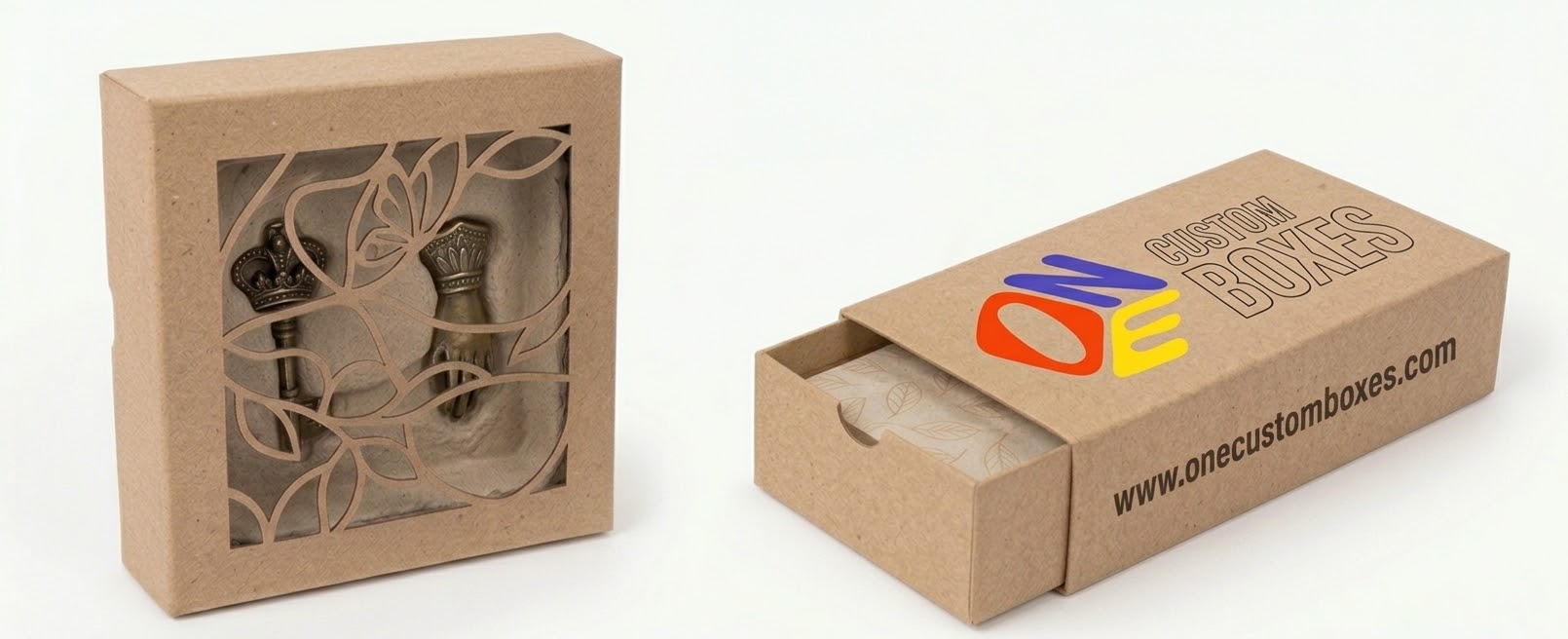
Two quotes land in a founder’s inbox for what looks like the same box. One is recycled kraft. The other is virgin coated board, and it’s more expensive, which is what you’d expect. Then a third quote arrives for a “green” version with plastic lamination and a full foil panel, and it costs more than both. So much for the idea that sustainable means pricey, or that cheap means dirty. What you pay for is a set of specific choices, and most of them are within your control.
What actually drives the price
Packaging cost comes down to a handful of decisions. Many of the greener options are also the cheaper ones, because they mean using less of everything.
Cut what the customer doesn’t need and the invoice drops along with the waste.
Picking the board
Recycled-content board is easy to find and prints well. It can show slight color shifts and a rougher surface than bright virgin stock, and for natural or handmade brands that texture usually helps. Kraft says “unprocessed” before you’ve added a single design element.
Ask for specifics. A stated recycled-content percentage and FSC-certified fiber (where it applies) are things you can check. “Eco-friendly” printed on a quote is not. If a supplier makes a claim, ask which certificate or document backs it up.
For weight, roughly 14 to 18pt works for many folding cartons, and shipping mailers usually go corrugated. That’s a general guideline. What’s inside and how it travels should decide the final spec.
Size is the cheapest lever you have
An oversized box wastes board, costs more to ship, and needs filler to stop the product rattling. A fitted box fixes all three at once.
Measure the real product with its cap or lid on, then allow about 0.1 to 0.2 inches of clearance for a rigid item. An extra inch on every side sounds harmless. Multiply it by a few thousand orders and it isn’t.
Finishes: skip the plastic
Plastic lamination feels smooth and glossy, but it can get in the way of recycling in many municipal systems. Aqueous coatings give decent scuff and moisture resistance without that problem. A foil logo is fine. Foil across a whole panel adds cost and can complicate recycling.
If you want a premium feel without piling on finishes, try these:
-
A deboss or blind emboss on the logo. It needs no extra material.
-
Single-color print on kraft. It looks deliberate and costs little.
-
Uncoated stock with one good typeface. It reads as modern and honest.
Recyclability also depends on what your customer’s local system accepts, so say “recyclable where facilities exist” instead of promising it everywhere.
Keeping costs down without gutting the box
When money is tight, it’s tempting to chase the lowest unit price. A few things work better:
-
Standardize sizes. Fewer dimensions across your range means less tooling and better pricing.
-
Limit colors. One or two inks cost less to run than full coverage.
-
Order what you’ll use. Bigger runs cut the unit cost, but only if the stock gets used before the design changes.
-
Start from a stock structure. A standard shape with custom print costs less than a fully bespoke one.
Anyone hunting for cheap eco friendly packaging should compare total cost, not just unit price. A thin box that crushes in transit brings replacements and complaints, and that’s the expensive option once you count them.
Don’t greenwash
Customers have gotten skeptical of vague environmental claims, and some regions have rules on how such claims can be worded. Keep yours specific and provable. “Made with 80% recycled paperboard” beats “planet-friendly” every time. If a feature isn’t recyclable or compostable in common systems, don’t hint that it is.
Printing a line like “flatten and recycle” on the box costs almost nothing and actually helps.
Get a sample
Order a physical sample and put the real product in it. Check the fit, check how the ink looks on the actual stock, and see how the coating copes with a few days of handling and a bit of moisture. Recycled board can print a little darker or duller than the digital proof suggests, and you’d rather find that out on one box than on five thousand.
A supplier that offers recycled and certified options, such as One Custom Boxes, can show you materials and finishes side by side, which makes this step easier. Whoever you pick, ask for paperwork on any sustainability claim you plan to repeat to customers.
The short version
Style and sustainability pair up best when the design stays simple. Use recycled or certified board, fit the box to the product, stick to one or two inks, and choose a finish that won’t block recycling. Measure the real item, get evidence for every green claim, and test a sample before you commit to volume. Most of the savings, and most of the environmental benefit, come from leaving out what the box never needed.

 English
 Arabic
 French
 Spanish
 Portuguese
 Deutsch
 Turkish
 Dutch
 Italiano
 Romaian
 Portuguese (Brazil)
 Greek