


Practical Classroom Layout Ideas for Active Learning
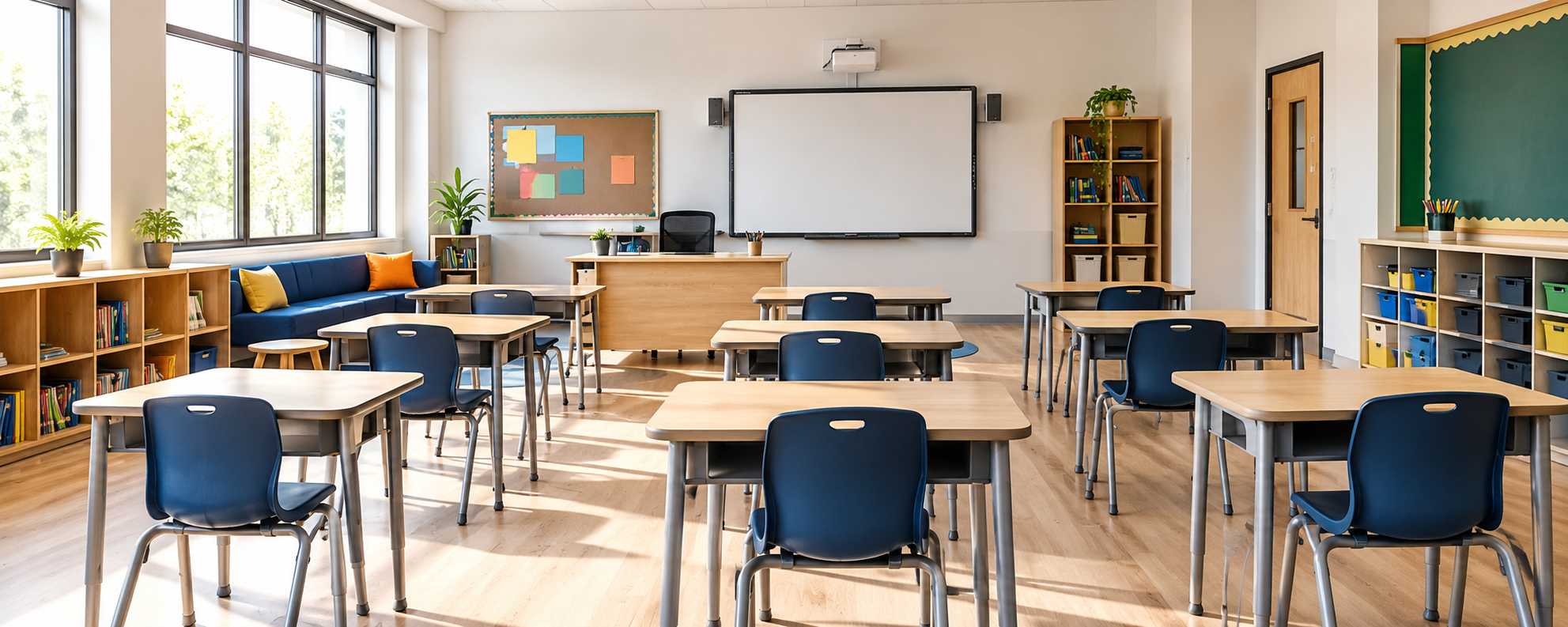
The layout and physical arrangement of a modern learning environment play a critical role in shaping how students engage with course material and interact with one another. Educational facilities are shifting away from rigid, traditional layouts toward dynamic environments that foster creativity, communication, and critical thinking.
Creating an inspiring academic atmosphere starts with understanding the daily needs of both students and instructors. Classrooms must be adaptable enough to accommodate various teaching methodologies, ranging from standard presentations to hands on collaborative workshops.
The Impact of Ergonomics on Student Focus
Physical comfort directly influences a student's ability to concentrate, retain information, and maintain high levels of engagement during long instructional hours. Standardized, rigid seating often leads to physical fatigue, restlessness, and posture issues that detract from the learning process.
Selecting ergonomic solutions involves evaluating how furniture interacts with student movement and natural body mechanics throughout the day. Active seating options, which allow subtle movement while seated, help improve core stability and blood circulation.
Start With the Lesson, Not the Furniture
One of the simplest ways to improve classroom planning is to begin with activities. Ask what students will actually do in the room. Will they work individually? Will they need to form groups? Will they present projects? Will they use computers? Will they move between stations?
These questions provide a better starting point than choosing furniture based purely on appearance. Good classroom furniture design ideas should solve classroom problems and support teaching objectives rather than simply making the room look contemporary.
Create Flexible Student Groups
Group tables can support discussion and teamwork, but permanent group arrangements may not work for every lesson.
Movable tables give teachers the ability to create pairs, small groups, larger teams, or individual working areas. This makes the classroom more responsive.
Teachers should be able to make changes without spending a large part of the lesson moving heavy furniture.
Use Small Groups for Discussion
Small groups can encourage students to communicate more naturally. Students can face one another instead of looking only toward the front of the classroom.
The arrangement also makes it easier for students to share materials and complete collaborative projects.
Return Quickly to Individual Work
After group activities, students may need to complete individual assignments. Furniture that separates easily can make this transition much faster.
The ability to change layouts is especially useful when the same classroom hosts different subjects throughout the day.
Create Clear Learning Zones
A classroom does not need permanent walls to have different functional areas. Furniture placement can help define zones for reading, collaboration, technology, practical work, and independent study.
For example:
A small seating area near a bookshelf can become a reading zone. A table near a display screen can support collaborative digital work.
The key is to keep these zones visually understandable without making the room feel divided.
Use the Walls as Learning Resources
Floor space is not the only resource available. Walls can support storage, displays, teaching materials, whiteboards, and student work. Using vertical space effectively can reduce pressure on the floor area.
However, walls should not become so crowded that important information becomes difficult to identify. Displays should have a clear purpose.
Consider Flexible Seating Carefully
Flexible seating can provide students with additional choices, but it should be implemented thoughtfully.
Different seating types may include traditional chairs, stools, benches, or alternative seating options. The choice should reflect student age, classroom activities, safety, and available space.
Flexible seating should not mean removing structure. Students still need clear expectations about where and how seating is used.
Keep Teacher Movement Open
Teachers should be able to reach every student without navigating narrow pathways. The teacher's movement is especially important during group work because monitoring several teams requires easy access to different areas. A classroom can have excellent furniture but still perform poorly if the arrangement prevents teachers from circulating effectively.
Make Technology Easy to Use
Technology should be integrated into the classroom without dominating it. Screens, projectors, charging areas, and digital devices should be accessible without creating cable hazards.
Students using laptops or tablets need appropriate surfaces. They may also need places to store devices when technology is not being used. Furniture should therefore be planned around the technology strategy of the school.
Think About Storage From the Beginning
A classroom without sufficient storage can quickly become cluttered. Books, art materials, science equipment, stationery, sports resources, and student projects all need places to go.
Storage should be accessible but should not interfere with circulation. Frequently used items should be easy to reach, while less frequently used materials can be stored elsewhere.
Choose Durable Surfaces
School furniture receives significant daily use. Tables may be cleaned repeatedly, chairs moved frequently, and surfaces exposed to spills and scratches. Durability should therefore be considered during selection.
Easy to clean surfaces are particularly useful because classroom furniture needs to remain presentable without requiring complicated maintenance.
Design for Different Students
Not all students have the same physical needs. Furniture should provide appropriate dimensions and enough room for comfortable movement.
Accessibility should be considered in the overall layout rather than addressed only after furniture has been installed.
Clear routes, suitable table heights, and sufficient maneuvering space can make the classroom more usable for a wider range of students.
Make Transitions Part of the Design
One of the most overlooked classroom challenges is transition time. Students may need to move from individual work to group work, then to a presentation, and later return to their desks.
Furniture should make these changes straightforward.
Teachers can establish simple layout routines so students know how furniture should be moved and returned. This creates flexibility without sacrificing classroom organization.
Test Layouts Before Buying
Schools can often learn a great deal by testing sample furniture or creating temporary layouts with existing equipment.
Teachers can then identify practical problems:
- Are pathways wide enough?
- Can students see the teaching display?
- Is group discussion comfortable?
- Can the teacher reach every student?
- Is storage accessible?
- Can the layout change quickly?
Testing reduces the risk of making a large purchase based only on a floor plan.
Conclusion
Effective classroom design is about creating an environment that supports different ways of learning. Flexible tables, appropriate seating, clear zones, accessible storage, practical technology integration, and open circulation can all make the classroom more adaptable.
The best furniture ideas are not necessarily the most unusual. They are the ones that make teaching easier, give students appropriate choices, and allow the room to change as the lesson changes.

 English
 Arabic
 French
 Spanish
 Portuguese
 Deutsch
 Turkish
 Dutch
 Italiano
 Russian
 Romaian
 Greek