


Can Simulation Software Help Japan’s Healthcare Industry Improve Patient Care?
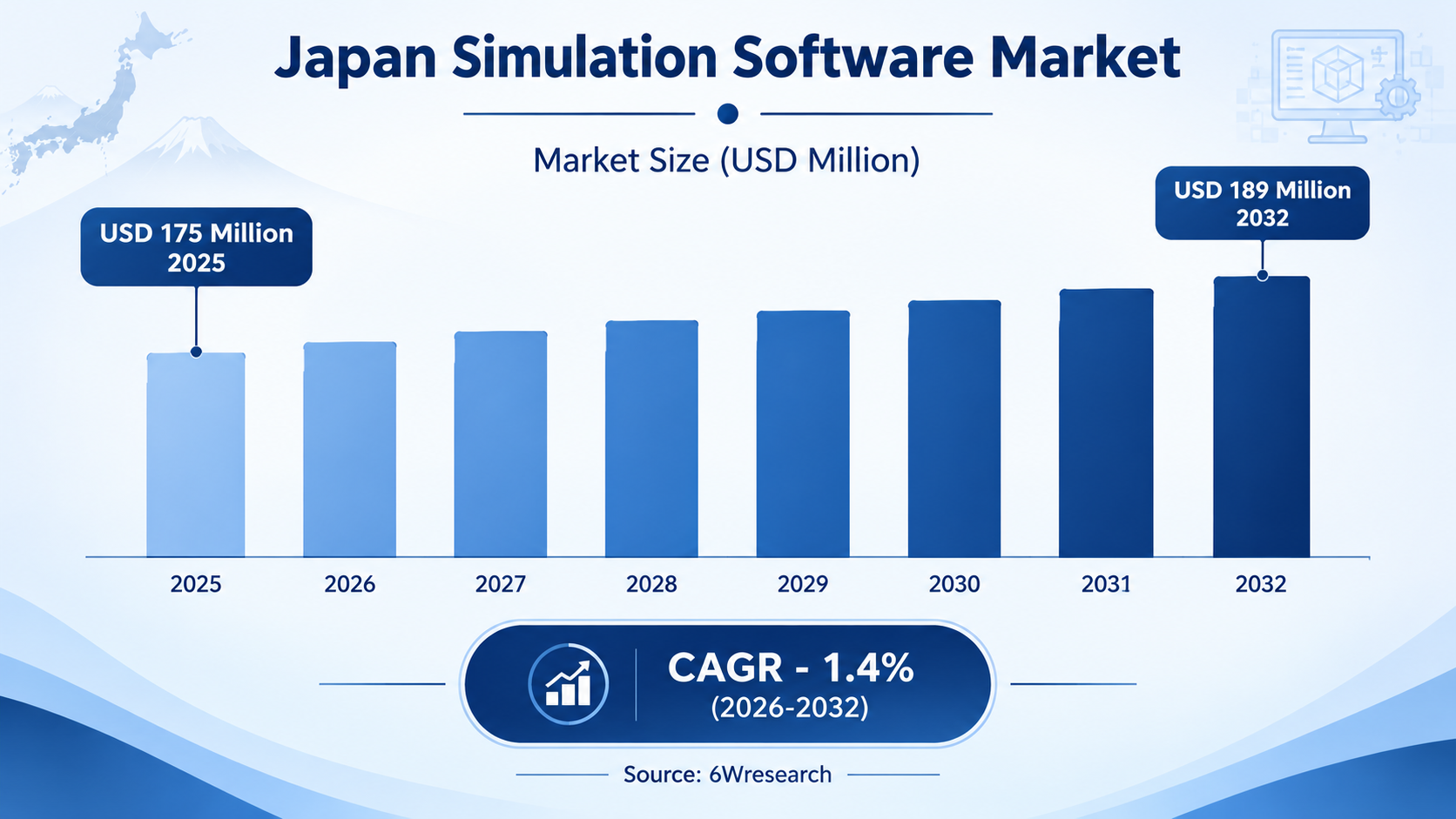
Healthcare organizations increasingly rely on sophisticated equipment, complex clinical procedures, and technology-driven research. Improving patient care requires professionals to develop practical skills while institutions manage safety, training costs, and operational efficiency. Simulation software can contribute by creating virtual environments for clinical learning, medical device development, and selected research applications. As healthcare providers and technology companies explore these capabilities, the Japan Simulation Software Market offers opportunities across healthcare and pharmaceutical applications.
How Simulation Supports Healthcare Innovation
Simulation enables researchers and professionals to examine selected scenarios without immediately testing every idea in a physical or clinical environment. Medical device developers can evaluate product behavior, while training teams can recreate clinical situations for educational purposes.
The technology can also support computational studies of biological processes and healthcare operations. Its applications range from technical engineering models to interactive environments designed to help professionals practice procedures.
However, simulation does not replace clinical judgment, controlled research, or required regulatory evaluation. Its role is to support these activities by providing additional opportunities for analysis and preparation.
Medical Training Through Virtual Environments
Healthcare professionals must develop technical competence, communication skills, and the ability to respond to unexpected events. Simulation-based training can provide structured opportunities to practice these capabilities.
Examples include:
-
Clinical procedure practice: Trainees can rehearse selected techniques in controlled environments.
-
Emergency response: Teams can practice coordination and decision-making during simulated critical events.
-
Medical equipment training: Professionals can learn how to use unfamiliar devices before working with patients.
-
Team communication: Simulated scenarios can help healthcare teams practice coordination and handovers.
-
Repeated assessment: Instructors can review performance and identify areas requiring further training.
The educational value depends on realistic scenarios, appropriate assessment methods, and the quality of instruction.
Supporting Medical Device Development
Medical device manufacturers must evaluate how products behave under different conditions. Simulation can support the development of equipment by helping engineers examine structural strength, fluid movement, thermal performance, and component interactions.
For example, an engineering team developing a medical device may investigate alternative materials or configurations before constructing prototypes. Computational analysis can help identify designs that warrant further testing.
Simulation can also support the evaluation of selected operating conditions and product performance. Nevertheless, the model must be appropriate for the intended purpose, and relevant conclusions require validation using suitable evidence.
Pharmaceutical Research and Computational Modeling
Simulation software can assist selected pharmaceutical research activities by representing biological processes, investigating chemical behavior, or evaluating experimental scenarios. These methods may help researchers explore hypotheses and prioritize areas for additional investigation.
Computational models can also support process engineering, including the analysis of manufacturing conditions and equipment performance. Such applications may be useful when researchers need to understand complex relationships among multiple variables.
The reliability of the results depends on model assumptions, data quality, and the scientific question being investigated. Computational findings should be interpreted alongside laboratory evidence and applicable research standards.
Healthcare Operations and Resource Planning
Beyond clinical research, simulation can help healthcare organizations examine operational challenges. Hospitals and other facilities may model patient movement, appointment scheduling, staffing patterns, or resource utilization.
By comparing alternative scenarios, administrators can investigate possible bottlenecks and evaluate changes before implementing them. For instance, a model might help examine how changes in appointment scheduling affect waiting times or staff workloads.
These models are most useful when based on representative operational data and interpreted by people who understand the healthcare environment.
Challenges That Healthcare Providers Must Consider
Simulation adoption involves several important considerations.
-
Data privacy: Healthcare information requires careful protection and appropriate access controls.
-
Model validation: Incorrect assumptions may produce misleading results.
-
Implementation expenses: Software, training, equipment, and integration services can increase costs.
-
Clinical relevance: Simulated scenarios must reflect appropriate professional requirements.
-
Interoperability: Healthcare systems and engineering platforms may use different data formats.
-
Regulatory expectations: Organizations must assess relevant requirements before relying on simulation in clinical or product-development contexts.
Addressing these issues requires collaboration between software developers, healthcare professionals, engineers, and compliance specialists.
Future Opportunities in Japan
Japan's healthcare and pharmaceutical sectors provide potential applications for simulation in training, device development, research, and operational planning. Opportunities will depend on institutional priorities, technical capabilities, funding, and the ability to demonstrate meaningful improvements.
Providers can strengthen their position by creating application-specific solutions, supporting integration with existing systems, and offering training for healthcare professionals. Partnerships with research institutions and medical technology developers may also help validate specialized applications.
Ultimately, simulation can contribute to healthcare innovation when it is implemented responsibly and supported by appropriate evidence. Vendors that combine technical reliability with a clear understanding of healthcare needs may find opportunities across Japan's evolving digital ecosystem.
About 6Wresearch
About 6Wresearch: 6Wresearch is a commercial strategy and growth advisory firm founded in 2011 and headquartered in New Delhi, India, with partners across Southeast Asia and the Middle East & Africa. The firm has delivered over 20,000 commercial engagements for over 2,000 organizations, including Fortune 500 companies, government agencies, and multilateral institutions such as the World Bank and the Asian Development Bank. Backed by proprietary market research and advanced analytics, 6Wresearch combines sector expertise with data-driven intelligence to help organizations navigate market complexity and drive sustainable growth. These capabilities explain why organizations trust 6Wresearch Global Market Research & Consulting Firm for reliable commercial insights and confident decision-making.
Our Proprietary Platform: 6W Export GTM
6W Export GTM is 6Wresearch's proprietary trade intelligence and go-to-market platform, built on UN Comtrade data and enhanced with 6Wresearch's in-house analytical and simulation models, including system dynamics-based forecasting. Unlike broad, sector-level market sizing tools, 6W Export GTM operates at the individual product level down to specific HS codes and micro-segments to identify precise, actionable export opportunities by country and product pair, including markets where trade currently does not exist. This granular, simulation-driven approach allows 6W Export GTM to surface opportunities that sector-wide analysis typically misses, positioning it among a small number of platforms globally offering this depth of product-and-country-specific export intelligence.

 English
 Arabic
 French
 Spanish
 Portuguese
 Deutsch
 Turkish
 Dutch
 Italiano
 Russian
 Romaian
 Portuguese (Brazil)