


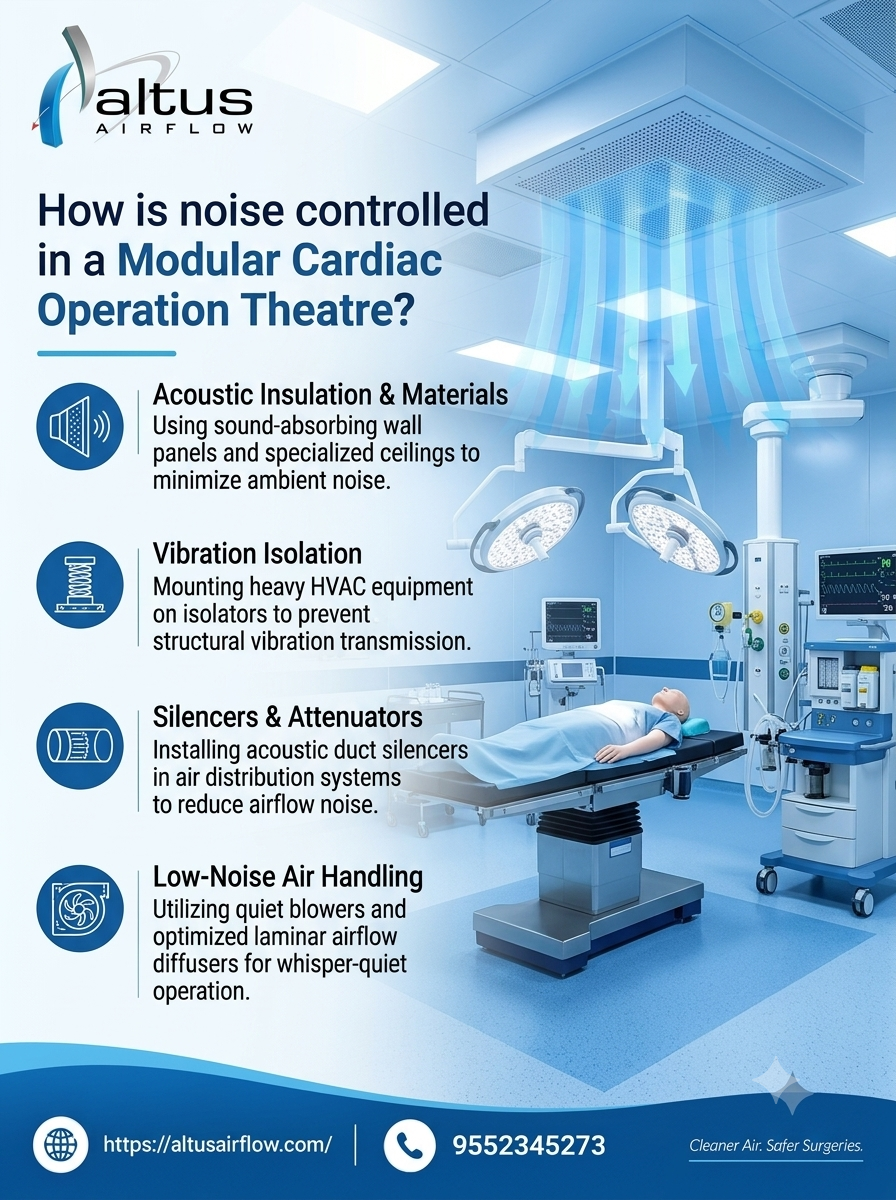
How Is Noise Controlled in a Modular Cardiac Operation Theatre?
Introduction
Altus Airflow supports the planning of modern cardiac operating theatres where a controlled, quiet, and efficient environment is essential for surgical teams. A Modular Cardiac Operation Theatre requires careful coordination of HVAC equipment, medical devices, wall and ceiling panels, doors, and building services to manage unwanted noise. Effective acoustic planning can reduce distractions, improve communication, and support staff concentration during complex procedures. By selecting suitable materials, isolating vibration sources, and coordinating equipment installation, healthcare facilities can create an operating environment that balances acoustic comfort with ventilation, hygiene, and patient safety requirements.
Why Is Noise Control Important in a Cardiac Operating Theatre?
Cardiac surgery involves coordinated work between surgeons, anesthesiologists, nurses, perfusionists, and other clinical professionals. Clear communication is essential because team members must exchange instructions, respond to monitoring information, and coordinate equipment during procedures. Excessive background noise can make conversations harder to understand and may contribute to fatigue or distraction.
Noise can originate from multiple sources, including ventilation systems, operating lights, medical pendants, suction devices, pumps, monitors, alarms, doors, and movement within the theatre. Some sounds are necessary for clinical care, while others result from vibration, poor equipment placement, or building-system design.
The objective of noise control is not to eliminate every sound. Medical alarms and equipment alerts must remain audible, and ventilation systems must continue to meet the theatre's environmental requirements. Instead, the goal is to reduce unnecessary noise while preserving essential clinical signals and communication.
1. Planning the Theatre Layout for Better Acoustics
Noise control should begin during the design stage. The arrangement of equipment, service zones, doors, and adjacent rooms can influence how sound travels through the operating suite.
A well-planned layout places noisy equipment where it is less likely to disturb sensitive clinical activities, provided the arrangement remains consistent with clinical workflow and safety requirements. Equipment rooms, service areas, and mechanical installations may be positioned or isolated to reduce the transmission of noise into the theatre.
During planning, the project team should assess:
-
The location of HVAC equipment and mechanical services.
-
The positions of medical pendants and ceiling-mounted devices.
-
The relationship between the theatre and adjacent rooms.
-
Door locations and frequently used access routes.
-
Potential sources of vibration and structure-borne sound.
-
Requirements for staff communication and alarm audibility.
The layout should also preserve clear access to medical equipment and emergency routes. Acoustic improvements must never compromise the surgical team's ability to reach essential devices quickly or communicate effectively.
Early coordination between clinical users, architects, acoustic specialists, and engineering teams can help identify potential noise problems before installation begins.
2. Selecting Sound-Reducing Wall and Ceiling Systems
Wall and ceiling construction can affect how sound travels between rooms and how much sound reflects within the operating theatre. Modular panels can be selected as part of an integrated interior system, with attention to acoustic performance, cleanability, fire safety, and maintenance access.
Sound insulation and sound absorption are different functions. Sound insulation helps limit the transmission of sound through a partition, while sound absorption reduces reflected sound within a space. A theatre may need both approaches, but each must be selected carefully.
Important considerations include:
-
Wall construction: Partition assemblies should provide suitable sound insulation for adjacent spaces.
-
Ceiling design: Ceiling systems should limit unwanted sound transmission while accommodating lighting, ventilation, and medical pendants.
-
Sealed joints: Properly finished connections can reduce sound leakage through gaps.
-
Service penetrations: Electrical, mechanical, and medical-gas penetrations should be coordinated and sealed using suitable systems.
-
Cleanable finishes: Interior materials must withstand approved cleaning and disinfection procedures.
-
Fire and safety compliance: Acoustic products must meet relevant building and healthcare requirements.
Conventional soft acoustic materials cannot automatically be used in every operating theatre because surfaces must also meet hygiene, fire, and maintenance requirements. Any sound-absorbing solution should be selected for the specific clinical environment and approved for its intended application.
3. Controlling HVAC and Ventilation Noise
Heating, ventilation, and air-conditioning systems are important sources of background noise in operating theatres. Fans, air movement, dampers, ducts, and vibration from mechanical equipment can produce sound that travels through the ceiling, walls, or service connections.
Noise control must be coordinated with the theatre's ventilation design. Cardiac operating theatres require environmental conditions appropriate to their clinical use, and acoustic measures must not reduce the required airflow or compromise filtration performance.
Potential engineering measures include:
-
Selecting HVAC equipment with suitable sound-performance characteristics.
-
Locating noisy mechanical equipment away from sensitive clinical areas where practical.
-
Using properly designed vibration isolation for fans and other mechanical components.
-
Selecting suitable duct layouts and air-terminal designs.
-
Considering acoustic duct treatment where appropriate.
-
Balancing airflow to meet the approved design without unnecessary turbulence.
-
Maintaining fans, bearings, filters, and dampers according to manufacturer guidance.
Duct silencers or acoustic lining may be considered when calculations and project requirements support their use. Their selection must account for pressure drop, cleanability, hygiene, fire safety, and access for maintenance.
Excessive air velocity or poorly selected air terminals can create unwanted noise. However, simply reducing fan speed or airflow to make a theatre quieter is not an acceptable solution if it causes the ventilation system to fall outside its required performance limits. Airflow and acoustic performance should be assessed together during design and commissioning.
4. Reducing Vibration from Medical Equipment
Noise can be transmitted through building structures when equipment vibrates during operation. This structure-borne sound may be heard in the theatre even when the source is located elsewhere.
Mechanical equipment such as pumps, fans, compressors, and certain motor-driven devices may require suitable vibration isolation. Depending on the equipment, isolation may involve resilient mounts, appropriately designed supports, flexible connections, or other manufacturer-approved measures.
The installation team should check that:
-
Equipment supports match the manufacturer's requirements.
-
Mounts are selected for the equipment's weight and operating characteristics.
-
Pipework and duct connections do not create unwanted rigid transmission paths.
-
Medical pendants and ceiling-mounted devices are securely installed.
-
Equipment is aligned and maintained correctly.
-
Vibration controls do not affect equipment stability or performance.
Flexible connectors may reduce vibration transmission in some installations, but they must be appropriate for the service involved and must not compromise medical-gas safety, electrical safety, or system integrity.
Vibration isolation should be designed rather than improvised after the equipment is installed. Poorly selected mounts can be ineffective or may create additional movement. A coordinated engineering approach helps ensure that acoustic improvements do not interfere with reliable equipment operation.
5. Choosing Quieter Medical Equipment and Devices
Medical equipment can contribute significantly to the overall sound level in a cardiac operating theatre. Monitors, suction units, pumps, cooling devices, and other equipment may produce continuous operating noise, intermittent mechanical sounds, or audible alerts.
When purchasing or specifying equipment, facilities should consider acoustic performance alongside clinical functionality, reliability, and compatibility with existing systems. Where comparable products are available, manufacturer information may help identify options with lower operating noise.
Practical measures include:
-
Reviewing available sound-level information before procurement.
-
Positioning equipment to avoid unnecessary sound concentration near staff.
-
Maintaining moving components and cooling fans.
-
Replacing damaged or unusually noisy equipment.
-
Using approved operating modes appropriate to the clinical task.
-
Avoiding unnecessary simultaneous operation of equipment.
Equipment should not be silenced, modified, or operated outside its intended settings simply to reduce noise. Essential alarms must remain effective, and devices must continue to provide their required clinical functions.
The best results come from considering equipment noise during procurement rather than trying to correct every issue after the theatre is operational.
6. Installing Sealed Doors and Managing Sound Leakage
Doors are important components of both acoustic separation and theatre hygiene. Gaps around doors can allow sound to pass between the operating theatre and adjacent corridors or rooms. Frequent opening and closing can also generate impact noise and introduce additional disturbance.
Appropriately specified doors and frames can help reduce sound transmission while supporting the theatre's required access, cleaning, and environmental-control arrangements.
Design considerations include:
-
Suitable door and frame construction.
-
Correct installation and alignment.
-
Appropriate perimeter seals where required.
-
Controlled door-closing mechanisms.
-
Hardware designed for frequent healthcare use.
-
Compatibility with pressure relationships and access controls.
Door seals should be selected carefully because they can affect the operation of doors and their relationship with the theatre's environmental systems. The door assembly must continue to function reliably during emergencies and routine clinical operations.
Staff practices also matter. Closing doors gently when clinically appropriate and avoiding unnecessary corridor noise can reduce disturbances. However, access and movement must always follow the facility's infection-control and emergency procedures.
7. Managing Alarms and Communication Systems
Cardiac operating theatres use monitors, infusion equipment, anesthesia systems, and other devices that may generate audible alarms. These sounds serve important clinical purposes and must not be reduced indiscriminately.
Noise management should distinguish between unnecessary background noise and essential clinical alerts. Alarm settings should follow clinical protocols, manufacturer instructions, and applicable safety requirements.
Useful measures include:
-
Ensuring alarms are configured appropriately for their clinical purpose.
-
Avoiding unnecessary duplication of alerts where safely permitted.
-
Maintaining monitoring equipment to prevent nuisance alarms caused by faults.
-
Positioning communication devices for clear speech.
-
Training staff to respond to alerts and communicate efficiently.
-
Reviewing recurring sources of avoidable noise.
Intercoms and communication systems should provide intelligible speech without excessive volume or feedback. The theatre team should be able to exchange instructions clearly while maintaining awareness of critical alarms and equipment sounds.
Noise assessments should include the actual operating environment, not just the empty room. Clinical activity can change sound levels substantially, so practical evaluation should consider equipment use and normal staff movement.
8. Reducing Noise from Lighting, Pendants, and Ceiling Services
Operating lights, medical pendants, and other ceiling-mounted equipment can create noise through movement, vibration, loose components, or contact with surrounding structures. Poor coordination between ceiling systems and equipment supports may also lead to installation problems.
During design and installation, ceiling-mounted devices should be positioned according to the theatre layout, equipment specifications, and structural requirements. Supports must be suitable for the loads and movements expected during use.
The installation team should verify that:
-
Operating lights move smoothly without unnecessary mechanical noise.
-
Pendants are securely mounted and properly balanced.
-
Cable and service routing does not interfere with moving components.
-
Ceiling penetrations are finished appropriately.
-
Access remains available for inspection and maintenance.
-
Equipment does not strike nearby panels or fixtures during movement.
Routine servicing can help identify loose fasteners, worn bearings, or other components that create additional noise. Staff should report unusual sounds rather than attempting unauthorized repairs.
These measures support both acoustic comfort and the dependable operation of essential theatre equipment.
9. Testing and Measuring Noise Levels
Noise control should be verified through suitable inspection and measurement rather than judged only by appearance or informal listening. Acoustic testing can help establish whether the completed theatre meets the project's specified criteria.
A qualified professional may use a calibrated sound-level meter to measure sound pressure levels at designated locations. Measurements should document the test conditions, including which equipment and building systems are operating, because readings can change depending on the theatre's activity.
Testing may include:
-
Measuring background noise under defined operating conditions.
-
Identifying major sound sources.
-
Comparing readings with project specifications and applicable guidance.
-
Checking noise near staff workstations and communication areas.
-
Inspecting vibration sources and sound transmission paths.
-
Repeating measurements after corrective actions.
The project should define appropriate acceptance criteria before testing begins. There is no single noise limit that can be applied automatically to every operating theatre regardless of equipment, measurement method, or clinical function.
If readings exceed the agreed limits, the team should investigate the source and determine whether changes to equipment, isolation, ductwork, doors, or interior assemblies are required. Final results should be documented in the commissioning records.
10. Maintaining Noise Control After Commissioning
Noise control continues after the operating theatre is handed over. Mechanical wear, loose fittings, blocked filters, damaged door seals, and poorly maintained equipment can increase noise over time.
A preventive maintenance plan should identify the components that require regular inspection, cleaning, adjustment, or replacement. Maintenance tasks should follow manufacturer guidance and the facility's operating procedures.
The maintenance program may cover:
-
HVAC fans, motors, bearings, and dampers.
-
Ductwork and air-terminal components.
-
Vibration-isolation mounts.
-
Operating lights and medical pendants.
-
Door closers, seals, and hardware.
-
Monitoring and communication equipment.
-
Periodic acoustic checks where specified.
Staff should have a clear process for reporting new or unusual noises. A sudden change may indicate a mechanical fault or a loose component that needs attention. Early investigation can prevent small problems from becoming more disruptive and costly.
Conclusion
Noise control in a cardiac operating theatre depends on coordinated acoustic planning, suitable wall and ceiling assemblies, properly balanced ventilation, vibration isolation, appropriate equipment selection, sealed doors, and regular maintenance. Testing after installation helps verify that the theatre meets its specified acoustic and operational requirements without compromising ventilation, infection-control measures, or clinical alarm audibility.
Altus Airflow coordinates modular theatre infrastructure with mechanical services, equipment integration, and installation requirements. By addressing acoustic considerations throughout the project, Altus Airflow helps healthcare facilities develop operating environments designed to support clear communication, staff concentration, and dependable clinical operations.
Frequently Asked Questions
1. How is noise controlled in a Modular Cardiac Operation Theatre?
A Modular Cardiac Operation Theatre can control noise through suitable wall and ceiling assemblies, HVAC noise reduction, vibration isolation, quieter equipment, sealed doors, and acoustic testing.
2. Why is HVAC noise control important in a cardiac OT?
Reducing unnecessary ventilation noise can support clear communication and staff concentration while preserving the required airflow and environmental conditions.
3. Can acoustic panels be installed in every operating theatre?
No. Materials must be suitable for healthcare cleaning, fire safety, hygiene, and maintenance requirements.
4. How can vibration from medical equipment be reduced?
Suitable vibration-isolation mounts, correct installation, flexible connections where appropriate, and regular equipment maintenance can help reduce structure-borne noise.
5. Should medical alarms be made quieter to reduce theatre noise?
Only when changes are permitted by clinical protocols and manufacturer guidance. Essential alarms must remain effective and audible to the relevant staff.
Read Our Previous Blog --------------->How does a Modular IVF Lab Engineering Company test HVAC and airflow systems?

 Arabic
 French
 Spanish
 Portuguese
 Deutsch
 Turkish
 Dutch
 Italiano
 Russian
 Romaian
 Portuguese (Brazil)
 Greek