


How to Choose a Cooking Course That Fits Your Goals
The rich cultural tapestry of Louisiana is best experienced through its legendary food traditions. From the bustling streets of the French Quarter to cozy family kitchens, local gastronomy tells a story of diverse influences, blending French, Spanish, African, and Caribbean roots. Every simmering pot of gumbo and every perfectly browned roux carries generations of history,
Mastering regional delicacies requires more than just following a printed recipe. It demands an appreciation for the foundational elements of regional cooking, such as the holy trinity of onions, celery, and bell peppers, combined with slow cooked broths and aromatic spices. Culinary traditions in this part of the world emphasize celebration, community, and hospitality.
Team Building and Private Events Through Shared Cooking
Culinary workshops offer exceptional venues for group gatherings, corporate retreats, and celebratory milestones. Modern workplaces constantly seek innovative ways to foster collaboration, communication, and mutual trust among team members.
Private celebrations such as family reunions, birthday parties, and anniversary trips find a perfect home in interactive culinary spaces. Sharing a cooking experience creates lasting memories that standard dining venues simply cannot replicate.
Start by Defining What You Want to Learn
Before selecting a course, identify the skills that matter most to you. A beginner may benefit from learning safe knife handling, ingredient preparation, and heat control, while someone with more experience may want to improve sauce preparation or explore unfamiliar culinary traditions.
Your reason for learning can also influence the ideal format. If you want to cook more efficiently at home, choose a session with techniques that transfer to everyday meals. If you are interested in cultural discovery, look for a menu that explores the history and preparation of regional dishes.
Different Learning Formats Offer Different Benefits
Demonstrations and Guided Practice
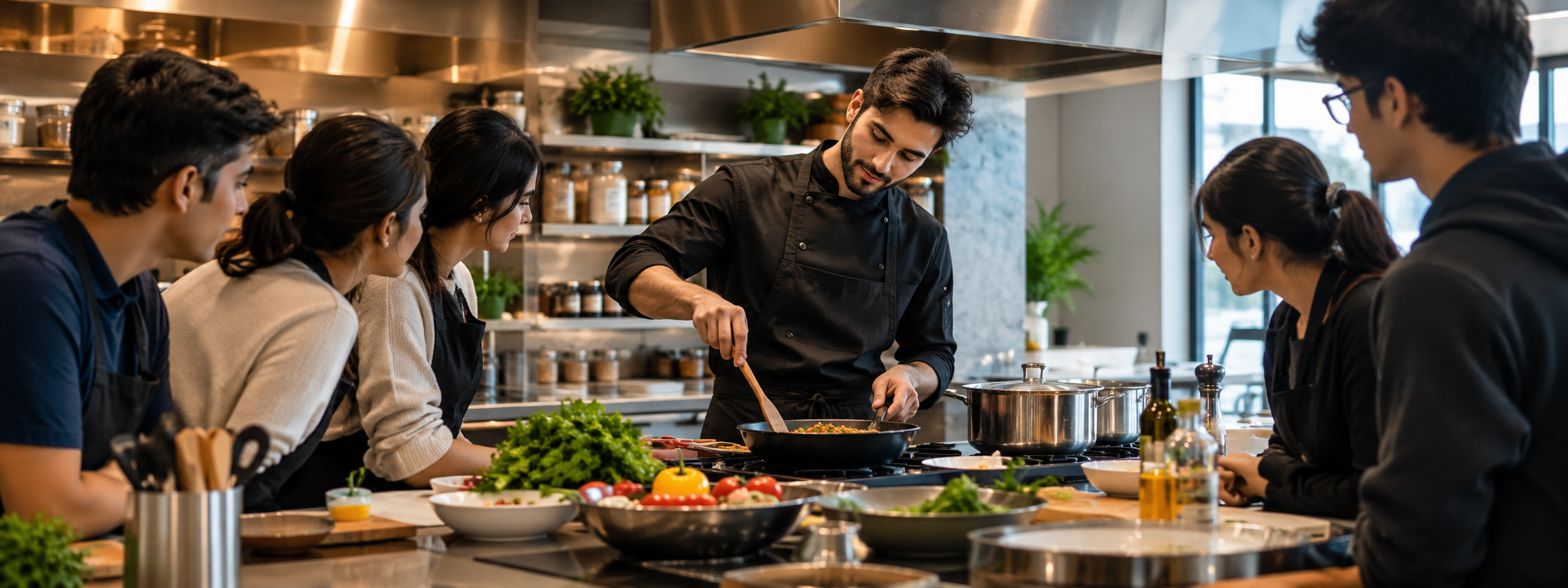
A demonstration allows participants to observe an experienced cook performing a technique. This can be useful when learning unfamiliar processes, particularly those that require close attention to colour, consistency, or timing.
Guided practice adds the opportunity to try the technique yourself. Participants can receive feedback, identify mistakes, and understand how to correct them before repeating the method at home.
Neither format is automatically better in every situation. The right choice depends on whether your main priority is observation, hands on experience, or a combination of both.
Individual Learning and Group Activities
Individual instruction may offer more focused attention, while group sessions can create opportunities to exchange ideas and learn from other participants' questions. Group activities may also suit people who want a shared experience with friends or family.
When comparing formats, consider how much personal guidance you are likely to need. Beginners may prefer smaller groups or sessions with clearly explained steps, whereas confident cooks may enjoy a more collaborative environment.
What to Look for When Comparing Available Options
A useful course description should explain what the session covers, how long it lasts, and what participants will do. It should also provide practical details about equipment, ingredients, booking conditions, and any experience requirements.
For people researching cooking classes, comparing the actual content of each available option is more useful than relying on a general description alone. Look for a clear connection between the advertised experience and the skills you hope to develop.
Consider these points before booking:
- The techniques or dishes included in the session.
- Whether practical participation is part of the experience.
- The instructor's approach and the level of guidance offered.
- The total price and any additional costs.
- Accessibility, dietary requirements, and cancellation terms.
Taking a few minutes to compare these details can help you avoid selecting a session that does not match your expectations.
Understand the Skills Behind the Menu
An appealing menu can attract your attention, but the techniques involved often determine how much you learn. A session featuring several familiar dishes may teach more useful skills than a complicated menu that leaves little time for explanation.
For example, preparing a stew can introduce browning, seasoning, and simmering. A rice dish can help demonstrate liquid management and temperature control, while a sauce may provide practice in adjusting consistency and balancing flavours.
Look for experiences that explain the purpose of each stage. Understanding why a method works makes it easier to apply the same principles to different recipes.
Budgeting for a Better Learning Experience
The lowest advertised price is not necessarily the best value, and a higher price does not guarantee better instruction. Consider what is included in the fee and whether the experience provides the type of practical learning you want.
Check whether ingredients, equipment, printed recipes, and any food or refreshments are included. Also review cancellation arrangements and whether additional purchases are expected.
A sensible budget should reflect your priorities. If your main goal is to develop a specific skill, choose an option that provides adequate instruction and practice rather than paying extra for features you do not need.
Prepare Before the Session Begins
Once you have booked, read any instructions provided by the organiser. Confirm the location, arrival time, clothing recommendations, and any materials you may need to bring.
If you have dietary restrictions or allergies, communicate them in advance and ask whether the kitchen can accommodate them safely. Do not assume that a menu can be changed without prior arrangement.
It can also help to identify two or three questions you would like answered. You might want to understand how to prevent vegetables from burning, how to balance a sauce, or how to reproduce a regional dish using ingredients available at home.
Make the Learning Continue Afterward
The course itself is only the beginning. Repeating a technique at home helps reinforce what you have learned and reveals which parts need more practice.
Choose one recipe from the session and prepare it again within a few days if possible. Review your notes, follow the instructions carefully, and record any differences between your result and the original dish.
You can gradually increase the difficulty as your confidence improves. Start with familiar methods, then introduce new ingredients or more complex techniques one at a time.
Final Summary
Choosing a cooking course becomes easier when you begin with a clear goal and compare the practical learning opportunities available. The menu, instructor, format, cost, and amount of hands on participation should all support the experience you want.
A well matched session can help you develop useful techniques, explore unfamiliar food traditions, and build confidence in the kitchen. Careful preparation and continued practice make those benefits more likely to last.

 English
 Arabic
 French
 Spanish
 Portuguese
 Deutsch
 Turkish
 Dutch
 Russian
 Romaian
 Portuguese (Brazil)
 Greek