


The Honest Guide to Booking India With an Indian Travel Company
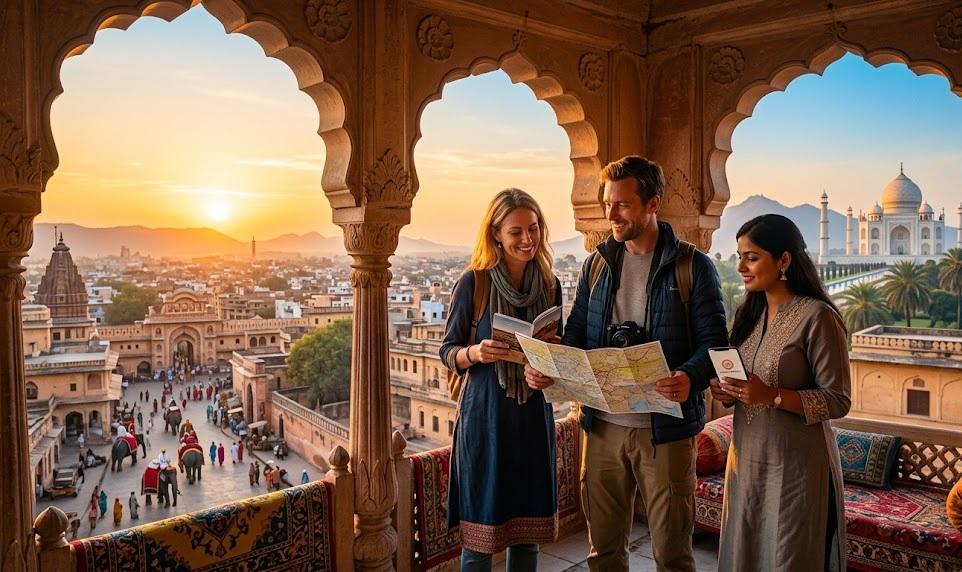
Planning a trip to India from the UK or Europe can feel big. The country is huge. The rules are different. And you may never have booked with a company that is based thousands of kilometres away.
This guide gives you a straight answer. An Indian travel agency can be a smart choice for many travellers. It is not the right choice for everyone. Below, you will learn what to check, what to ask, and what to watch out for, using advice from official government and health sources.
Key Takeaways (Quick Answers)
• Is it safe to book with an Indian travel company from the UK or Europe? It can be, if you check the company first. Ask about licences, payment safety, written itineraries and who supports you during the trip.
• Does ATOL cover an India-based company? Not usually. ATOL is a UK scheme run by the Civil Aviation Authority (CAA). Ask any overseas company what protection it offers instead.
• Do UK citizens need a visa? Yes. You apply for an e-visa on the official Indian government portal, indianvisaonline.gov.in. Check fees and rules there, because they change.
• Which parts of India does the UK government advise against? Areas within 10 km of the India-Pakistan border, most of Jammu and Kashmir, and all but essential travel to Manipur.
• Biggest benefit of a local company: On-the-ground knowledge, private drivers and guides, and the chance to adjust your plan fast.
What Is an Indian Travel Agency, and What Does It Do?
An Indian travel agency is a travel business based in India. It plans and runs trips inside India. It books hotels, trains, flights, drivers, guides and activities.
You may also see the term Indian travel company or India tour operator. In daily use, people mix these words. The simple difference is this. A tour operator builds and runs the trip. A travel agent sells trips made by others. Many Indian companies do both.
The Government of India has a voluntary recognition scheme for inbound tour operators, run by the Ministry of Tourism. Inbound means the company serves visitors who come into India from abroad. The scheme aims to encourage quality and standards. Because the scheme is voluntary, a company without approval is not automatically bad. But approval is one more sign you can check.
Why Do Travellers Choose an Indian Travel Company?
Here are the main reasons. They come from how the business works, not from marketing claims.
1. Local knowledge. A team that lives in India knows which roads are slow, which hotels are quiet, and which sights get crowded at noon. They can fix a problem on the same day.
2. Flexible, private trips. Many Indian companies build tailor-made tours with a private driver and guide. You set the pace.
3. Direct contact with the people on the ground. When you book with a local company, the team that plans your trip is often the team that runs it. That means fewer people between you and the answer.
4. Fewer middle layers. A Western company may buy its India trip from a local partner. Booking with the local company removes one step. Price differences depend on the company, so compare quotes rather than assume.
What Are the Downsides? (The Honest Part)
A good guide tells you the weak points too. Here they are.
Financial protection may be different. If you book a package holiday with a UK company, UK law requires insolvency protection. Tour operators that sell package holidays with flights must hold an ATOL licence. According to the ATOL scheme, that protection only applies to UK-based companies. Companies outside the UK do not need to provide it. So, if you book with a company based in India, you need to ask what protection exists.
Time zones and distance. India is several hours ahead of the UK. Ask how the company will reach you during the trip, and in what hours.
Quality varies. Like any country, India has excellent and poor operators. That is why the checklist below matters.
Indian Travel Agency in UK vs Booking Directly With a Company in India
People often search for an Indian travel agency in UK. This can mean two things. It may mean a UK-based business that sells India holidays. Or it may mean an India-based business that serves UK customers. Here is how they usually differ.
|
Question |
UK-based company selling India trips |
India-based company |
|
ATOL protection |
Often yes, if it sells flight-inclusive packages. Check the licence. |
Usually no. Ask what protection it offers. |
|
Who runs the trip on the ground? |
Often a partner company in India |
The company itself |
|
Support hours |
UK hours, plus a local partner in India |
India hours. Ask about UK-friendly contact times. |
|
Customer rights if things go wrong |
Under UK package travel rules |
Depends on the contract. Read the terms. |
|
Price |
Includes the UK company’s margin |
Often a direct quote. Always compare. |
Neither option is always better. A UK company may feel safer for first-timers. A trusted Indian travel company in UK that offers UK-friendly support hours may suit people who want a more personal trip. Choose based on what you value most.
How Do You Check If an Indian Travel Company Is Trustworthy?
Use this checklist before you pay anything.
1. Ask for the company’s registration details. A real business will share its legal name, address and registration number. Check that they match across the website, invoice and bank account name.
2. Look for Ministry of Tourism recognition. The Government of India lists guidelines for approved inbound tour operators. Recognition is voluntary and is granted for an initial period of five years, so ask for the certificate and check its dates.
3. Ask about trade body membership. The Indian Association of Tour Operators (IATO) is one example. Ask the company to show proof, then confirm with the body itself.
4. Read independent reviews. Look beyond the company’s own site. Check several platforms and read the mixed reviews as well as the five-star ones.
5. Get a written itinerary and price. It should list hotels, transport, guides, entry fees, meals and extras. Vague plans are a warning sign.
6. Ask what is not included. Flights, visas, insurance, tips and some meals are often extra.
7. Check payment safety. Use a secure payment method. Be careful with requests to pay into a personal account or by cash transfer.
8. Test their communication. Send two or three questions. Fast, clear and honest answers show how they will treat you later.
9. Read the cancellation and refund policy. Know what happens if you cancel, or if the company cancels.
10. Ask about emergency support. Who do you call at 11 pm if your driver does not show up?
Red flags: pressure to pay today, prices far below every other quote, no named staff, no written terms, and refusal to answer direct questions.
What Should a Good India Tour Package Include?
Ask the company to list every item. Most packages cover the following, but always confirm in writing.
• Hotel stays, with names and room types
• Private transport or train tickets
• Domestic flights, if any
• Guides and entrance fees
• Meals, with the number of breakfasts, lunches and dinners listed
• Airport transfers
Things that are often not included: international flights, visa fees, travel insurance, personal spending and tips.
How Do You Get an India Visa as a UK Traveller?
British passport holders apply for an India e-visa online. Always use the official Government of India portal: indianvisaonline.gov.in. Look for the .gov.in address before you enter any personal details, because look-alike sites exist.
Common requirements include a passport with at least six months of validity, blank pages and a working email address. Fees, visa types and rules change, so read the current details on the portal on the day you apply.
A good Indian travel agency can guide you through the steps. But you can apply yourself, and you should be wary of any site that charges a large extra fee to do something you can do on the official page.
Is India Safe for Tourists? What Official Advice Says
The honest answer is that millions of people visit India safely, but you should plan with care. Here is what official sources say.
Regions to avoid. The UK Foreign, Commonwealth & Development Office (FCDO) advises against all travel within 10 km of the India-Pakistan border. It also advises against all travel to Jammu and Kashmir, with limited exceptions for air travel to and travel within the city of Jammu. For the state of Manipur, the FCDO advises against all but essential travel. Your travel insurance could be invalid if you travel against FCDO advice. Check the live page before you book.
Women travellers. Official advice is clear on this topic. The FCDO notes a risk of sexual assault, including attacks on female foreign visitors in tourist areas and cities. The Government of Canada also says foreign women are often the target of unwanted attention. Practical steps include using trusted drivers, arranging airport pick-ups, booking hotels with good reviews, and sharing your plans with someone at home. India’s women’s helpline is 1091. A good company will talk about this openly and explain how it keeps solo women safe.
Scams. Canadian government advice lists scams that involve exporting jewels, gemstones, carpets and similar goods. Be careful if a stranger or a driver pushes you toward a shop. Ask your agency in advance about shopping stops, and agree that you can say no.
Crime in busy places. The FCDO warns that opportunistic criminals operate in tourist hotspots such as Goa. Keep valuables out of sight, lock your bags, and keep copies of your documents.
A responsible Indian travel company will mention these points before you ask.
What Health Steps Should You Take Before You Go?
See your GP or a travel clinic early. The US Centers for Disease Control and Prevention (CDC) suggests visiting a doctor at least a month before you travel. That gives time to complete vaccine courses.
TravelHealthPro, the UK’s travel health website run by the National Travel Health Network and Centre, recommends hepatitis A and typhoid vaccines for most travellers to India. Typhoid spreads through contaminated food and water. Other vaccines, such as hepatitis B and rabies, may suit some travellers, depending on where you go and what you plan to do. Rabies is a risk in India. Wash any animal bite or scratch well and get medical help right away, even if the wound looks small. Dengue, spread by mosquitoes that bite during the day, also exists in India, so use insect repellent.
This is general information, not medical advice. Ask a health professional what fits your trip.
General food and water tips: drink bottled or treated water, eat freshly cooked food, and wash your hands often.
How Should You Choose Between a Private Tour and a Group Tour?
Choose a private tour if you want to set your own pace, you travel with children or older relatives, you have special diets, or you want a solo-woman-friendly plan with a trusted driver.
Choose a group tour if you want to meet people, you like a fixed plan, or you want to cut costs.
Many Indian travel companies offer both. Ask how big the group is and who leads it.
What Questions Should You Ask Before You Book?
Copy these into your first email.
• What is your company’s legal name, address and registration number?
• Are you recognised by the Ministry of Tourism, or a member of a trade body? Can I see proof?
• What protection do I have if the company stops trading, or cancels my trip?
• What is included, and what is not?
• Who will be my contact in India, and how can I reach them in an emergency?
• What are your cancellation and refund terms?
• How do you keep solo travellers and women travellers safe?
• Can you share recent feedback from UK or European travellers?
A Simple Step-by-Step Plan for Booking India Well
1. Decide your trip style. Pick your regions, trip length and budget.
2. Shortlist two or three companies. Include at least one UK-based and one India-based, if you want to compare.
3. Ask the questions above. Compare how they answer.
4. Compare written quotes. Look at what is included, not just the total.
5. Read the terms. Check cancellation, refunds and insurance advice.
6. Pay safely. Keep every receipt and email.
7. Arrange visa, insurance and vaccines. Use official sources.
8. Check FCDO advice again before you fly.
Final Thoughts: Is an Indian Travel Company Right for You?
If you want local knowledge, a private and flexible plan, and a direct line to the team on the ground, an Indian travel company is a strong option. If a UK-style financial protection scheme matters most to you, a UK-based seller may suit you better. Either way, the best protection is a few good questions before you pay.
Frequently Asked Questions
Is it safe to book with an Indian travel agency from the UK? It can be safe if you check the company first. Verify registration, read independent reviews, get a written itinerary and ask how your money is protected.
Will ATOL protect my booking with an Indian travel company? Usually not. ATOL is a UK scheme for UK-based companies. If a company is based in India, ask what protection it offers and read its terms.
What is the difference between an Indian travel agency and an Indian travel company? In everyday use, there is little difference. Both plan and sell trips. A tour operator usually builds and runs the trip itself.
Do I need a visa for India as a UK citizen? Yes. Apply through the official e-visa portal, indianvisaonline.gov.in, and check current fees and rules there.
Which areas of India should I avoid? The FCDO advises against all travel within 10 km of the India-Pakistan border and to most of Jammu and Kashmir, and against all but essential travel to Manipur. Check the live FCDO page before you book.
Which vaccines are recommended for India? TravelHealthPro recommends hepatitis A and typhoid for most travellers. Others may suit some travellers. Speak to a GP or travel clinic at least a month before you go.
Is India safe for solo women? Many women travel there safely, but official advice warns of risks. Plan with a trusted company, use vetted drivers, and share your plans.
Can I book directly with a company in India? Yes. Many travellers do. Compare quotes, check the company and understand what protection you have.

 English
 Arabic
 French
 Spanish
 Portuguese
 Deutsch
 Turkish
 Dutch
 Italiano
 Russian
 Romaian
 Greek