


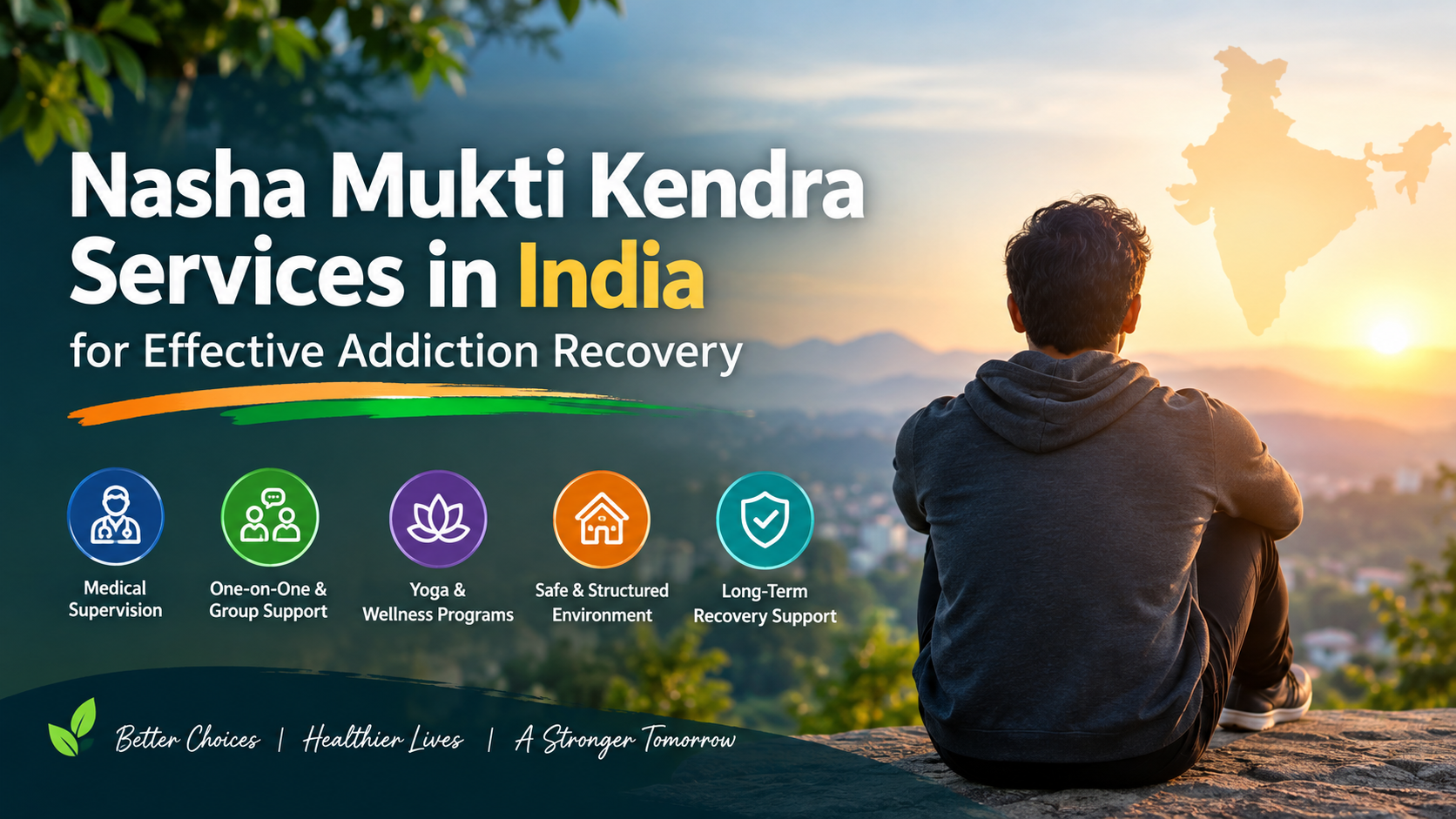
Nasha Mukti Kendra Services in India for Effective Addiction Recovery
Ask any family that has been through it and they’ll tell you addiction never stays with one person. Money disappears, arguments get louder, and a mother lies awake waiting for the phone to ring. But people do get better, usually when they get real medical care and someone who won’t give up on them. A Nasha Mukti Kendra is a place built for exactly that: a safe spot to stay away from substances while trained people help you get your days back in order.
Most families want the same few things. Treatment that’s private, safe and doesn’t make anyone feel judged. Good centres today mix medical care, counselling and simple lifestyle changes, because addiction affects the mind as much as the body. When all of that comes together under one roof, the person has a real chance to rebuild.
Understanding Addiction and Why Professional Help Matters
Plenty of people try quitting on their own. A few days in, the shaking, the restless nights, the body aches and the cravings hit, and they’re back where they began. It isn't a weakness. Withdrawal is tough, and doing it alone at home rarely works. Families living in the capital often start by looking at a Nasha Mukti Kendra in Delhi, since the city has a wide range of treatment options.
Addiction is a health problem. Once a family sees it that way, the shame starts to ease and the person can put their energy into recovery. In a supervised setting, doctors track withdrawal closely, counsellors help the person figure out what sets off the urge, and there’s nothing around to tempt them.
Timing matters too. If you’ve noticed a change in someone’s mood, work, habits or friends, don’t wait for a big crisis. Asking for help early usually means a shorter road.
Admission and Treatment Planning Services
Good treatment begins with listening. On arrival, the team asks about the person’s background, what they’ve been using, for how long, and whether they have any other health issues. Then they build a plan around that story, not a standard programme handed to everyone.
A typical admission looks like this:
-
First conversation and a basic physical check
-
Review of mental health and substance use history
-
A treatment plan and daily timetable made for that person
-
A meeting with the family to explain what’s ahead
-
Regular progress reviews with the treating team
Patients tend to settle faster when they feel heard from the first day. Families, meanwhile, get a clear idea of what the next few weeks will be like.
Detoxification and Medical Care
Detox is often the roughest part. The body has to flush out the substance, and symptoms can be serious, even risky with alcohol or certain tablets. That’s why someone needs to be watching around the clock.
Doctors may give medicines to calm the symptoms, and the person gets proper food, water and plenty of rest. Nurses check blood pressure, pulse and temperature at regular times, and they step in fast if anything looks off. When the body steadies, the mind clears, and therapy starts to make sense.
When a situation turns urgent, a lot of people type Nasha Mukti Kendra Near Me into their phone. Closer is better here, because relatives can visit often and stay part of the process.
Counselling, Therapy and Family Involvement
Detox cleans the body. It doesn’t touch the reason someone started in the first place. Often it’s stress, a loss, pressure from friends, an old trauma, or plain loneliness. Counselling gives people space to say these things out loud, maybe for the first time.
One-on-one sessions look at personal triggers and how to handle them. Group sessions put patients in a room with others who understand, and that eases the feeling of being alone. Yoga, meditation, workouts and art or music give restless energy somewhere to go.
Families need this work as well. Relatives learn to talk without blaming, to set limits kindly, and to support the person once they’re back home. Those living on the Uttar Pradesh side of the region may find a Nasha Mukti Kendra in Ghaziabad handy for attending these joint sessions.
The Role of Doctors and Counsellors in Recovery
A full team usually has psychiatrists, physicians, psychologists, counsellors and support staff, and each has a different job. Doctors handle withdrawal and any physical illness. Psychologists deal with anxiety or depression that may be hiding behind the addiction. Counsellors are the ones who keep the person going on the slow days.
When everyone shares notes and changes the plan together, the care feels steadier. Experienced staff also notice small warning signs, like a sudden low mood or someone losing interest in sessions, and can act before it turns into a bigger setback.
Aftercare and Relapse Prevention
Going home isn’t the finish line. The first few months are often the shakiest, since the same streets, the same friends and the same stress are waiting. Aftercare works like a net under the person while they find their feet.
It can mean follow-up counselling, regular check-ins, support group meetings, and help planning a new routine around job, studies and family time. Patients also learn to spot a craving early and use simple steps to get through it. And if someone slips, a good plan treats that as a lesson to work on, not proof that it’s all over.
Benefits of Professional Rehabilitation
Going to a proper centre makes a real difference, for the patient and for everyone around them.
Key benefits include:
-
Safe medical supervision through withdrawal
-
A quiet setting away from bad influences and triggers
-
Therapy shaped around the individual
-
Emotional support for the patient and the family
-
Better habits with food, sleep and exercise
-
A long-term plan that lowers the risk of relapse
Over time, people get their health back, mend strained relationships and return to work and social life feeling more sure of themselves.
Why Choose the Right Rehabilitation Partner
A good centre treats people with respect, keeps their details private and tells the family the truth about progress. Look for qualified staff, clean rooms, clear fees and a plan that carries on after discharge.
If you can, visit before deciding. Ask how treatment is done and meet the people who’ll look after your family member. Many families south of the capital shortlist a Nasha Mukti Kendra in Noida for this reason, since regular visits are easy and they can judge the place for themselves. Trust your gut on whether it feels honest and caring.
The first step is usually the hardest one, and it’s also the one that matters most. With patience, honest talk and steady follow-up, a life that felt out of control can start to find its footing again.

 Arabic
 French
 Spanish
 Portuguese
 Deutsch
 Turkish
 Dutch
 Italiano
 Russian
 Romaian
 Portuguese (Brazil)
 Greek