


Advertising Profitability: A Guide to Better Ad Returns
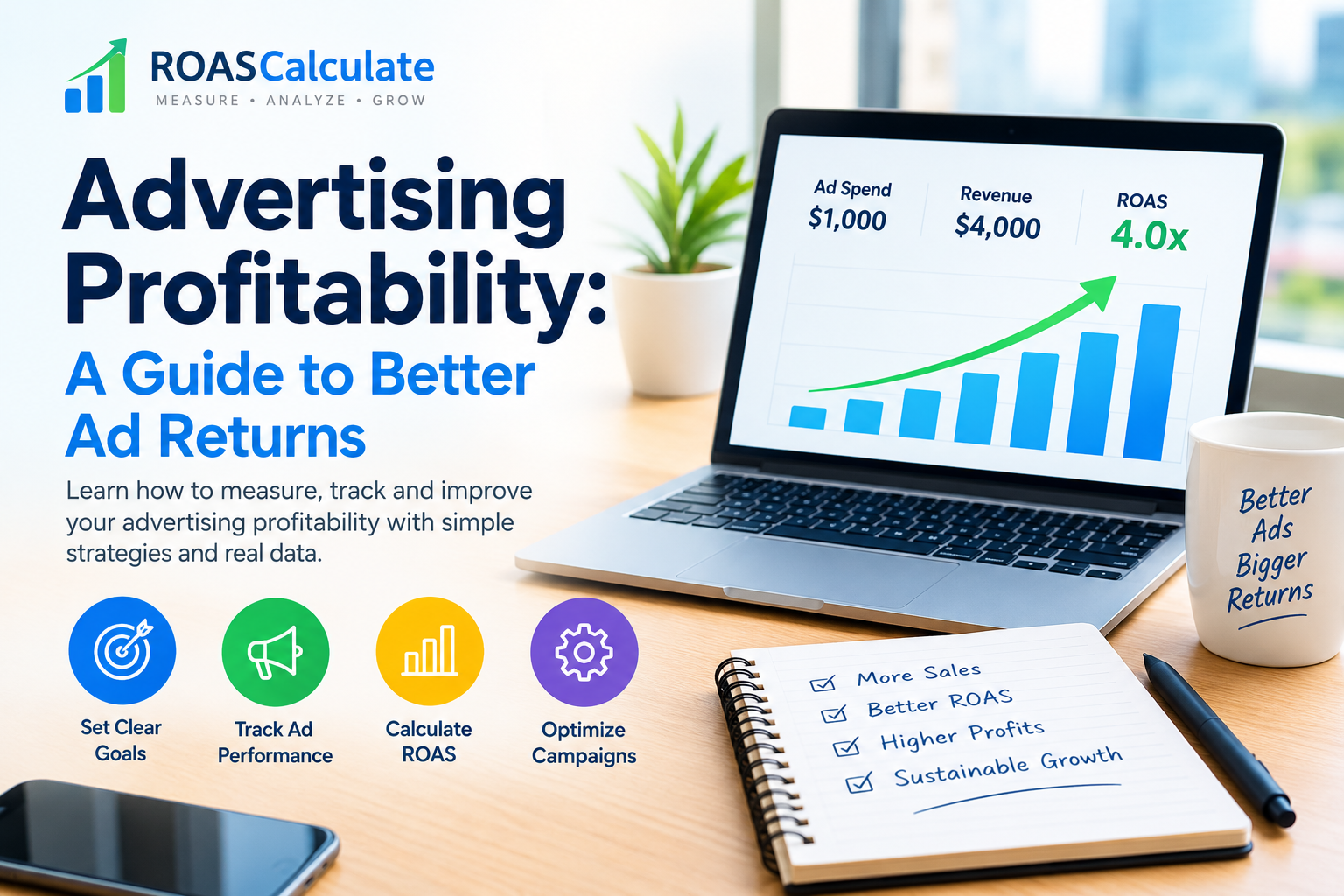
Advertising is an important part of business growth, but spending money on campaigns does not always lead to better results. Businesses need to understand how much revenue their advertisements generate and whether their marketing budget is being used effectively. Measuring campaign performance helps marketers make informed decisions, reduce wasted spending, and improve returns. Understanding Advertising Profitability is an important step toward building a marketing strategy that supports long-term business growth.
What Is Advertising Profitability?
Advertising profitability refers to the financial value a business receives from its advertising activities compared with the money it spends. It helps businesses understand whether their campaigns contribute to revenue and profit or simply increase expenses.
For example, an online store may spend $1,000 on a paid advertising campaign and generate $4,000 in sales. This means the campaign has generated four dollars in revenue for every dollar spent on advertising. However, revenue is not the same as profit. Product costs, shipping, platform fees, and other business expenses must also be considered to understand the campaign's actual financial contribution.
Businesses that measure advertising profitability can identify successful campaigns, improve weaker advertisements, and allocate budgets based on performance instead of assumptions.
Why Advertising Profitability Matters
Every advertising campaign uses resources. Whether a business advertises through Google Ads, social media platforms, or other paid channels, it needs a clear way to evaluate results.
Tracking profitability offers several benefits.
1. Better Budget Management
Campaign data helps marketers decide where to invest their money. If one campaign generates stronger returns than another, the business can investigate the reasons and consider shifting more budget toward the better-performing campaign.
This does not mean that every low-performing campaign should be stopped immediately. Some campaigns support brand awareness, customer acquisition, or future sales. The goal is to understand their role before making budget decisions.
2. Reduced Advertising Waste
Poor targeting, irrelevant keywords, weak landing pages, and ineffective advertisements can increase spending without producing enough sales.
Regular performance reviews help marketers identify these problems. They can exclude irrelevant search terms, adjust audience targeting, improve advertisements, and direct visitors to more relevant pages.
3. More Informed Business Decisions
Advertising profitability provides useful information for planning future campaigns. Businesses can compare channels, test different messages, and understand which products or audiences generate stronger financial results.
These insights make it easier to set realistic marketing targets and prepare budgets that match business objectives.
Understanding ROAS and Its Role in Advertising
Return on ad spend, commonly called ROAS, is one of the main metrics used to evaluate advertising performance. It measures the revenue generated for every dollar spent on advertising.
The formula is straightforward:
ROAS = Revenue Attributed to Advertising ÷ Advertising Cost
Suppose a business spends $2,000 on a campaign and generates $8,000 in attributed revenue.
ROAS = $8,000 ÷ $2,000 = 4
The result is a 4:1 ROAS, meaning the campaign generates $4 in revenue for every $1 spent on advertising.
A ROAS Calculator makes this calculation easier by allowing marketers to enter advertising costs and revenue to determine campaign returns. Tools such as the one available at roascalculate can help users evaluate results without performing repeated manual calculations.
However, a high ROAS does not automatically mean a campaign is profitable. A business with high product costs may earn little profit even when its advertising generates substantial revenue. ROAS should therefore be reviewed alongside profit margins, customer acquisition costs, and other relevant expenses.
How Marketing Analytics Improves Campaign Performance
Marketing Analytics helps businesses turn campaign data into practical decisions. Rather than looking only at clicks or impressions, marketers can evaluate how advertising activity contributes to sales and business goals.
Track the Right Metrics
The most useful metrics depend on the campaign objective. For sales-focused campaigns, marketers should consider:
- ROAS: Revenue generated per unit of advertising spend.
- Conversion rate: The percentage of visitors who complete a desired action.
- Cost per acquisition (CPA): The advertising cost required to acquire a customer or conversion.
- Click-through rate (CTR): The percentage of impressions that result in clicks.
- Average order value (AOV): The average revenue generated per order.
These metrics provide different perspectives. A campaign may receive many clicks but generate few purchases. Another may attract fewer visitors but produce more valuable customers.
Reviewing multiple metrics helps marketers understand what is happening and why.
Use Data to Identify Weak Campaigns
Campaign reports can reveal where performance needs improvement. For instance, a high click-through rate combined with a low conversion rate may indicate a mismatch between the advertisement and the landing page.
Marketers can investigate page speed, product pricing, checkout problems, audience relevance, and the accuracy of campaign messaging.
The aim is to identify the cause of poor performance before increasing spending.
Compare Performance Over Time
A campaign's performance may change because of seasonal demand, competition, pricing, or audience behavior. Comparing results over different periods helps businesses recognize patterns and avoid making decisions based on a single day's data.
Consistent measurement also helps establish realistic benchmarks for future campaigns.
The Importance of Advertising & PPC Strategies
Advertising & PPC, or pay-per-click advertising, allows businesses to pay for visits generated through platforms such as search engines and social networks. These campaigns can attract customers who are actively searching for products or services.
However, successful PPC management requires more than setting a budget and launching advertisements.
Select Relevant Keywords
For search advertising, keyword selection affects both traffic quality and campaign costs. Businesses should target terms that match their products, services, and customers' search intentions.
Negative keywords can help prevent advertisements from appearing for irrelevant searches. This reduces unnecessary clicks and helps keep spending focused on relevant audiences.
Improve Ad Copy and Landing Pages
An advertisement should communicate a clear benefit and match the content users find after clicking. If an advertisement promises a particular product discount, the landing page should make that offer easy to understand.
Clear messaging, relevant content, mobile-friendly design, and a simple checkout process can improve the customer experience.
Test Campaign Variations
A/B testing allows marketers to compare different headlines, descriptions, calls to action, and landing pages. Testing one meaningful variable at a time can help identify changes that improve results.
Businesses should evaluate the financial impact of these changes rather than assuming that more clicks always mean better performance.
A Practical Case Study: Improving Advertising Returns
Consider a hypothetical online retailer that sells home accessories. The business spends $3,000 monthly on paid advertising and generates $9,000 in attributed sales.
Its initial ROAS is:
$9,000 ÷ $3,000 = 3:1
The marketing team reviews campaign data and finds that some advertisements attract visitors who rarely complete purchases. The team improves keyword targeting, updates product landing pages, and pauses several consistently weak advertisements.
In the following month, advertising spending remains at $3,000, while attributed sales increase to $12,000.
The new ROAS is:
$12,000 ÷ $3,000 = 4:1
The campaign's ROAS has increased from 3:1 to 4:1, while attributed revenue has grown by approximately 33.3%.
These figures illustrate how better targeting and landing-page improvements may support stronger advertising returns. They are hypothetical, not results from a verified business campaign.
The retailer should still account for product costs, fulfillment, discounts, and other expenses before deciding how much additional profit the improvement produced.
Common Mistakes That Reduce Advertising Profitability
Even experienced marketers can make decisions that weaken campaign results. Avoiding common mistakes can help businesses use their budgets more effectively.
Focusing Only on Revenue
Revenue shows how much money a campaign generates, but it does not reveal the full cost of fulfilling sales. Businesses should consider gross margins and operating expenses before deciding whether a campaign is financially successful.
Ignoring Conversion Tracking
Without reliable conversion tracking, marketers may incorrectly attribute sales to campaigns or overlook valuable customer actions. Tracking systems should be configured correctly and checked regularly.
Increasing Budgets Too Quickly
A campaign that performs well at a small budget may not maintain the same results when spending increases. Businesses should scale campaigns gradually and monitor whether acquisition costs and ROAS remain within acceptable limits.
Making Decisions Without Enough Data
Short-term fluctuations can create misleading impressions. Marketers should consider conversion volume, campaign objectives, seasonality, and the length of the sales cycle before making significant changes.
Practical Ways to Improve Advertising Profitability
Businesses can take several steps to strengthen advertising performance.
- Set clear campaign goals before spending money.
- Establish a target ROAS based on profit margins and business costs.
- Review advertising reports regularly and investigate unusual changes.
- Test audiences, keywords, creative content, and landing pages.
- Remove irrelevant traffic sources and ineffective placements where appropriate.
- Compare campaign revenue with the costs required to generate and fulfill sales.
- Use consistent tracking to measure results accurately.
These actions create a repeatable process for improving campaigns. Instead of relying on guesswork, businesses can use performance data to guide their next decisions.
Conclusion
Advertising profitability depends on more than generating clicks, impressions, or sales. Businesses need to understand how advertising spending contributes to revenue and how much value remains after relevant costs are considered.
ROAS, Marketing Analytics, and effective Advertising & PPC management provide a practical foundation for evaluating campaigns. By measuring results, improving targeting, testing landing pages, and monitoring expenses, businesses can make better decisions about their advertising budgets.
The key is to review performance consistently and focus on sustainable financial results rather than revenue alone. With clear goals and reliable measurement, businesses can identify opportunities, reduce wasted spending, and build advertising strategies that support long-term growth.
Frequently Asked Questions (FAQs)
1. What is advertising profitability?
Advertising profitability measures how effectively advertising contributes to a business's financial results after relevant costs are considered.
2. What is a good ROAS for advertising?
A good ROAS depends on product margins, operating costs, and business objectives. A higher ROAS is not always more profitable if costs are also high.
3. How does a ROAS Calculator help marketers?
A ROAS Calculator divides attributed revenue by advertising spending, helping marketers evaluate campaign returns quickly and consistently.
4. How can Marketing Analytics improve advertising results?
Marketing Analytics helps businesses identify performance trends, measure conversions, compare campaigns, and make data-informed marketing decisions.
5. What is the difference between ROAS and ROI?
ROAS measures advertising-attributed revenue against advertising spend. ROI measures the return relative to the investment and typically accounts for relevant costs and profit.

 English
 Arabic
 French
 Spanish
 Portuguese
 Deutsch
 Turkish
 Italiano
 Russian
 Romaian
 Portuguese (Brazil)
 Greek