


Advik FPV Drone: Features, Uses and Key Considerations
Drone technology is changing how people capture aerial views, inspect locations, and understand their surroundings. First-person-view (FPV) drones provide a camera feed that allows operators to see from the aircraft's perspective, creating a different flying experience from conventional aerial platforms. As interest in specialised drones grows in India, understanding their design, applications, and limitations becomes increasingly important.
The Advik FPV Drone is a relevant topic for readers exploring FPV technology and its differences from conventional surveillance drones. By examining important design features, potential applications, and practical selection criteria, readers can better understand how FPV systems fit into the wider drone industry.
What Is an FPV Drone?
An FPV drone is an unmanned aircraft that transmits a live camera view to an operator's screen or goggles. This view helps the operator understand the aircraft's position and surroundings while flying.
FPV drones are commonly associated with recreational flying, racing, aerial filming, technical training, and selected professional applications. Their capabilities depend on the aircraft design, camera, control system, power source, and installed equipment.
Unlike some conventional surveillance platforms, many FPV drones prioritise responsive control and manoeuvrability. However, not every FPV drone has the same capabilities, and its suitability depends on the intended task.
Understanding the Advik FPV Drone
When evaluating the Advik FPV Drone, it is important to consider the features that affect practical use rather than relying on the product name alone.
1. Flight Control and Manoeuvrability
Flight control determines how an aircraft responds to operator input. FPV systems are often selected for applications that require direct control and precise movement.
The aircraft's frame, motors, flight controller, and overall weight can influence its handling. Buyers should review the manufacturer's specifications and operating guidance to understand the platform's capabilities.
2. Camera and Live Video Feed
The camera and video transmission system determine the quality and responsiveness of the operator's view. Camera resolution, lighting conditions, signal quality, and latency can all influence the experience.
For tasks involving visual observation, it is important to select equipment that provides an appropriate view under the expected operating conditions.
3. Battery and Flight Time
Battery capacity and aircraft weight influence flight duration. Payloads, weather, flying style, and battery condition can also affect the time available in the air.
Users should assess published flight-time figures alongside realistic operating needs and follow the manufacturer's battery maintenance recommendations.
4. Build Quality and Maintenance
A drone's frame, electrical components, motors, and propellers affect its durability and service requirements. Regular inspections can help identify damage and reduce the risk of equipment failure.
Before choosing a platform, users should also check the availability of replacement parts, repair services, and technical guidance.
FPV Drones vs Conventional Surveillance Drones
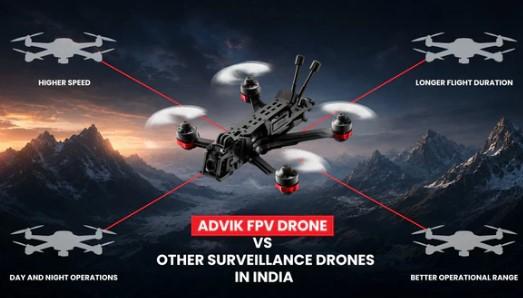
FPV drones and conventional surveillance drones can serve different purposes. The appropriate option depends on the required flight behaviour, camera system, endurance, and data collection needs.
| Feature | FPV drones | Conventional surveillance drones |
|---|---|---|
| Main operating focus | First-person flying and responsive control | Aerial observation and information collection |
| Operator view | Live camera feed, often through goggles or a screen | Commonly a live video feed on a controller or monitor |
| Flight characteristics | Often designed for responsive manoeuvring | May prioritise stable flight and observation |
| Camera options | Depend on the model and intended use | May include specialised imaging equipment |
| Flight duration | Varies by design and battery | Varies by aircraft size and power system |
| Common applications | Racing, recreation, filming, and training | Inspection, surveying, observation, and monitoring |
These are general differences rather than fixed rules. Some FPV aircraft can carry specialised cameras, while some conventional drones support manual control and agile flight. Actual specifications should always be checked for the individual model.
Practical Applications of FPV Drone Technology
FPV technology has applications across several areas. Its usefulness depends on the aircraft's capabilities, the operator's training, and the conditions in which it is used.
Recreational Flying and Racing
FPV systems allow pilots to experience flight through a camera feed. Racing and recreational flying can help users develop coordination, spatial awareness, and familiarity with drone controls.
Aerial Filming
Some FPV drones are used to capture moving aerial footage in locations where responsive control is useful. Camera quality, stabilisation, flight planning, and the operator's skill influence the final result.
Technical Education
FPV platforms can support learning about flight controllers, motors, batteries, radio systems, and aircraft maintenance. Practical instruction helps learners understand both the technology and its limitations.
Inspection and Specialised Operations
Suitable drones may assist with visual inspection of selected structures or difficult-to-access locations. The aircraft must have the necessary camera, flight capability, and safety provisions for the task.
How to Choose the Right FPV Drone
Choosing a drone requires a clear understanding of its intended use. The following factors can help buyers compare available options.
Define Your Purpose
Decide whether the drone will be used for recreation, racing, filming, training, or professional work. Each application can require different equipment and flight characteristics.
Check Technical Specifications
Review the aircraft's weight, dimensions, battery type, flight controller, camera, control system, and stated flight time. Confirm that the specifications match your requirements.
Understand Operating Limitations
Wind, rain, obstacles, radio interference, and battery condition can affect drone performance. Users should follow manufacturer instructions and operate within the aircraft's documented limits.
Consider Training and Safety
New operators should learn basic flight controls, battery handling, pre-flight inspections, and emergency procedures. They should also check the applicable drone rules and airspace restrictions in India.
Review Long-Term Support
Replacement parts, repairs, maintenance guidance, and technical assistance can affect the overall ownership experience. These considerations are important when comparing different models.
Safety and Responsible Drone Operation
Responsible operation is essential for all drone categories. Before flying, operators should inspect the aircraft, confirm battery condition, check the surroundings, and understand the planned flight area.
Operators should maintain awareness of people, buildings, other aircraft, and local restrictions. They should also protect personal privacy and avoid recording people or private property without appropriate permission.
In India, drone operators should check the current requirements under applicable Directorate General of Civil Aviation rules and the Digital Sky platform, where relevant. Requirements depend on the aircraft category, location, and intended operation.
The Growing Role of FPV Drones in India
India's drone ecosystem includes recreational aircraft, commercial platforms, agricultural systems, surveying drones, and specialised unmanned aircraft. FPV technology forms one part of this broader sector.
As equipment develops, improvements in cameras, flight controllers, batteries, and video transmission may expand the range of applications available to users. However, selecting a suitable drone still requires attention to proven specifications, safe operating practices, maintenance, and the intended purpose.
For buyers and enthusiasts, understanding these differences provides a useful foundation for comparing products and making informed decisions.
Conclusion
FPV drones offer a distinctive flying experience through a live camera view and responsive operator control. Their applications include recreation, racing, aerial filming, training, and selected inspection tasks. The right platform depends on its design, camera system, flight duration, build quality, and available technical support.
When researching the Advik FPV Drone, readers should evaluate verified product specifications and compare them with their intended requirements rather than assuming that every FPV aircraft offers the same performance.
To explore another aspect of the industry, read more about Top tactical drones India and learn how different drone categories are described and compared. Understanding their intended roles helps readers develop a clearer picture of modern unmanned aerial technology.
Frequently Asked Questions
1. What is the Advik FPV Drone?
Advik FPV Drone is the subject of an InsideFPV article exploring FPV drone technology and its differences from conventional surveillance drones. Consult the relevant product or article information for verified model specifications and availability.
2. What does FPV mean in drones?
FPV stands for first-person view. It describes a system that sends a camera feed from the aircraft to an operator's display or goggles.
3. How is an FPV drone different from a surveillance drone?
An FPV drone commonly emphasises first-person viewing and responsive control, while a conventional surveillance drone is generally designed for observation and information collection. Features can overlap depending on the aircraft.
4. What affects an FPV drone's flight time?
Flight time depends on battery capacity, aircraft weight, payload, motor efficiency, weather, and flying style. Actual performance may differ from published maximum figures.
5. Are FPV drones suitable for beginners?
Some FPV drones are suitable for beginners, especially when supported by training modes, simulators, or instructor guidance. Beginners should select an appropriate model and learn safe operating procedures before flying.
6. Can FPV drones be used for professional work?
Yes. Depending on their design and equipment, FPV drones can support aerial filming, training, and selected inspection activities. Professional use requires suitable equipment, trained operators, and compliance with applicable rules.
7. What should I check before purchasing an FPV drone?
Check the intended application, flight performance, camera system, battery, build quality, replacement parts, technical support, and applicable operating requirements. Compare verified specifications before making a decision.

 Arabic
 French
 Spanish
 Portuguese
 Deutsch
 Turkish
 Dutch
 Italiano
 Russian
 Romaian
 Portuguese (Brazil)
 Greek