


Which Zhiguang Flat Pallets Match Your Products and Equipment
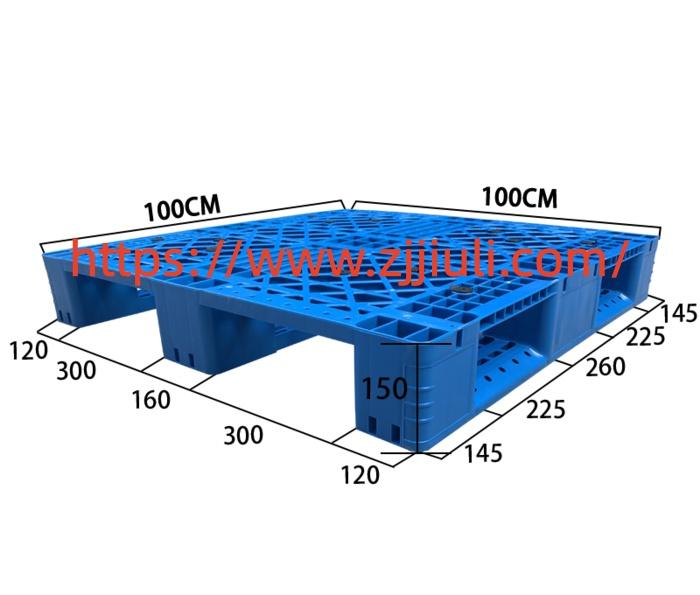
Flat Pallets can be a practical option for businesses that need to move packaged goods, organize inventory, and coordinate daily warehouse operations. However, choosing a suitable design involves more than checking dimensions or comparing prices. A platform that works well for lightweight cartons may not meet the requirements of heavy components, while a model suitable for floor storage may need additional verification before being used on warehouse racks. Understanding the journey of each load helps buyers make a more informed purchasing decision.
Start by looking at the products your business handles every day. A warehouse storing sealed cartons has different requirements from a manufacturing facility moving metal components or a distributor handling containers of different sizes. Consider the length, width, height, and shape of the goods, along with how their weight is distributed. Items with uneven bases or concentrated weight may need additional support or a different loading arrangement. Recording these details before contacting a supplier makes product comparisons more useful.
The next step is to examine the available working space. Measure the width of storage aisles, the height of shelving systems, and the clearance around loading areas. A platform that fits the product itself may still create difficulties if the combined load cannot pass through a doorway or turn comfortably within an aisle. Businesses with several storage zones should also consider whether the same dimensions can be used throughout their operations. Consistent sizing may simplify inventory planning, although different product categories can require different configurations.
Handling equipment deserves careful consideration. Forklifts, manual pallet trucks, automated conveyors, and storage systems do not necessarily work with every platform design. Check the entry direction, opening dimensions, base structure, and available clearance for the equipment used at your facility. Fork length and lifting capacity should also match the intended load. If goods travel between several locations, review every stage of the route rather than checking compatibility at the receiving area alone. A sample trial under normal operating conditions can help identify practical issues before a larger order is placed.
Load capacity is another specification that deserves a closer look. Suppliers may provide separate ratings for stationary storage, movement, and rack supported applications. These figures describe different support conditions and should not be treated as interchangeable. The weight of the goods is only part of the assessment because load distribution, support spacing, and operating conditions can affect performance. Buyers should request model specific technical information and confirm that the stated rating applies to their intended use. Careful evaluation of loading conditions and support arrangements helps businesses assess whether a design fits their requirements.
Material selection depends on the working environment and the expected handling routine. Plastic options may suit operations that require straightforward cleaning and resistance to moisture, while wooden or metal designs may meet other application needs. Temperature changes, exposure to chemicals, outdoor storage, and repeated impacts should all be considered before making a decision. Buyers should ask about material specifications, structural details, surface condition, and maintenance requirements. Where hygiene or product contact matters, relevant documentation should be checked rather than assumed.
Purchasing teams should also think about the complete operating cycle. Goods may arrive from a supplier, remain in temporary storage, move to a production area, and eventually leave for delivery. Each transfer creates handling requirements. If the same support unit can be used across several stages, staff may have fewer repacking tasks to manage. Return logistics matter as well. Businesses that repeatedly send empty units between locations may want to compare storage requirements, return transport arrangements, and the practical cost of reuse.
Communication with a manufacturer becomes easier when the purchasing brief is specific. Prepare product dimensions, expected load weights, handling methods, storage conditions, required quantities, and any special design preferences. Photographs or simple drawings can help explain unusual loads or equipment interfaces. Ask which specifications are available as standard options and which may require customization. It is also useful to clarify sample availability, inspection procedures, production schedules, and packaging arrangements before confirming an order.
Zhiguang provides a starting point for businesses comparing storage products against their actual operating requirements. Rather than selecting a design based on appearance alone, buyers can review dimensions, structural features, material choices, and intended applications before discussing an order. Visit https://www.zjjiuli.com/product/ to review the available product range and identify options that may suit your storage and handling plans. A clear specification, combined with careful equipment checks and realistic load assessment, can help your team choose a practical solution for its daily operations.

 English
 French
 Spanish
 Portuguese
 Deutsch
 Turkish
 Dutch
 Italiano
 Russian
 Romaian
 Portuguese (Brazil)
 Greek