


Advanced Wire Processing for Secure Fastening
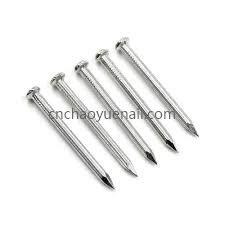
Reliable fastening begins with careful material selection and consistent manufacturing control. In applications that require strong connections between dense materials or multiple layers, Heavy Wire Staples depend on suitable steel properties, accurate forming, and dependable production processes to support secure assembly. Manufacturers must coordinate wire quality, machine settings, tooling condition, and inspection procedures to produce fasteners that perform consistently across different operating environments.
Steel wire is the foundation of staple performance. Its chemical composition, surface condition, and mechanical properties influence forming stability and the finished product’s ability to penetrate and hold materials. Incoming wire should be evaluated for dimensional consistency, surface defects, and material variations that could affect production. Reliable raw materials help reduce forming interruptions, limit unnecessary scrap, and maintain consistent results throughout manufacturing batches. Material selection should also reflect the intended application, including the substrate, fastening method, and expected service conditions.
Wire preparation is an important stage in the production process. Drawing and straightening operations help establish a consistent wire profile, while suitable lubrication reduces friction during processing. Automated feeding systems then guide the wire into forming equipment, where cutting and bending operations create uniform legs and crowns. The forming sequence must be controlled carefully because irregular bends, inconsistent cutting, or poor alignment can affect feeding and fastening performance. Stable machine settings and repeatable forming methods help manufacturers maintain product consistency without relying solely on final inspection.
Tooling condition also has a direct influence on manufacturing quality. Cutting blades, forming dies, and guide components gradually wear during repeated production cycles. If maintenance is delayed, the resulting fasteners may show burrs, uneven shapes, or dimensional variation that interferes with tool operation. Preventive maintenance programs should include scheduled cleaning, wear checks, alignment verification, and timely replacement of damaged components. Monitoring production behavior can help identify gradual changes before they lead to larger batches of nonconforming products.
Surface treatment should be selected according to application requirements and storage conditions. Bright steel finishes may suit indoor applications where additional corrosion protection is not essential, while coated or galvanized options may be considered when greater resistance to moisture is required. The suitability of a finish depends on the surrounding environment, the materials being joined, and the expected handling conditions. Manufacturers should communicate finish options clearly and avoid treating any surface treatment as a universal solution for every exposure level. Proper packaging and dry storage also help preserve surface quality before use.
Compatibility with fastening equipment is another important consideration for professional buyers. Staple dimensions, crown shape, leg geometry, collation quality, and feeding consistency must correspond to the intended tool and application. Even well-formed staples may cause interruptions when their configuration does not match the equipment’s requirements. Manufacturers should therefore maintain clear product identification and communicate compatibility information during order confirmation. Where customers use automated or high-volume fastening systems, consistent collation and dependable feeding can help reduce stoppages and improve workflow efficiency.
Quality assurance should cover the entire production process rather than relying only on finished-product sampling. Incoming material checks, in-process monitoring, and final inspection each address different risks. Operators can monitor wire feeding, cutting accuracy, forming stability, and surface appearance during production. Sampling procedures can then evaluate shape consistency, joint geometry, and other characteristics relevant to the product specification. Where suitable, machine vision and automated counting systems can support repeatable inspection and packaging control. Batch identification and production records also make it easier to investigate quality concerns and maintain traceability across shipments.
Packaging and logistics influence the condition in which fasteners reach the customer. Suitable cartons, inner bags, or bulk containers can protect products from contamination, mixing, and avoidable moisture exposure during storage and transportation. Clear labels should identify product type, finish, batch information, and other details agreed upon with the buyer. For distributors and industrial purchasing teams, consistent packaging quantities and reliable delivery coordination simplify inventory management and replenishment planning. Export orders may also require packaging arrangements that suit long-distance transport and warehouse handling.
Responsible manufacturing can further improve resource efficiency. Accurate wire feeding and optimized forming processes help reduce material waste, while segregated steel scrap can often be directed into appropriate recycling channels. Preventive maintenance reduces rejected production runs, and well-organized packaging operations can limit unnecessary material use. These practices support operational efficiency while helping manufacturers respond to buyers who consider both product consistency and responsible sourcing when evaluating suppliers.
For distributors, equipment manufacturers, and industrial users, dependable fastening products are best evaluated through material control, manufacturing consistency, tool compatibility, inspection practices, and supply reliability. Buyers sourcing Heavy Wire Staples should communicate their intended applications, equipment requirements, preferred surface finishes, and packaging needs before confirming an order. To review available product categories and manufacturing options, visit https://www.cnchaoyuenail.com/product for further information.

 English
 French
 Spanish
 Portuguese
 Deutsch
 Turkish
 Dutch
 Italiano
 Russian
 Romaian
 Portuguese (Brazil)
 Greek