


How Traffic Surveys Improve Road Design and Capacity Planning in the UAE
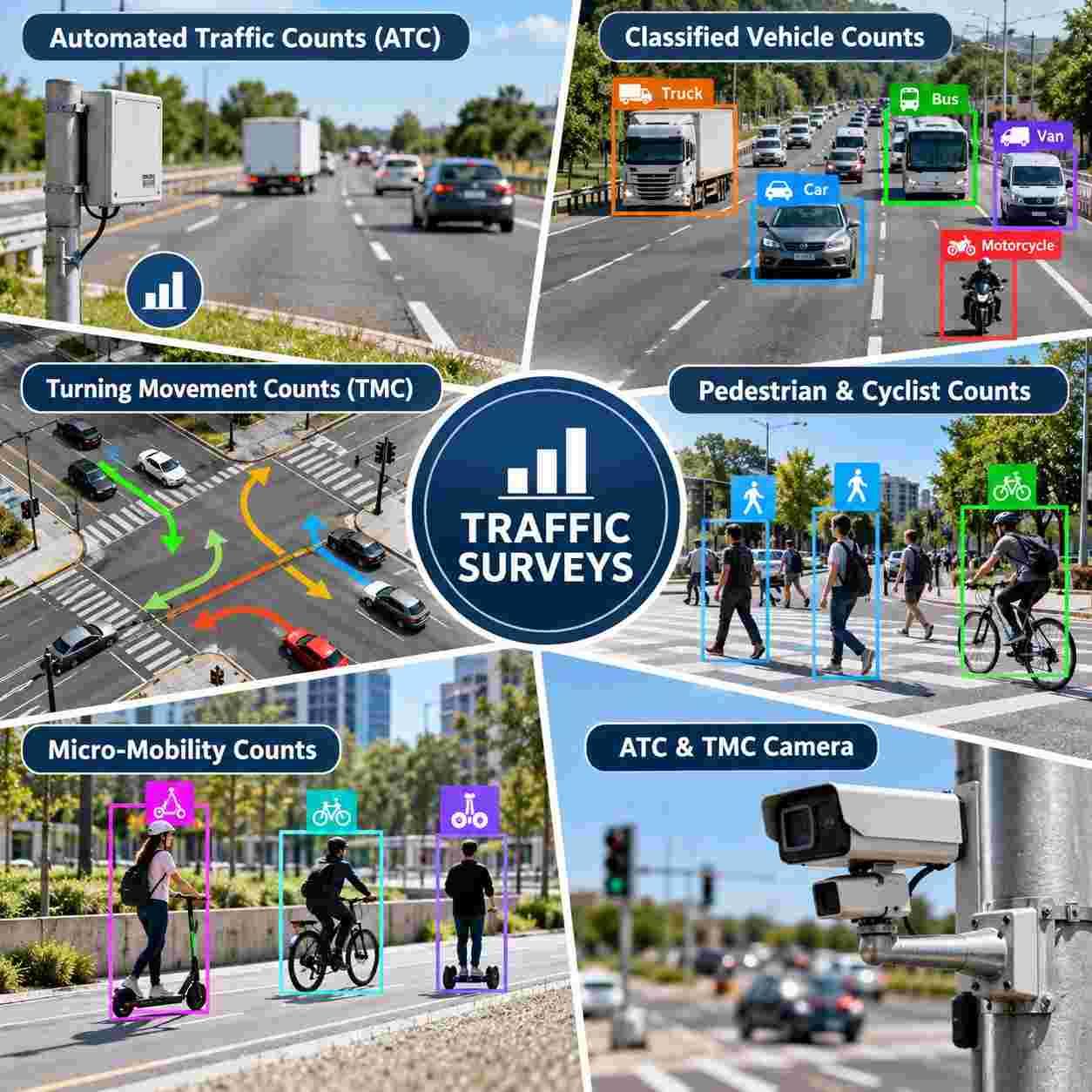
Every road, junction, and car park in the Emirates is built to serve a forecast of how many people will use it. When that forecast is wrong, drivers’ queue, pedestrians take risks, and budgets are spent on fixes that proper evidence would have made unnecessary. Traffic Surveys replace guesswork with measured data, showing how many vehicles, pedestrians, and riders actually use a location, when they arrive, and where they go.
Top Precisions provides traffic survey services in the UAE, and its traffic survey services in the UAE help developers, consultants, and authorities collect the evidence that sound design depends on. This article explains the main survey methods, how the results shape road design and capacity planning, and what to look for when commissioning a survey.
Why Measured Data Beats Assumptions
Design standards and growth models are useful, but they describe averages. A real junction has its own school, its own warehouse shift change, and its own habits. Two junctions with identical geometry can carry very different loads at different hours. Surveys capture these local patterns, so engineers can size lanes, signal phases, and crossings for the traffic that exists and the traffic that is credibly expected, rather than for a generic case.
Automated Traffic Counts (ATC) for Continuous Measurement
Automated Traffic Counts (ATC) record how many vehicles pass a point on a road, usually continuously for seven days or longer. Sensors or cameras log each vehicle with a time stamp, producing a profile of traffic by hour and day. This reveals morning and evening peaks, weekend behaviour, seasonal swings, and the effect of events. Long duration counts are especially valuable in the UAE, where patterns change between winter and summer, during Ramadan, and around school terms and holidays.
Classified Vehicle Counts and Why Vehicle Type Matters
Not every vehicle uses a road the same way. Classified Vehicle Counts separate cars, light goods vehicles, buses, heavy trucks, and motorcycles. Heavy vehicles take more road space, accelerate slowly, and wear pavements faster, so a road with many trucks needs different lane widths, turning radii, and pavement design from one carrying mostly cars. Industrial areas, ports, and logistics corridors in the Emirates make this distinction especially important.
Turning Movement Counts (TMC) at Junctions
Junctions are where most delay and many collisions occur. Turning Movement Counts (TMC) record how many vehicles of each class turn left, go straight, or turn right from every approach, usually in fifteen-minute intervals during the busiest periods. This detail tells designers whether a left turn pocket is long enough, whether a signal phase is wasted, and whether a roundabout, signal, or grade separation is justified. Without it, junction designs rest on estimates that may miss the real bottleneck.
Pedestrian & Cyclist Counts for Safer Streets
Roads serve people on foot and on bicycles as well as drivers. Pedestrian & Cyclist Counts measure how many people cross at each point, which routes they follow, and when demand peaks. These figures justify new crossings, wider footpaths, shaded walkways, and protected cycle tracks. In a hot climate, pedestrian behaviour is shaped by shade and time of day, so counts taken at the right hours show where walking is concentrated and where people are exposed to conflict with traffic.
Micro Mobility Counts for E Scooters and Shared Bikes
E scooters, shared bicycles, and similar devices are now part of many UAE neighbourhoods and waterfront districts. Micro Mobility Counts record how many such riders use each corridor and where they interact with cars and pedestrians. Planners use this evidence to decide where dedicated lanes are needed, how wide shared paths must be, and where parking zones for devices should go, so that new models are integrated safely instead of added as an afterthought.
ATC & TMC Camera Technology
Modern surveys increasingly rely on video. An ATC & TMC Camera records the scene at a road section or junction, and analytics software counts and classifies road users from the footage. Compared with manual street side counting, camera-based surveys cover long periods without fatigue, allow the footage to be reviewed to verify results, and keep field staff away from live traffic. Good systems handle glare, shadows, and dust, and provide validation against sample manual counts.
From Raw Counts to Design Decisions
Counts become useful when they are turned into measures that engineers can act on. Typical outputs include peak hour volumes, peak hour factors, directional splits, heavy vehicle percentages, and demand by movement. These feed capacity calculations that estimate level of service, queue lengths, and delay. Designers then test alternatives, such as adding a lane, lengthening a turn pocket, or retiming signals, and choose the option that meets demand at the lowest sensible cost.
Capacity Planning for Growing Districts
The Emirates continue to add residential communities, business parks, and mixed-use developments. Capacity planning asks whether the surrounding network can absorb the new demand. Surveys of existing conditions provide the baseline, and growth forecasts add the expected effect of new development. Authorities commonly require traffic impact studies that rest on current counts, so reliable survey data speeds approvals and reduces the risk of costly redesign later.
Traffic Surveys UAE: Standards, Seasons, and Planning
Traffic Surveys UAE projects should follow the requirements of the relevant road and transport authority, which may specify survey duration, time periods, vehicle classes, and report format. Timing matters, because school terms, Ramadan, summer travel, and major events all change patterns. A survey taken during an unrepresentative week can mislead a design, so it is wise to agree survey dates with the project consultant and the authority before fieldwork begins.
Traffic Surveys Dubai: Dense Growth and Mixed Modes
Dubai combines dense business districts, large residential communities, busy freight routes, and a strong push toward walking, cycling, and public transport. Traffic Surveys Dubai work therefore often covers several modes at once, capturing vehicles, pedestrians, cyclists, and micro mobility users around metro stations, waterfront areas, and new developments. Combined data helps designers allocate road space fairly and justify investments in crossings and active travel links.
Traffic Surveys Abu Dhabi: Island Access and Regional Corridors
Abu Dhabi's island geography and the major corridors that connect it to the mainland create distinctive pressure points at bridges, interchanges, and gateways. Traffic Surveys Abu Dhabi projects commonly measure peak flows at these entry points, as well as local junctions in growing districts and around large public venues. Reliable data supports decisions on lane allocation, signal coordination, and phasing of new links.
Data Quality, Validation, and Privacy
A survey is only as good as its data. Reputable providers calibrate equipment, validate camera counts against manual samples, check for gaps or sensor faults, and document their method so that clients and authorities can trust the results. Privacy matters as well: traffic counting needs only the number and type of road users, not their identities, so surveys should avoid capturing licence plates or faces unless there is a clear purpose and legal basis.
Choosing the Right Survey Provider
When selecting a provider, ask about experience with similar projects, the equipment used, how results are validated, the format of deliverables, and how quickly data can be turned around. Look for clear method statements and sample reports. Organizations that want a single partner for counts, classification, junction studies, and reporting can review the Top Precisions traffic survey solutions alongside other shortlisted suppliers before deciding.
Experience and Trust Behind Every Survey
Top Precisions delivers traffic survey and measurement services across the UAE, with fieldwork planned around the specific location, time periods, and reporting needs of each project. Method statements, calibration checks, and documented validation give clients and authorities confidence in the numbers, and clear reports translate raw counts into figures that designers can use directly.
Further information on available survey types, equipment, and reporting is provided on the company's traffic survey service page, so project teams can review the approach before commissioning work.
Conclusion
Reliable Traffic Surveys give designers measured evidence instead of assumptions when sizing roads, junctions, and crossings. Automated Traffic Counts (ATC), Classified Vehicle Counts, and Turning Movement Counts (TMC) reveal how roads and junctions truly perform. Pedestrian & Cyclist Counts and Micro Mobility Counts bring walkers and riders into planning, supported by an ATC & TMC Camera for dependable video evidence. Projects needing Traffic Surveys UAE coverage should match survey timing to seasons, events, and authority requirements. Teams commissioning Traffic Surveys Dubai and Traffic Surveys Abu Dhabi work should choose a provider with validated methods and clear reporting.
FAQs
1. How long should a traffic count last?
Road section counts commonly run for seven continuous days to capture weekday and weekend patterns, while junction counts focus on the busiest morning and evening periods, with exact durations set by the project and the authority.
2. Can camera-based counts be trusted as much as manual counts?
Yes, when equipment is calibrated and results are validated against manual samples, camera counts are accurate and have the added benefit that footage can be reviewed to check any figure.
3. When is the best time of year to survey?
Surveys should reflect normal conditions for the project, so avoid unusual weeks such as major holidays or events unless those conditions are the subject of the study, and agree dates with the consultant and authority in advance.
4. Do surveys record licence plates or faces?
Standard traffic counts need only the number and type of road users, so providers should avoid capturing personal identifiers unless there is a clear purpose and legal basis.
5. What do I receive at the end of a survey?
Deliverables typically include hourly and fifteen-minute volumes, peak hour figures, vehicle class percentages, movement splits, and a short method statement, in the format the client or authority requires.

 English
 French
 Spanish
 Portuguese
 Deutsch
 Turkish
 Dutch
 Italiano
 Russian
 Romaian
 Portuguese (Brazil)
 Greek